TRANS PNP 40V 0.6A TO-18
2N2907 is a Bipolar PNP transistor. This article mainly introduces pinout, specifications, features, and other detailed information about STMicroelectronics 2N2907.

TRANS PNP 40V 0.6A TO-18 2N2907 is a Bipolar PNP transistor. This article mainly introduces pinout, specifications, features, and other detailed information about STMicroelectronics 2N2907.
458
Mar 20, 2021
Ophelia
TRANS PNP 40V 0.6A TO-18
2N2907 is a Bipolar PNP transistor. This article mainly introduces pinout, specifications, features, and other detailed information about STMicroelectronics 2N2907.
2N2907
The 2N2907 are silicon planar epitaxial PNP transistors in Jedec TO-18 (for 2N2907) metal case. They are designed for high-speed saturated switching and general-purpose application.
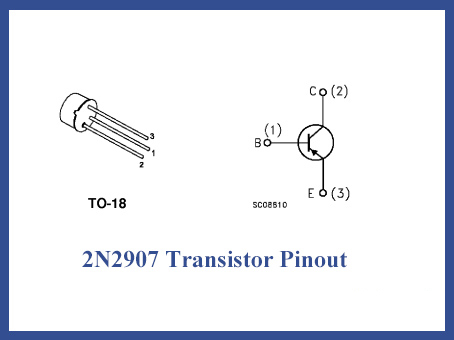
|
Pin No. |
Pin Name |
Description |
|
1 |
Emitter |
Current Drains out through emitter |
|
2 |
Base |
Controls the biasing of transistor |
|
3 |
Collector |
Current flows in through collector |
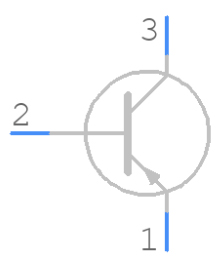 Symbol
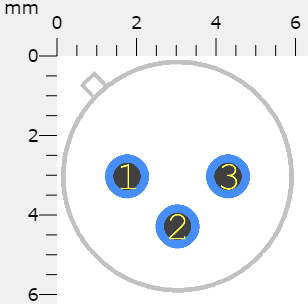 footprint
Having a high value of current (max. 600 mA)
Low voltage value (max. 40 V)
Comes in different type of packages – TO-92, TO-18
These are Lead (Pb) free devices
Collector to Emitter voltage (VCEO) is 40v (max.)
Collector to Base voltage (VCBO) is 60v (max.)
Emitter to Base voltage(VEBO) is 5v (normally)
Maximum value of Collector current is 600mA
Power dissipation at ambient temperature is about 400mW
Having DC current gain (hfe) of 100 to 300 (max.)
Temperature of operation and storage is -65 to +150 °C
STMicroelectronics 2N2907 technical specifications, attributes, parameters and parts with similar specifications to STMicroelectronics 2N2907.
Central Semiconductor 2N2907 technical specifications, attributes, parameters and parts with similar specifications to Central Semiconductor 2N2907.
| Product Attribute | Attribute Value | |
|---|---|---|
| Factory Lead Time | 5 Weeks | |
| Package / Case | TO-18 | |
| Surface Mount | NO | |
| Collector-Emitter Saturation Voltage | 1.6V | |
| Frequency - Gain Bandwidth Product (GBP) | 200MHz | |
| Number of Elements | 1 Element | |
| Power Dissipation (Max) | 400mW | |
| hFEMin | 35 | |
| Published | 2013 | |
| JESD-609 Code | e0 | |
| Pbfree Code | no | |
| Part Status | Active | |
| Number of Terminations | 3Terminations |
| Product Attribute | Attribute Value | |
|---|---|---|
| ECCN Code | EAR99 | |
| Terminal Finish | Tin/Lead (Sn/Pb) | |
| Max Operating Temperature | 150°C | |
| Min Operating Temperature | -65°C | |
| HTS Code | 8541.21.00.75 | |
| Terminal Position | BOTTOM | |
| Terminal Form | WIRE | |
| Peak Reflow Temperature (Cel) | NOT SPECIFIED | |
| Reach Compliance Code | not_compliant | |
| Time@Peak Reflow Temperature-Max (s) | NOT SPECIFIED | |
| JESD-30 Code | O-MBCY-W3 | |
| Qualification Status | Not Qualified | |
| Polarity | PNP |
| Product Attribute | Attribute Value | |
|---|---|---|
| Configuration | SINGLE | |
| Transistor Application | SWITCHING | |
| Collector Emitter Voltage (VCEO) | 40V | |
| Max Collector Current | 600mA | |
| Transition Frequency | 200MHz | |
| Collector Base Voltage (VCBO) | 60V | |
| Emitter Base Voltage (VEBO) | 5V | |
| DC Current Gain-Min (hFE) | 50 | |
| Continuous Collector Current | 450mA | |
| Turn Off Time-Max (toff) | 100ns | |
| Turn On Time-Max (ton) | 45ns | |
| RoHS Status | Non-RoHS Compliant |
| Part No. | Manufacturer | Package |
Description |
| 2N2907A |
STMicroelectronics | TO-206AA, TO-18-3 Metal Can | STMICROELECTRONICS 2N2907A Bipolar (BJT) Single Transistor, PNP, -60 V, 200 MHz, 400 mW, -600 mA, 300 hFE |
| 2N2907 | STMicroelectronics | TO-206AA, TO-18-3 Metal Can | TRANS PNP 40V 0.6A TO-18 |
| 2N2907A | Microsemi Corporation | TO-18 | Trans GP BJT PNP 60V 0.6A 3-Pin TO-18 |
| 2N2907AL | Microsemi Corporation | TO-206AA, TO-18-3 Metal Can | Trans GP BJT PNP 60V 0.6A 3-Pin TO-18 |
2N2907 transistor as Switch
When used as a switch, can be operated in the saturation region and cut-off region. In the PNP transistor, by default, it’s in ON state, but not to be said perfectly until the base pin is not grounded. If we provide ground to the base pin then the transistor will be in reverse biased and said to be turned ON. If supply is provided to the base pin it stops conducting current between emitter and collector and said to be in an OFF state. For the protection of the transistor, a resistance added in series with it. For finding the value of that resistor you can use the formula:
RB = VBE / IB
Where the value of VBE will be 5v for this transistor. The maximum value of providing base current is 200mA. So, from that, you can find the value of resistance to be added in series with it.
2N2907 transistor as Amplifier
When used as an amplifier, can be operated in the active region. When its base is connected to the ground it will allow a high current (600mA) to pass through the collector to the emitter, that’s how it amplifies the current. There is three configurations used in an amplifier circuit are common emitter, common base, common collector. This transistor is used where low power amplification is needed. It can also amplify the power and current. Amplification factor usually determined in term of power, for calculating the current gain we use the formula:
Gain (hfe) = IC / IB
Where IC is the collector current and IB is the base current of the circuit.
Where amplification of low power is needed we use this transistor.
It can also be used in various switching applications.
Used for making siren or dual Led or Lamp flasher.
Can be used in Darlington Pair.
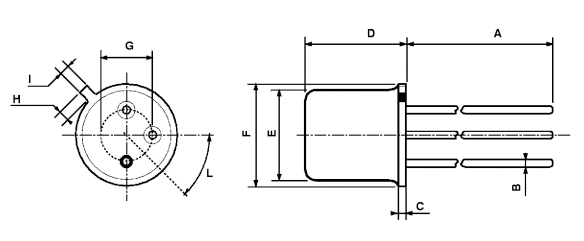
STMicroelectronics is a global independent semiconductor company and is a leader in developing and delivering semiconductor solutions across the spectrum of microelectronics applications. An unrivaled combination of silicon and system expertise, manufacturing strength, Intellectual Property (IP) portfolio, and strategic partners positions the Company at the forefront of System-on-Chip (SoC) technology, and its products play a key role in enabling today's convergence trends.
Download datasheets and manufacturer documentation for STMicroelectronics 2N2907.
Download datasheets and manufacturer documentation for 2N2907
TAGS
Comments