As previously mentioned, the 2N3055 can be used in any NPN transistor application, but let us consider a basic application circuit as shown below to better understand how the system works. We'll use a 2N3055 as a simple switching device to drive a motor in this example, which has a common emitter configuration.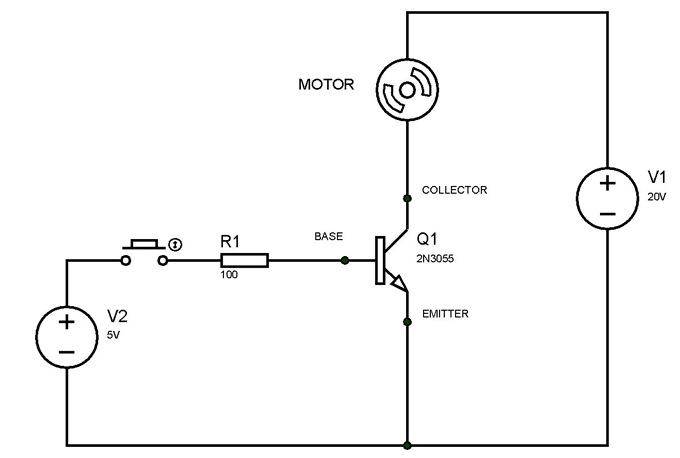
As shown in the circuit, the load is a motor, and the gate signal for turning on the transistor is given by a 5V source, with the triggering device being a button. For the circuit to operate, the trigger source and power source must share a common ground. The 100-ohm resistor is used to restrict the current flowing through the base.
The button will be open at first, and no current will pass through the transistor's foundation. The transistor operates as an open circuit when there is no base current, and the entire supply voltage V1 appears through it.
As seen in the circuit diagram, when the button is pressed at a specific time, the voltage V2 forms a closed loop with the transistor's base-emitter. A current flows through the base of the transistor in this closed-loop, and the transistor is turned on as a result of the base current flow. When a transistor is in the ON mode, it acts as a short circuit, causing the collector current to pass through the motor, causing it to rotate. This motor will continue to rotate until the base current is reached.
When the button is released after a certain amount of time, the base current drops to zero, and the transistor is switched off. The collector current becomes zero when the transistor is switched to a high resistance state in OFF mode, bringing the motor to a halt.
The use of 2N3055 as a switching system is realized by controlling a power motor with a simple push-button, and we can use 2N3055 in other transistor circuits in the same way.


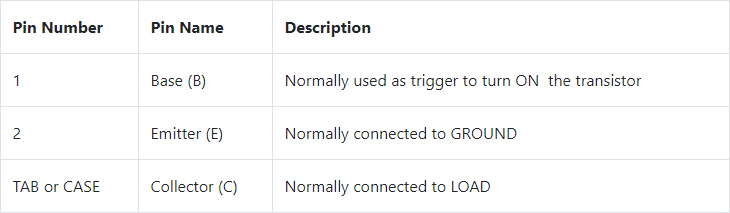
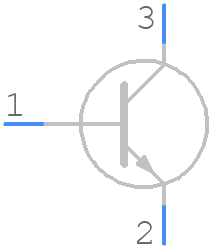 2N3055 symbol
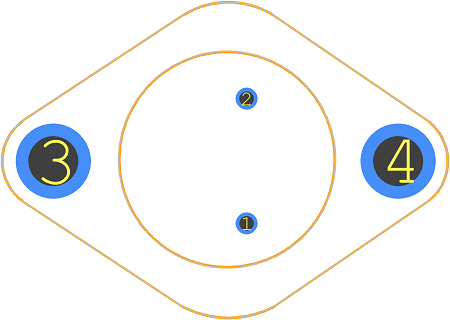 2N3055 footprint
 2N3055 3D model
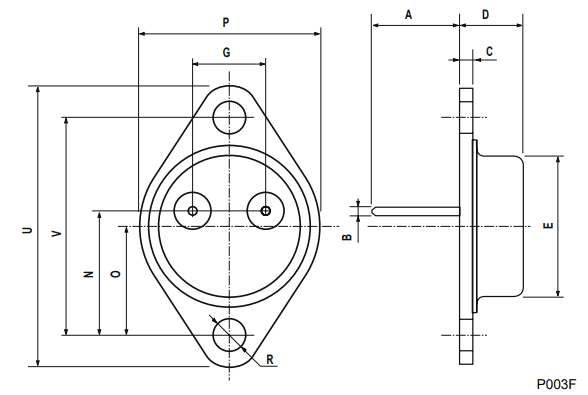 2N3055 Dimension
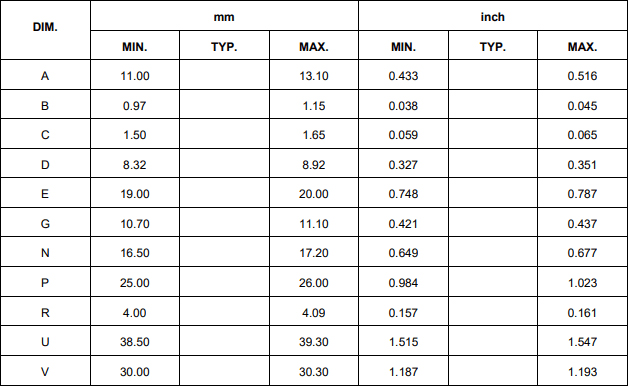 TO-3 MECHANICAL DATA