ATTENTION: Due to increased demand and order volume, processing time may take an additional 1-3 business days.
HomeCommunitySubject2N3771 Transistor: 2N3771 NPN Power Transistor, Datasheet, Pinout

2N3771 Transistor: 2N3771 NPN Power Transistor, Datasheet, Pinout

Transistors - Bipolar (BJT) - Single TRANS NPN 40V 30A TO-3 The 2N3771 is a high current switching transistor that has a collector current of 30A.

58

Dec 6, 2021

Virgil Harrison

TO-3 package rendering of 2N3771 high gain pass transistor


Transistors - Bipolar (BJT) - Single TRANS NPN 40V 30A TO-3

The 2N3771 is a high current switching transistor that has a collector current of 30A. This article will cover its datasheet, pinout, replacement about 2N3771. Welcome your RFQ!

2N3771

10000In Stock
Min.: 1 Mult.: 1
Price not displayed? Not available to buy online? Please send an RFQ, and we will respond immediately.
Quick Links

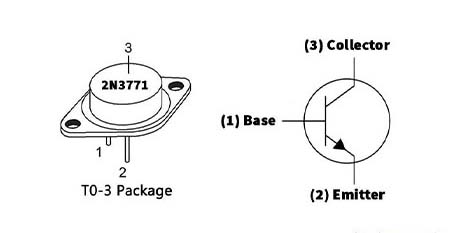
2N3771 Pinout

2N3771 Pinout


Pin Number

Pin Name

Description

1

Base

Controls the biasing of the transistor, Used   to turn ON or OFF the transistor

2

Collector

Current flows in through collector,   normally connected to load

3

Emitter

Current Drains out through emitter,   normally connected to ground

2N3771 CAD Model

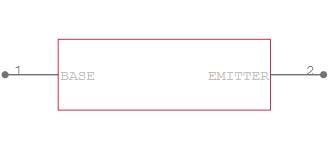
2N3771 Symbol


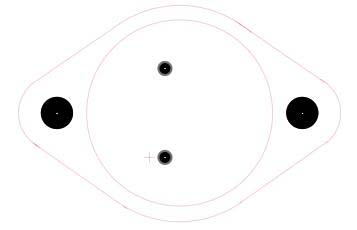
2N3771 Footprint

2N3771 Description

The 2N3771 is a high-power NPN transistor that can handle up to 30A of collector current. The transistor also has a low base threshold voltage of less than 5V and a high collector to emitter voltage of 40V, making it appropriate for high current switching devices.

Despite the fact that the transistor has a very low gain of 60 maximum, it is still utilized in a few linear amplifiers due to the high current. It's most typically found in power supply circuits and in inductive load switching. The transistor is packaged in a To-3 package, which means it has only two leads: Base and Emitter, with the collector acting as the transistor's body. Because the collector will be carrying a huge amount of current, the body will act as a heat sink due to its enormous surface area. If you're utilizing them on a PCB, the collector connection is formed by securing them with nuts. If you're using a computer, there are also mounting kits and connections available.

2N3771 Feature

High Power NPN Transistor

DC Current Gain (hFE) 15 to 60

Continuous Collector current (IC) is 30A

Collector-Emitter voltage (VCE) is 40 V

Collector-Base voltage (VCB) is 50V

Emitter Base Voltage (VBE) is 5V

Available in To-3 Package

2N3771 Application

  • Linear switching circuits

  • Small Amplifiers

  • Power supply circuits

  • Inductive load switching

  • high current switching (up to 20A) loads

2N3771 Alternatives

The alternatives for 2N3771:

  • SK9134

  • NTE181

  • 2N5302

  • 2N5686

Specifications

STMicroelectronics 2N3771 technical specifications, attributes, parameters and parts with similar specifications to STMicroelectronics 2N3771.

2N3771 Tech Specifications

STMicroelectronics 2N3771 technical specifications, attributes, parameters and parts with similar specifications to STMicroelectronics 2N3771.

Product Attribute Attribute Value
MountChassis Mount, Through Hole
Mounting TypeChassis Mount
Package / CaseTO-204AA, TO-3
Number of Pins2Pins
Collector-Emitter Breakdown Voltage40V
Collector-Emitter Saturation Voltage2V
Number of Elements1 Element
hFEMin5
PackagingTube
JESD-609 Codee3
Part StatusObsolete
Moisture Sensitivity Level (MSL)1 (Unlimited)
Number of Terminations2Terminations
ECCN CodeEAR99
Terminal FinishTin (Sn)
Product Attribute Attribute Value
Max Operating Temperature200°C
Min Operating Temperature-65°C
Voltage - Rated DC40V
Max Power Dissipation150W
Terminal PositionBOTTOM
Terminal FormPIN/PEG
Current Rating30A
Frequency200kHz
Base Part Number2N37
Element ConfigurationSingle
Power Dissipation150W
Case ConnectionCOLLECTOR
Transistor ApplicationSWITCHING
Gain Bandwidth Product200 kHz
Polarity/Channel TypeNPN
Product Attribute Attribute Value
Transistor TypeNPN
Collector Emitter Voltage (VCEO)40V
Max Collector Current30A
DC Current Gain (hFE) (Min) @ Ic, Vce15 @ 15A 4V
Current - Collector Cutoff (Max)10mA
Vce Saturation (Max) @ Ib, Ic4V @ 6A, 30A
Transition Frequency0.2MHz
Max Breakdown Voltage400V
Collector Base Voltage (VCBO)50V
Emitter Base Voltage (VEBO)5V
VCEsat-Max4 V
REACH SVHCNo SVHC
Radiation HardeningNo
RoHS StatusROHS3 Compliant
Lead FreeLead Free
0 Products View Similar

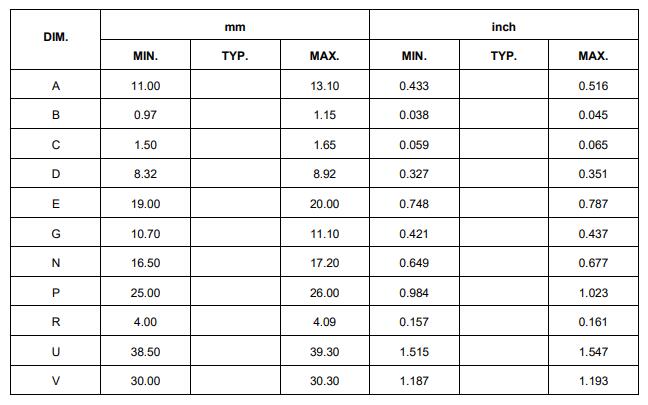
2N3771 Package

Datasheet PDF

2N3771 Documents

Download datasheets and manufacturer documentation for 2N3771

Frequently Asked Questions

What is the gain of the 2N3771 transistor?
60 maximum.
Where is the transistor most commonly used?
Power supply circuits and for switching inductive loads.
What package does the transistor come in?
To-3
What happens to the body of the transistor due to its large surface area?
The body will act as a heat sink.
What can you use if you are using them on testing boards?
Mounting kits and wires.
What is the difference between PNP and NPN?
PNP sensors produce a positive output to your industrial controls input, while NPN sensors produce a negative signal during an “on” state. ... NPN, or “sinking” output sensors, work in the opposite way, sinking ground voltage to input when it's on.
How do NPN transistors work?
An NPN transistor consists of a layer of P-doped semiconductor between two layers of N-doped material, where electrons are passed from the emitter to the collector instead. The emitter then “emits” electrons into the base, with the base controlling the no. of electrons the emitter emits.
FAQ
What is the gain of the 2N3771 transistor?
60 maximum.
Where is the transistor most commonly used?
Power supply circuits and for switching inductive loads.
What package does the transistor come in?
To-3
What happens to the body of the transistor due to its large surface area?
The body will act as a heat sink.
What can you use if you are using them on testing boards?
Mounting kits and wires.
What is the difference between PNP and NPN?
PNP sensors produce a positive output to your industrial controls input, while NPN sensors produce a negative signal during an “on” state. ... NPN, or “sinking” output sensors, work in the opposite way, sinking ground voltage to input when it's on.
How do NPN transistors work?
An NPN transistor consists of a layer of P-doped semiconductor between two layers of N-doped material, where electrons are passed from the emitter to the collector instead. The emitter then “emits” electrons into the base, with the base controlling the no. of electrons the emitter emits.

TAGS

Share