ATTENTION: Due to increased demand and order volume, processing time may take an additional 1-3 business days.
HomeCommunitySubject2N5306 Transistor: NPN Darlington Transistor, Datasheet, Pinout

2N5306 Transistor: NPN Darlington Transistor, Datasheet, Pinout

Transistors - Bipolar (BJT) - Single TRANS NPN DARL 25V 1.2A TO-92 The 2N5306 NPN Darlington Transistor is designed by connecting two transistors together.

105

Nov 12, 2021

Carol Penn

Transistors - Bipolar (BJT) - Single TRANS NPN DARL 25V 1.2A TO-92

The 2N5306 NPN Darlington Transistor is designed by connecting two transistors together. This article will unlock more details about 2N5306.t There is a huge range of Semiconductors, Capacitors, Resistors and ICs in stock. Welcome RFQ.

2N5306

5000In Stock
Min.: 1 Mult.: 1
Price not displayed? Not available to buy online? Please send an RFQ, and we will respond immediately.
Quick Links

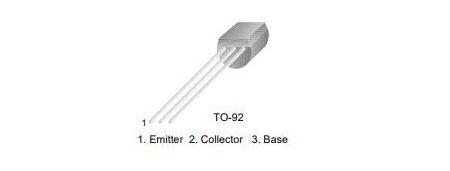
2N5306 Pinout

2N5306 Pinout


Pin Number

Pin Name

Description

1

Emitter

Current Drains out through emitter,   normally connected to ground

2

Base

Controls the biasing of the transistor, Used   to turn ON or OFF the transistor

3

Collector

Current flows in through collector,   normally connected to load

2N5306 CAD Model

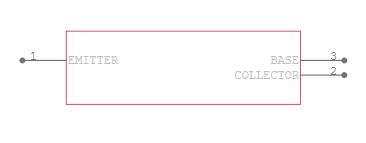
2N5306 Symbol


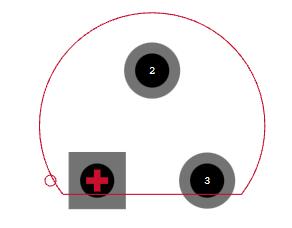
2n5306 Footprint

2N5306 Description

The 2N5306 NPN Darlington Transistor is made up of two transistors connected together. One is an NPN transistor, while the other is a PNP transistor in one package that looks like a regular transistor with the emitter, base, and collector connections. When compared to a regular transistor, it has a large current gain.

2N5306 Feature

  • NPN  Darlington Transistor

  • High DC Current Gain (hFE), typically 20,000 when IC=100mA

  • Emitter Base On Voltage (VBE) is 1.5V

  • Continuous Collector current (IC) is 1.2A

  • Collector-Emitter voltage (VCE) is 25 V

  • Collector-Base voltage (VCB) is 25V

  • Available in To-92 Package

2N5306 Applicaiton

  • Can be used to switch high current (up to 51) loads

  • Audio Amplifiers

  • Signal Gain Boosters

  • Can be used as medium Power switches

  • Used where high amplification is needed

  • Inverter and other rectifier circuits

2N5306 Equivalent

The equivalent for 2N5306:

  • 2N5308

Specifications

ON Semiconductor 2N5306 technical specifications, attributes, parameters and parts with similar specifications to ON Semiconductor 2N5306.

2N5306 Tech Specifications

ON Semiconductor 2N5306 technical specifications, attributes, parameters and parts with similar specifications to ON Semiconductor 2N5306.

Product Attribute Attribute Value
MountThrough Hole
Mounting TypeThrough Hole
Package / CaseTO-226-3, TO-92-3 (TO-226AA)
Number of Pins3Pins
Supplier Device PackageTO-92-3
Collector-Emitter Breakdown Voltage25V
Collector-Emitter Saturation Voltage1.4V
Current-Collector (Ic) (Max)1.2A
Number of Elements1 Element
hFEMin20000
Operating Temperature-55°C~150°C TJ
PackagingBulk
Published2002
Product Attribute Attribute Value
Part StatusObsolete
Moisture Sensitivity Level (MSL)1 (Unlimited)
Max Operating Temperature150°C
Min Operating Temperature-55°C
Voltage - Rated DC25V
Max Power Dissipation625mW
Current Rating1.2A
Base Part Number2N5306
PolarityNPN
Element ConfigurationSingle
Power - Max625mW
Transistor TypeNPN - Darlington
Collector Emitter Voltage (VCEO)25V
Product Attribute Attribute Value
Max Collector Current1.2A
DC Current Gain (hFE) (Min) @ Ic, Vce7000 @ 2mA 5V
Current - Collector Cutoff (Max)100nA ICBO
Vce Saturation (Max) @ Ib, Ic1.4V @ 200μA, 200mA
Voltage - Collector Emitter Breakdown (Max)25V
Collector Base Voltage (VCBO)25V
Emitter Base Voltage (VEBO)12V
Height5.33mm
Length5.2mm
Width4.19mm
RoHS StatusRoHS Compliant
Lead FreeLead Free
0 Products View Similar

Where to Use 2N5306?

The 2N5306 transistor is fairly similar to regular  NPN  transistors, however, because it is a Darlington transistor, it is significantly more powerful. The current gain of a normal transistor is typically 100-300, while our Darlington transistor has a gain of 20000, making it suitable for amplifier applications. Because it is made up of two circuits, it can carry a large amount of current (up to 1.2A), making it perfect for high-current applications. The sole significant disadvantage of this transistor is the high base voltage, which is roughly 1.5V.

How to Use 2N5306?

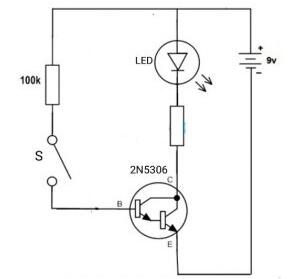
Darlington transistors, which provide high DC current gain, are commonly utilized in amplification and switching applications. Let's look at the circuit schematic below to see how to use the 2N5306 NPN Darlington transistor as a switch. 

2N5306 Circuit.jpg

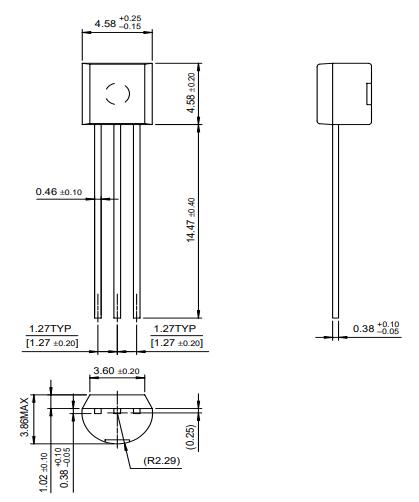
2N5306 Package

2N5306 Package

2N5306 Manufacturer

ON Semiconductor (Nasdaq: ON) is driving energy efficient innovations, empowering customers to reduce global energy use. The company offers a comprehensive portfolio of energy-efficient power and signal management, logic, discrete and custom solutions to help design engineers solve their unique design challenges in automotive, communications, computing, consumer, industrial, LED lighting, medical, military/aerospace and power supply applications. ON Semiconductor operates a responsive, reliable, world-class supply chain and quality program, and a network of manufacturing facilities, sales offices and design centres in key markets throughout North America, Europe, and the Asia Pacific regions.

Datasheet PDF

2N5306 Documents

Download datasheets and manufacturer documentation for 2N5306

Frequently Asked Questions

What is a Darlington Transistor?
Darlington Transistors are made up of two transistors that have been merged. One transistor will be an NPN transistor, while the other will be a PNP transistor. Yes, the transistor you see above is actually a pair of transistors packaged together to make it easier to use in our circuits. The high current gain of a transistor is one of its most important features. Because of its Darlington features, the transistor has a current gain of 20000 and a collector constant current of 1.2A.
How to Choose a Darlington Transistor?
A Darlington Transistor is used in applications that demand a lot of current gain and amplification. This is due to the fact that a standard BJT has a limited current gain. Class AB amplifiers and push-pull topologies commonly use the Sziklai Darlington pair or cross Darlington design.
What is Current Gain? Why is it important?
A Darlington transistor's current gain is a significant characteristic. It determines how many times the load current can be amplified based on the bias pin input current. A transistor is switched on by applying an input current to the base pin (current controlled device), and once on, it allows the load current to pass through it, which may be calculated using the equations. Load current=i/p current X transistor gain As a result, increasing the base current is required for loads that consume a lot of power. However, in some applications, the base current is limited and cannot be increased, hence the transistor gain must be increased. This is when the Darlington transistor comes in handy.
FAQ
What is a Darlington Transistor?
Darlington Transistors are made up of two transistors that have been merged. One transistor will be an NPN transistor, while the other will be a PNP transistor. Yes, the transistor you see above is actually a pair of transistors packaged together to make it easier to use in our circuits. The high current gain of a transistor is one of its most important features. Because of its Darlington features, the transistor has a current gain of 20000 and a collector constant current of 1.2A.
How to Choose a Darlington Transistor?
A Darlington Transistor is used in applications that demand a lot of current gain and amplification. This is due to the fact that a standard BJT has a limited current gain. Class AB amplifiers and push-pull topologies commonly use the Sziklai Darlington pair or cross Darlington design.
What is Current Gain? Why is it important?
A Darlington transistor's current gain is a significant characteristic. It determines how many times the load current can be amplified based on the bias pin input current. A transistor is switched on by applying an input current to the base pin (current controlled device), and once on, it allows the load current to pass through it, which may be calculated using the equations. Load current=i/p current X transistor gain As a result, increasing the base current is required for loads that consume a lot of power. However, in some applications, the base current is limited and cannot be increased, hence the transistor gain must be increased. This is when the Darlington transistor comes in handy.

TAGS

Share