ATTENTION: Due to increased demand and order volume, processing time may take an additional 1-3 business days.
HomeCommunitySubject6N136 Transistor: Circuit, Pinout, and Datasheet

6N136 Transistor: Circuit, Pinout, and Datasheet

Optoisolators - Transistor, Photovoltaic Output High Speed Optocouplers 1Mbd High-Speed Trans Out CTR>35%

550

Nov 4, 2021

Olivia Harrison

6N136 optocoupler ic testing | 6N136 pinout circuit diagram


Optoisolators - Transistor, Photovoltaic Output High Speed Optocouplers 1Mbd High-Speed Trans Out CTR>35%

The high-speed optocoupler 6N136 is a photoelectric coupling device with excellent characteristics. This model is packaged with a high-level infrared light-emitting tube and a photosensitive transistor. This article mainly introduces circuit, pinout, datasheet and other detailed information about Vishay Semiconductor 6N136.
6N136-X001

Inquiry
Min.: 1 Mult.: 1
Price not displayed? Not available to buy online? Please send an RFQ, and we will respond immediately.
Quick Links

6N136 Description

In a DIP-8 plastic container, the 6N136 is an optocoupler with a GaAIAs infrared emitting diode that is optically coupled with an integrated photodetector that consists of a photodiode and a high-speed transistor. Signals can be transmitted at up to 2 MHz between two electrically separated circuits. The potential difference between the circuits to be linked should not exceed the reference voltages that are allowed.


It has a small size, long life, strong anti-interference, high isolation voltage, high speed, and TTL logic level Compatible and other features, can be used for isolation circuits, switching circuits, digital-to-analog conversion, logic circuits, long-term transmission, over-current protection, high-voltage control, level matching, linear amplification, etc.

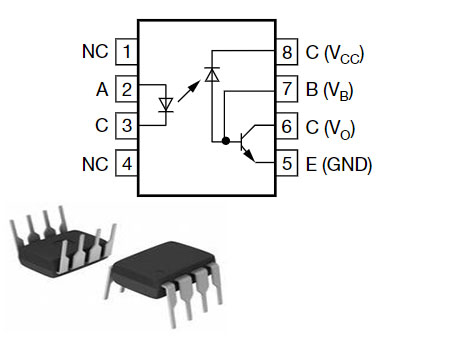
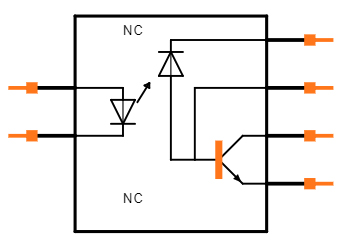
6N136 Pinout

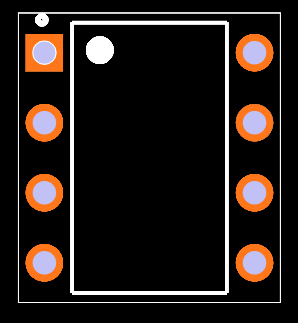
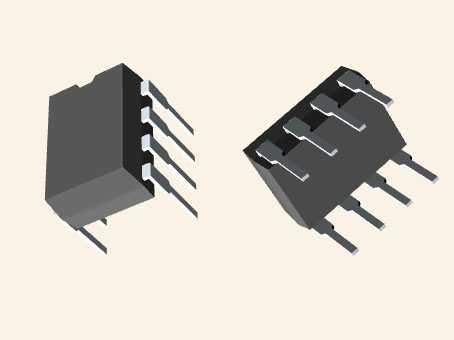
6N136 CAD Model

Symbol


Footprint


3D Model

6N136 Features

• Isolation test voltages: 5300 VRMS

• TTL compatible

• High bit rates: 1.0 Mbit/s

• High common-mode interference immunity

• Bandwidth 2.0 MHz

• Open-collector output

• External base wiring possible

• Lead (Pb)-free component

• Component in accordance to RoHS 2002/95/EC and WEEE 2002/96/EC

Specifications

Vishay Semiconductor Opto Division 6N136-X001 technical specifications, attributes, parameters and parts with similar specifications to Vishay Semiconductor Opto Division 6N136-X001.

6N136-X001 Tech Specifications

Vishay Semiconductor Opto Division 6N136-X001 technical specifications, attributes, parameters and parts with similar specifications to Vishay Semiconductor Opto Division 6N136-X001.

Product Attribute Attribute Value
Factory Lead Time6 Weeks
MountThrough Hole
Mounting TypeThrough Hole
Package / Case8-DIP (0.300, 7.62mm)
Number of Pins8Pins
Current Transfer Ratio-Min19% @ 16mA
Number of Elements1 Element
Operating Temperature-55°C~100°C
PackagingTube
Published2012
Part StatusActive
Moisture Sensitivity Level (MSL)1 (Unlimited)
Additional FeatureTTL COMPATIBLE
Product Attribute Attribute Value
Max Power Dissipation100mW
Base Part Number6N136
Voltage - Isolation5300Vrms
Output Voltage400mV
Output TypeTransistor with Base
ConfigurationSINGLE
Number of Channels1Channel
Power Dissipation100mW
Voltage - Forward (Vf) (Typ)1.33V
Input TypeDC
Optoelectronic Device TypeLOGIC IC OUTPUT OPTOCOUPLER
Forward Current25mA
Max Output Voltage15V
Product Attribute Attribute Value
Data Rate1 MBps
Output Current per Channel8mA
Rise Time800ns
Fall Time (Typ)800 ns
Max Collector Current8mA
Reverse Breakdown Voltage5V
Max Input Current25mA
Turn On / Turn Off Time (Typ)200ns, 200ns
Current Transfer Ratio35 %
Radiation HardeningNo
RoHS StatusROHS3 Compliant
0 Products View Similar

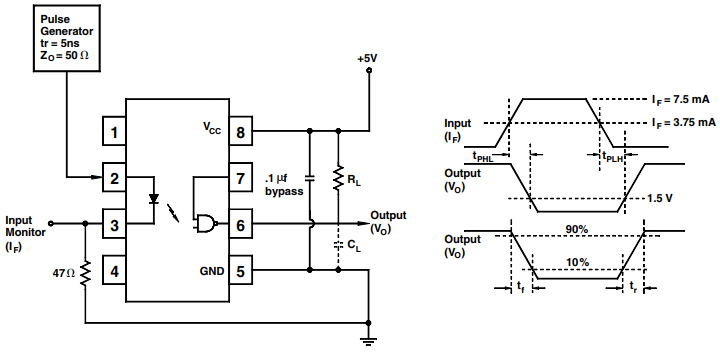
6N136 Circuit

Pull Up Resistor of 2.2k Connects With the Collector Terminal


When you connect the Vin signal to a 1MHz signal, the Vout pin receives an inverted signal. Because, by default, 5 volts logic appears on the Vout terminal, and the ground signal appears on the Vout pin when the transistor is turned on. In summary, the Vout pin will produce an inverted output when compared to the input signal.

6N136 Circuit Diagram

Circuit Diagram

Internal LED turns on and transmits IR beam and active poto transistor when appropriate input current reaches the terminals (+Vf and -Vf). Look at the diagram below, where the 6N136 IC has inverted the polarity of the input pulse. If the input logic is strong, the output will be weak, and if the input logic is weak, the output will be strong.

6N136 Alternatives

Part Number Description Manufacturer
6N139#500OPTOELECTRONICS 1 CHANNEL LOGIC OUTPUT OPTOCOUPLER, 0.1 Mbps, 0.300 INCH, SURFACE MOUNT, DIP-8 Agilent Technologies Inc
HCPL-5700#200OPTOELECTRONICS 1 CHANNEL LOGIC OUTPUT OPTOCOUPLER, 0.1Mbps, HERMETIC SEALED, CERAMIC, DIP-8 Avago Technologies
HCPL-0700OPTOELECTRONICS 1 CHANNEL LOGIC OUTPUT OPTOCOUPLER, SO-8 Fairchild Semiconductor Corporation
HCPL-2730-020OPTOELECTRONICS Logic IC Output Optocoupler, 2-Element, 5000V Isolation, 0.300 INCH, DIP-8 Agilent Technologies Inc
HCPL0500VOPTOELECTRONICS 8-Pin SOIC 1 Mbit/s Single-Channel High Speed Transistor Output Optocoupler, 3000-TUBE onsemi
HCPL-4503-560OPTOELECTRONICS 1 CHANNEL LOGIC OUTPUT OPTOCOUPLER, 1Mbps, 0.300 INCH, SURFACE MOUNT, DIP-8 Avago Technologies
HCPL-0500VOPTOELECTRONICS 1 CHANNEL LOGIC OUTPUT OPTOCOUPLER, 1 Mbps, LEAD FREE, SOIC-8 Rochester Electronics LLC
HCNW4502EOPTOELECTRONICS 1 CHANNEL LOGIC OUTPUT OPTOCOUPLER, 1Mbps, 0.400 INCH, LEAD FREE, DIP-8 Avago Technologies
SFH6325OPTOELECTRONICS Logic IC Output Optocoupler, 2-Element, 5300V Isolation, 1MBps, PLASTIC, DIP-8 Infineon Technologies AG
HCPL-5701#200OPTOELECTRONICS Logic IC Output Optocoupler, 1-Element, 1500V Isolation, 0.1MBps, HERMETIC SEALED, CERAMIC, DIP-8 Agilent Technologies Inc

6N136 Applications

• Line Receivers

• Pulse Transformer Replacement

• Output Interface to CMOS-LSTTL-TTL

• Wide Bandwidth Analog Coupling

6N136 Package

Package

6N136 Manufacturer

Vishay offers an unrivaled selection of discrete semiconductors (diodes, MOSFETs, and optoelectronics) as well as passive components (resistors, inductors, and capacitors). In the industrial, computing, automotive, consumer, telecommunications, military, aerospace, and medical markets, these components are employed in almost all types of electronic systems and equipment.

Datasheet PDF

Download datasheets and manufacturer documentation for Vishay Semiconductor Opto Division 6N136-X001.

6N136-X001 Documents

Download datasheets and manufacturer documentation for 6N136-X001

Datasheets
6N135, 6N136
PCN Design/Specification
OMV-771-2014-Rev-0 31/Mar/2015
Mfg CAD Models
DIP8-TH.(igs,stp)

Frequently Asked Questions

1.What is the difference between 6N135 and 6N136 optocoupler devices?
(1) The Composition is Different ① Optocoupler device 6N135: There is an 850nm wavelength AlGaAsLED inside and an integrated detector. The detector consists of a photodiode, a high-gain linear operational amplifier and a Schottky clamped open collector triode. ② 6N136: A high-level infrared light-emitting tube and photosensitive triode are encapsulated inside. (2)The Characteristics are Different ① Optocoupler device 6N135: It has temperature, current and voltage compensation functions, high input and output isolation, LSTTL/TTL compatible, high speed (typically 10MBd), and a very small input current of 5mA. ② 6N136: It has the characteristics of small size, long life, strong anti-interference, high isolation voltage, high speed, and TTL logic-level compatibility. (3)Different Uses ① Optocoupler device 6N135: application in a logic circuit, as solid-state switch application, application in trigger circuit, application in the pulse amplifier circuit. ② 6N136: used for isolation circuits, switching circuits, digital-to-analog conversion, logic circuits, long-term transmission, over-current protection, high-voltage control, level matching, linear amplification, etc.
2.What is the difference between 6N137 and 6N136?
The supply voltage range of 6N137 is smaller, and 136 is relatively large, which can reach 15V. The maximum speed of 136 is not as good as 137, the former is only 1Mb, and the latter is 10Mb.
3.What is the high speed of 6N136?
The main feature of 6N136 is a high speed, tPraJn_H=0.5 (RL=1.9Ω), so it can display and give full play to its excellent characteristics of high speed in the isolation of high-speed digital communication interfaces, and the data baud rate can reach 500k or more. . In contrast, common photoelectric coupling devices 4N25 and TILI17 can only achieve a baud rate of several thousand.
FAQ
1.What is the difference between 6N135 and 6N136 optocoupler devices?
(1) The Composition is Different ① Optocoupler device 6N135: There is an 850nm wavelength AlGaAsLED inside and an integrated detector. The detector consists of a photodiode, a high-gain linear operational amplifier and a Schottky clamped open collector triode. ② 6N136: A high-level infrared light-emitting tube and photosensitive triode are encapsulated inside. (2)The Characteristics are Different ① Optocoupler device 6N135: It has temperature, current and voltage compensation functions, high input and output isolation, LSTTL/TTL compatible, high speed (typically 10MBd), and a very small input current of 5mA. ② 6N136: It has the characteristics of small size, long life, strong anti-interference, high isolation voltage, high speed, and TTL logic-level compatibility. (3)Different Uses ① Optocoupler device 6N135: application in a logic circuit, as solid-state switch application, application in trigger circuit, application in the pulse amplifier circuit. ② 6N136: used for isolation circuits, switching circuits, digital-to-analog conversion, logic circuits, long-term transmission, over-current protection, high-voltage control, level matching, linear amplification, etc.
2.What is the difference between 6N137 and 6N136?
The supply voltage range of 6N137 is smaller, and 136 is relatively large, which can reach 15V. The maximum speed of 136 is not as good as 137, the former is only 1Mb, and the latter is 10Mb.
3.What is the high speed of 6N136?
The main feature of 6N136 is a high speed, tPraJn_H=0.5 (RL=1.9Ω), so it can display and give full play to its excellent characteristics of high speed in the isolation of high-speed digital communication interfaces, and the data baud rate can reach 500k or more. . In contrast, common photoelectric coupling devices 4N25 and TILI17 can only achieve a baud rate of several thousand.

TAGS

Share