ATTENTION: Due to increased demand and order volume, processing time may take an additional 1-3 business days.
HomeCommunitySubjectATMEGA1284P Microcontroller: Pinout, Datasheet, ATMEGA1284 vs. ATMEGA1284P

ATMEGA1284P Microcontroller: Pinout, Datasheet, ATMEGA1284 vs. ATMEGA1284P

Embedded - Microcontrollers A/D 8x10b 40-DIP (0.600, 15.24mm) 128kB Brown-out Detect/Reset, POR, PWM, WDT -40°C~85°C TA 1.8V~5.5V AVR? ATmega MICROCONTROLLER, RISC ATMEGA1284P 20MHz MCU 8-bit ATmega AVR RISC 128KB Flash 2.5V/3.3V/5V 40-Pin PDIP W

202

Oct 23, 2021

Jodie Gray

8-Bit Homebrew Computer - using Arduino and Atmega1284p-pu


Embedded - Microcontrollers A/D 8x10b 40-DIP (0.600, 15.24mm) 128kB Brown-out Detect/Reset, POR, PWM, WDT -40°C~85°C TA 1.8V~5.5V AVR® ATmega MICROCONTROLLER, RISC ATMEGA1284P 20MHz MCU 8-bit ATmega AVR RISC 128KB Flash 2.5V/3.3V/5V 40-Pin PDIP W

The ATMEGA1284P is a low power, CMOS 8-bit microcontroller. This post will unlock more details about ATMEGA1284P. There is a huge range of Semiconductors, Capacitors, Resistors and ICs in stock. Welcome RFQ.

ATMEGA1284P-PU

30In Stock
Min.: 1 Mult.: 1
Quantity Unit Price Ext. Price
1+ $17.69862$17.7
10+ $16.69681$166.97
100+ $15.75171$1575.17
500+ $14.8601$7430.05
1000+ $14.01896$14018.96
Unit Price:$17.69862
Subtotal: $17.7
Looking for a better price? Want a lower wholesale price? Please send an RFQ, and we will respond immediately.
Quick Links

ATMEGA1284P-PU Description

The ATMEGA1284P-PU is an 8-bit CMOS microcontroller based on the AVR improved RISC architecture that consumes very little power. The ATMEGA1284P-PU provides throughputs approaching 1MIPS per MHz by executing strong instructions in a single clock cycle, allowing system designers to balance power consumption and processing speed.

ATMEGA1284P-PU CAD Models

Symbol

Footprint

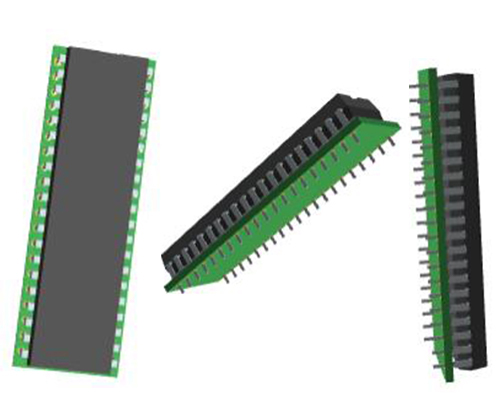
3D Models

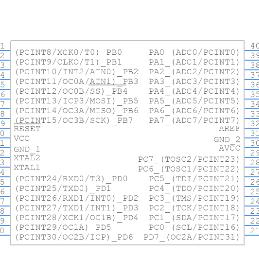
ATMEGA1284P-PU Pinout and Configuration

Specifications

Microchip Technology ATMEGA1284P-PU technical specifications, attributes, parameters and parts with similar specifications to Microchip Technology ATMEGA1284P-PU.

ATMEGA1284P-PU Tech Specifications

Microchip Technology ATMEGA1284P-PU technical specifications, attributes, parameters and parts with similar specifications to Microchip Technology ATMEGA1284P-PU.

Product Attribute Attribute Value
Factory Lead Time2 Weeks
Contact PlatingTin
MountThrough Hole
Mounting TypeThrough Hole
Package / Case40-DIP (0.600, 15.24mm)
Number of Pins40Pins
Data ConvertersA/D 8x10b
Number of I/Os32I/Os
Watchdog TimersYes
Operating Temperature-40°C~85°C TA
PackagingTube
SeriesAVR® ATmega
Published1997
JESD-609 Codee3
Pbfree Codeyes
Part StatusActive
Moisture Sensitivity Level (MSL)1 (Unlimited)
Number of Terminations40Terminations
Terminal PositionDUAL
Terminal Pitch2.54mm
Product Attribute Attribute Value
Frequency20MHz
Base Part NumberATMEGA1284P
Supply Voltage-Max (Vsup)5.5V
Power Supplies2/5V
Interface2-Wire, I2C, SPI, UART, USART
Memory Size128kB
Oscillator TypeInternal
RAM Size16K x 8
Voltage - Supply (Vcc/Vdd)1.8V~5.5V
uPs/uCs/Peripheral ICs TypeMICROCONTROLLER, RISC
Core ProcessorAVR
PeripheralsBrown-out Detect/Reset, POR, PWM, WDT
Program Memory TypeFLASH
Core Size8-Bit
Program Memory Size128KB 64K x 16
ConnectivityI2C, SPI, UART/USART
Bit Size8
Has ADCYES
DMA ChannelsNO
Data Bus Width8b
Product Attribute Attribute Value
Number of Timers/Counters3Timers/Counters
EEPROM Size4K x 8
Boundary ScanYES
Low Power ModeYES
FormatFIXED-POINT
Integrated CacheNO
Number of ADC Channels8ADC Channels
Number of Serial I/Os2Serial I/Os
Number of External Interrupts3External Interrupts
Number of PWM Channels6PWM Channels
Number of I2C Channels1I2C Channel
Height4.445mm
Length52.58mm
Width13.97mm
REACH SVHCNo SVHC
Radiation HardeningNo
RoHS StatusROHS3 Compliant
Lead FreeLead Free
0 Products View Similar

ATMEGA1284P-PU Features

1. High-performancelow-power 8-bit Atmel AVR Microcontroller

2. Advanced RISC architecture

  • 131 powerful Instructions – most single-clock cycle execution ̶

  • 32 × 8 general-purpose working registers ̶

  •  Fully static operation ̶

  •  Up to 20MIPS throughput at 20MHz ̶

  •  On-chip 2-cycle multiplier

3. High endurance non-volatile memory segments ̶

  • 16/32/64/128KBytes of In-System Self-programmable Flash program memory ̶

  • 512/1K/2K/4KBytes EEPROM ̶

  • 1/2/4/16KBytes Internal SRAM ̶

  • Write/Erase Cycles: 10,000 Flash/ 100,000 EEPROM ̶

  • Data retention: 20 years at 85°C/ 100 years at 25°C ̶

  • Optional Boot Code Section with Independent Lock Bits

4. In-System Programming by On-chip Boot Program

5. True Read-While-Write Operation

  • Programming Lock for Software Security

6. Atmel QTouch library support

  • Capacitive touch buttons, sliders, and wheels ̶

  • QTouch and QMatrix acquisition ̶

  • Up to 64 sense channels

7. JTAG (IEEE std. 1149.1 Compliant) Interface ̶

  • Boundary-scan Capabilities According to the JTAG Standard ̶

  • Extensive On-chip Debug Support ̶

  • Programming of Flash, EEPROM, Fuses, and Lock Bits through the JTAG Interface

8. Peripheral Features ̶

  • Two 8-bit Timer/Counters with Separate Prescaler and Compare Modes ̶

  • One/two 16-bit Timer/Counter with Separate Prescaler, Compare Mode, and Capture Mode

  • Real-Time Counter with Separate Oscillator ̶

  • Six PWM Channels ̶

  • 8-channel, 10-bit ADC

9. Differential mode with selectable gain at 1x, 10×, or 200× ̶

  • Byte-oriented Two-wire Serial Interface ̶

  • Two Programmable Serial USART ̶

  • Master/Slave SPI Serial Interface
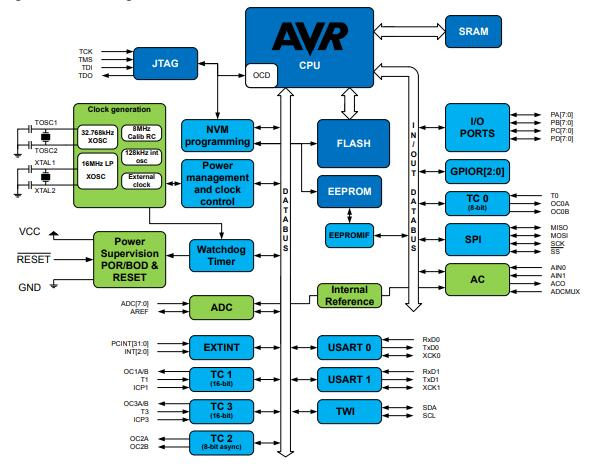
ATMEGA1284P-PU Block Diagram

ATMEGA1284P-PU Manufacturer

Microchip Technology Incorporated is a major producer of embedded control solutions that are smart, connected, and secure. Customers can generate optimal designs with its easy-to-use development tools and extensive product selection, which decrease risk while cutting overall system cost and time to market. More than 120,000 customers use the company's solutions in the industrial, automotive, consumer, aerospace and defense, communications, and computing areas. Microchip provides excellent technical support as well as consistent delivery and quality.

ATMEGA1284P-PU vs ATMEGA1284-PU

  ATmega1284 ATmega1284P
DigitalTimerQty_16bit 2 2
Max 8 Bit Digital Timers 2 2
Ethernet None None
I2C 1 1
Program Memory Type Flash Flash
mtrlcntrlinputcapture 1 1
ADC Channels 8 8
Low Power No Yes
Operating Voltage 1.8 - 5.5 1.8 - 5.5
output-comparator PWM 6 6
Pin Count 44 44
SPI 3 3
Temp Range (°C) -125 -125
USART 10 2

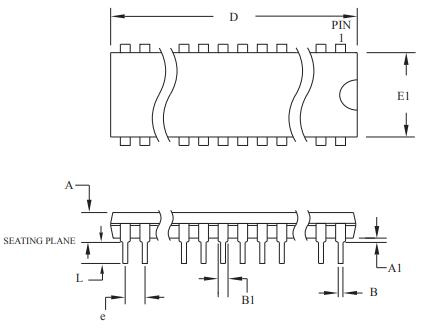
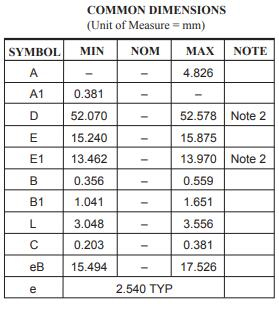
ATMEGA1284P-PU Package

Datasheet PDF

ATMEGA1284P-PU Documents

Download datasheets and manufacturer documentation for ATMEGA1284P-PU

Frequently Asked Questions

How do I use the ATMEGA328P with the Arduino IDE?
The ATmega1284P is a desirable chip to work with: it provides a generous 128 Kbytes of flash memory, 4 Kbytes of EEPROM, and 16 Kbytes RAM, twice as much RAM as the ATmega2560. It also has the advantage that it's available in a DIP package, so it fits on a prototyping board and is easy to wire up, and is nearly half the price of the ATmega2560.
How to upload a program on an atmega128P?
Select the ATmega1284 @ 1 MHz (internal oscillator; BOD disabled) option on the Boards menu which is the default fuse setting on new ATmega1284s. Then upload the program using the Tiny AVR Programmer Board (see ATtiny-Based Beginner's Kit ): Connecting the Tiny AVR Programmer Board to an ATmega1284 for ISP programming.
How do I burn an ATMEGA328P bootloader?
Once you have the Mighty 1284P platform set up, burning a bootloader is trivial. Follow the Arduino ISP instructions. You first burn the “Arduino ISP” sketch onto a regular Ardunio. Then change the “Boards” setting to the Mighty 1284P, hook up the ‘Arduino’ connections in the schematic above, choose “Tools > Programmer > Arduino as ISP” from the IDE, and then “Tools > Burn bootloader.” To verify that it worked, move the LED to pin 1, and power cycle the breadboard. When the bootloader starts it flashes pin 1.
Which is the default fuse setting on atmega1284P?
Here's a Blink program for use with the empty core, using an LED connected via a 220Ω resistor to digital I/O pin PD5 (pin 19): Select the ATmega1284P @ 1 MHz (internal oscillator; BOD disabled) option on the Boards menu which is the default fuse setting on new ATmega1284P.
FAQ
How do I use the ATMEGA328P with the Arduino IDE?
The ATmega1284P is a desirable chip to work with: it provides a generous 128 Kbytes of flash memory, 4 Kbytes of EEPROM, and 16 Kbytes RAM, twice as much RAM as the ATmega2560. It also has the advantage that it's available in a DIP package, so it fits on a prototyping board and is easy to wire up, and is nearly half the price of the ATmega2560.
How to upload a program on an atmega128P?
Select the ATmega1284 @ 1 MHz (internal oscillator; BOD disabled) option on the Boards menu which is the default fuse setting on new ATmega1284s. Then upload the program using the Tiny AVR Programmer Board (see ATtiny-Based Beginner's Kit ): Connecting the Tiny AVR Programmer Board to an ATmega1284 for ISP programming.
How do I burn an ATMEGA328P bootloader?
Once you have the Mighty 1284P platform set up, burning a bootloader is trivial. Follow the Arduino ISP instructions. You first burn the “Arduino ISP” sketch onto a regular Ardunio. Then change the “Boards” setting to the Mighty 1284P, hook up the ‘Arduino’ connections in the schematic above, choose “Tools > Programmer > Arduino as ISP” from the IDE, and then “Tools > Burn bootloader.” To verify that it worked, move the LED to pin 1, and power cycle the breadboard. When the bootloader starts it flashes pin 1.
Which is the default fuse setting on atmega1284P?
Here's a Blink program for use with the empty core, using an LED connected via a 220Ω resistor to digital I/O pin PD5 (pin 19): Select the ATmega1284P @ 1 MHz (internal oscillator; BOD disabled) option on the Boards menu which is the default fuse setting on new ATmega1284P.

TAGS

Share