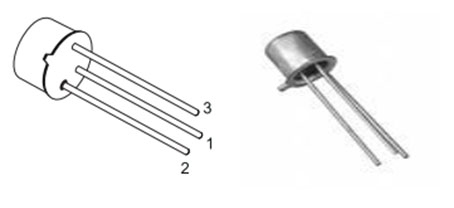
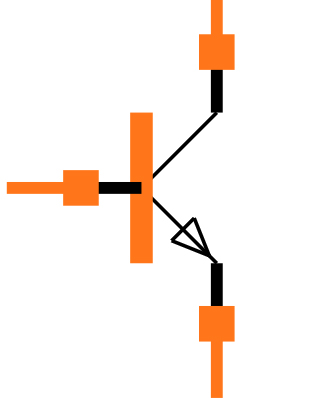
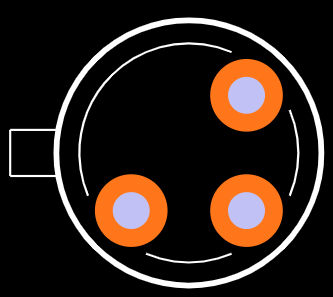
BC107 is a low-power NPN bipolar junction transistor, which is packaged in a TO-18 metal can. It is mainly designed for general switching and amplification purposes. It is mainly composed of three terminals, which are called emitter, base, and collector.
As a current control device, the small current on the base side is used to control the large current on the emitter and collector sides. When a voltage is applied to the base terminal, it will be biased and draw current and begin to control the large current on the emitter and collector sides.
The movement of electrons plays an important role in the conductivity of any transistor. BC107 is a bipolar junction transistor in which conductivity is achieved by two charge carriers including electrons and holes, but most of the charge carriers are electrons.
The free movement of electrons is like a bridge between the emitter and the collector. The emitter emits electrons, which are then collected by the collector. Bases are used to control the number of electrons. Since it is an NPN transistor, the base is extremely positive relative to the emitter.
The function and doping concentration of the emitter, base, and collector are different. Compared with the base and collector, the emitter is highly doped. And the voltage on the collector side is much greater than the base voltage. When two diodes are connected back to back, they form a bipolar junction transistor.