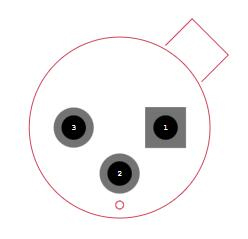
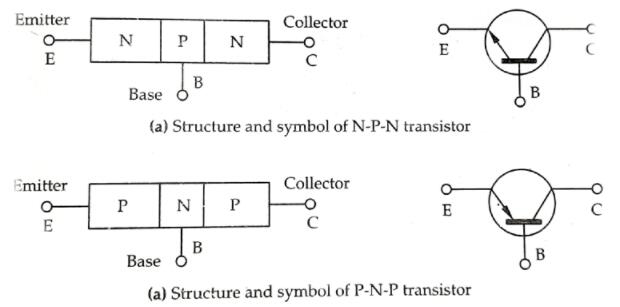
Transistors, unlike MOSFETs, are current-controlled devices that may be turned on or off by delivering the required base current (for BC180 transistor it is 2mA). The BC550 is an NPN transistor, which means it will remain open while no current is provided to its base, but will flip on when a base voltage is applied. The following simulated circuit shows how this transistor operates when the base current is applied and when the base current is not applied.
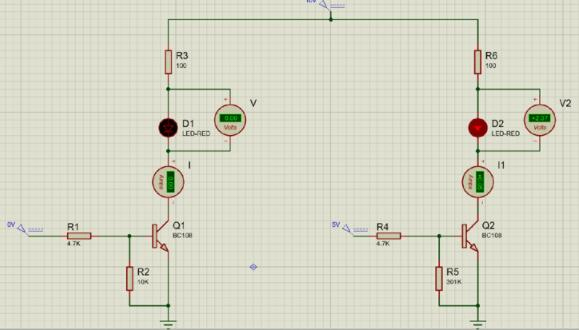
BC108 Application Circuit
When we switch on the transistor by giving the requisite current to its base, it will stay on until the voltage at the transistor's base approaches zero. The transistor's base cannot be left floating because this could cause false triggering, which could cause problems in the circuit. To remedy this problem, we must employ pulldown resistors; for example, in the example above, a 10K resistor is used to pull down the transistor's base.