DC Power Switching
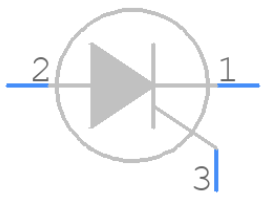
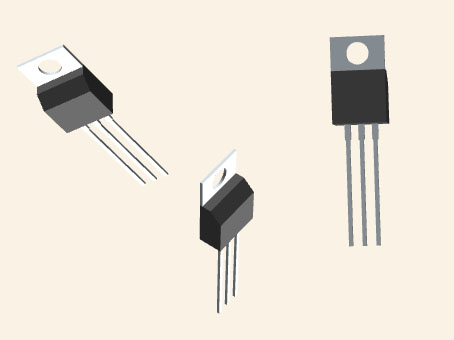
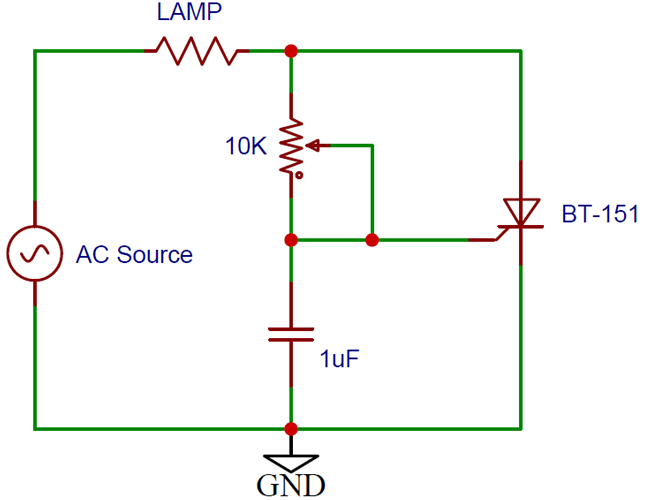
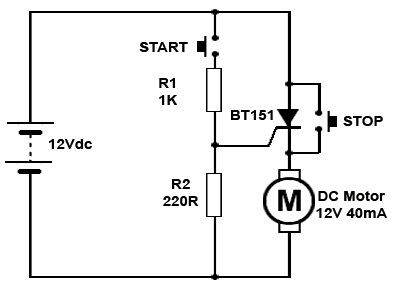
Thyristors can switch low voltage low current devices as well as extremely large currents at mains (line) voltages, and they can regulate AC or DC loads. The image above shows a simple example of a thyristor managing a DC load, such as a small DC motor. A BT151 thyristor is used to link the motor to a 12V DC supply, however, it will not run until the thyristor is made to conduct. This is accomplished by briefly shutting the start switch, which sends a pulse of current to the thyristor's gate terminal. The motor now runs as soon as the thyristor is turned on, and its resistance has plummeted.
There is no gate current when the start switch returns to its normally open state, but the thyristor continues to conduct, and in a DC circuit, the current continues to flow and the motor continues to drive. Any subsequent operations on the start switch are now ineffective. Only if the current flow falls below the thyristor's holding current threshold will the thyristor turn off.
This is accomplished by briefly shutting the stop switch, which shorts out the thyristor. Because the SCR current is now less than the holding current value, the circuit current now passes through the stop switch rather than the thyristor, which turns off instantly. A normally closed switch in series with the thyristor may also be used to stop the motor. When pressed, the normally closed switch would also momentarily stop current flow through the thyristor, allowing the thyristor to turn off.