Bell-output Fire-alarms
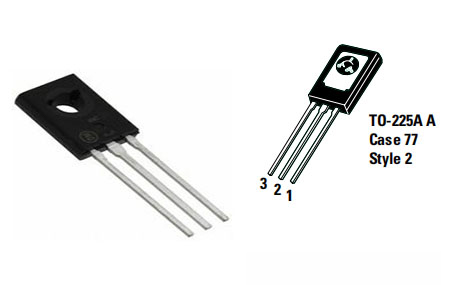
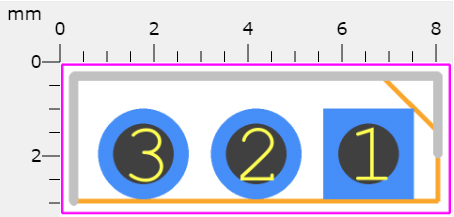
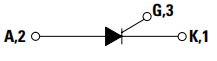
An SCR (C106D), rather than a relay, can occasionally be used to trigger bell-output fire alarms. The following figure depicts a typical circuit of this type. A standard self-interrupting alarm bell is connected in series with the SCR anode, and gate current is drawn from the positive supply line via the thermostats and current-limiting resistor R1. When the thermostats are open, the SCR and bell are turned off, and the circuit only leaks a little amount of current. When the temperature rises above a certain point, the thermostats close and provide gate current to the SCR via R1, causing the alarm to sound.
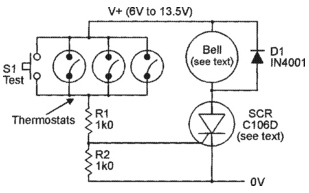
SCR-aided Non-latching Fire Alarm
The non-latching form of operation is achieved using the basic Figure circuit. By connecting shunt resistor R3 across the bell as shown in Figure below, the circuit can be made self-latching, ensuring that the SCR's(C106D) anode current does not fall below its latching value when the bell enters self-interrupting mode. The circuit can be reset or unlatched by wiring the push-button switch S2 in series with R3.

SCR-aided Self-latching Fire Alarm
The alarm bell should be chosen with this factor in mind because the SCR used in the two Figure circuits above has a current rating of only 2A. SCRs with a greater current rating can be used instead of the device depicted, however, this will likely entail changes to the R1 and R3 values in the circuits. When the SCR is turned on, about 1V is lost across it, so the circuit's supply line voltage should be about 1V higher than the bell's nominal working voltage.