ATTENTION: Due to increased demand and order volume, processing time may take an additional 1-3 business days.
HomeCommunitySubjectCC2541 MCU: Pinout, Circuit, Application

CC2541 MCU: Pinout, Circuit, Application

Bluetooth v4.0 (BLE) SMART SOC Class II 2Mbps Automotive 40-Pin VQFN EP T/R

95

Aug 12, 2021

Zoe Hazlitt

DEMO: Arduino, CC2541 (AT-09, HM10) Bluetooth-Module BLE and 'ATOM FAST' App as a geiger counter


Bluetooth v4.0 (BLE) SMART SOC Class II 2Mbps Automotive 40-Pin VQFN EP T/R

The CC2541 is a power-optimized true system-on-chip (SoC) solution for both Bluetooth low energy and proprietary 2.4-GHz applications.

CC2541F256TRHARQ1

2500In Stock
Min.: 1 Mult.: 1
Quantity Unit Price Ext. Price
1+ $25.16093$25.16
10+ $23.73672$237.37
100+ $22.39314$2239.31
500+ $21.1256$10562.8
1000+ $19.92981$19929.81
Unit Price:$25.16093
Subtotal: $25.16
Looking for a better price? Want a lower wholesale price? Please send an RFQ, and we will respond immediately.
Quick Links

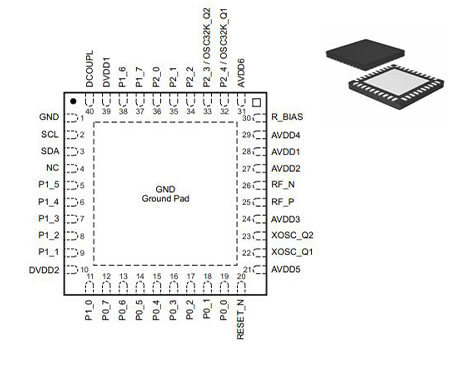
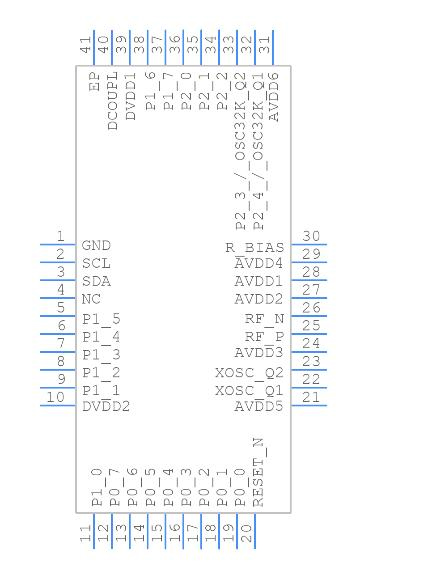
CC2541 Pinout

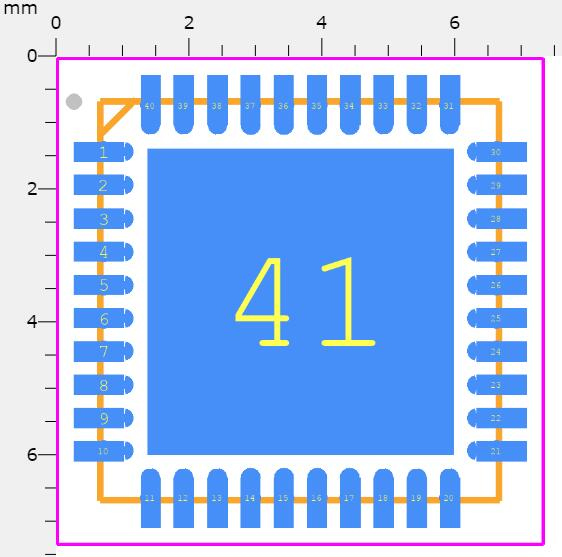
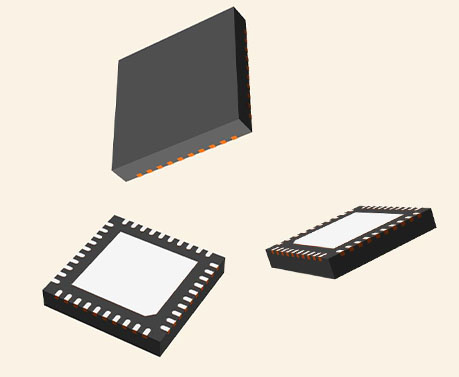
CC2541 CAD Model

Symbol


Footprint


3D Model

CC2541 Description

The CC2541 is a power-optimized true system-on-chip (SoC) solution for both Bluetooth low energy and proprietary 2.4-GHz applications. It enables robust network nodes to be built with low total bill-of-material costs. It combines the excellent performance of a leading RF transceiver with an industry-standard enhanced 8051 MCU, in-system programmable flash memory, 8-KB RAM, and many other powerful supporting features and peripherals. 

CC2541 Features

  •   RF

o    2.4-GHz Bluetooth low energy Compliant and Proprietary RF System-on-Chip

o    Supports 250-kbps, 500-kbps, 1-Mbps, 2-Mbps Data Rates

o    Excellent Link Budget, Enabling Long-Range Applications Without External Front End

o    Programmable Output Power up to 0 dBm

o    Excellent Receiver Sensitivity (–94 dBm at 1 Mbps), Selectivity, and Blocking Performance

o    Suitable for Systems Targeting Compliance With Worldwide Radio Frequency Regulations: ETSI EN 300 328 and EN 300 440 Class 2 (Europe), FCC CFR47 Part 15 (US), and ARIB STD-T66 (Japan)

·         2.4-GHz Bluetooth low energy Compliant and Proprietary RF System-on-Chip

·         Supports 250-kbps, 500-kbps, 1-Mbps, 2-Mbps Data Rates

·         Excellent Link Budget, Enabling Long-Range Applications Without External Front End

·         Programmable Output Power up to 0 dBm

·         Excellent Receiver Sensitivity (–94 dBm at 1 Mbps), Selectivity, and Blocking Performance

·         Suitable for Systems Targeting Compliance With Worldwide Radio Frequency Regulations: ETSI EN 300 328 and EN 300 440 Class 2 (Europe), FCC CFR47 Part 15 (US), and ARIB STD-T66 (Japan)

  •    Layout

o    Few External Components

o    Reference Design Provided

o    6-mm × 6-mm QFN-40 Package

o    Pin-Compatible With CC2540 (When Not Using USB or I2C)

·         Few External Components

·         Reference Design Provided

·         6-mm × 6-mm QFN-40 Package

·         Pin-Compatible With CC2540 (When Not Using USB or I2C)

·         Low Power

o    Active-Mode RX Down to: 17.9 mA

o    Active-Mode TX (0 dBm): 18.2 mA

o    Power Mode 1 (4-µs Wake-Up): 270 µA

o    Power Mode 2 (Sleep Timer On): 1 µA

o    Power Mode 3 (External Interrupts): 0.5 µA

o    Wide Supply-Voltage Range (2 V–3.6 V)

·         Active-Mode RX Down to: 17.9 mA

·         Active-Mode TX (0 dBm): 18.2 mA

·         Power Mode 1 (4-µs Wake-Up): 270 µA

·         Power Mode 2 (Sleep Timer On): 1 µA

·         Power Mode 3 (External Interrupts): 0.5 µA

·         Wide Supply-Voltage Range (2 V–3.6 V)

·         TPS62730 Compatible Low Power in Active Mode

o    RX Down to: 14.7 mA (3-V supply)

o    TX (0 dBm): 14.3 mA (3-V supply)

·         RX Down to: 14.7 mA (3-V supply)

·         TX (0 dBm): 14.3 mA (3-V supply)

·         Microcontroller

o    High-Performance and Low-Power 8051 Microcontroller Core With Code Prefetch

o    In-System-Programmable Flash, 128- or 256-KB

o    8-KB RAM With Retention in All Power Modes

o    Hardware Debug Support

o    Extensive Baseband Automation, Including Auto-Acknowledgment and Address Decoding

o    Retention of All Relevant Registers in All Power Modes

·         High-Performance and Low-Power 8051 Microcontroller Core With Code Prefetch

·         In-System-Programmable Flash, 128- or 256-KB

·         8-KB RAM With Retention in All Power Modes

·         Hardware Debug Support

·         Extensive Baseband Automation, Including Auto-Acknowledgment
and Address Decoding

·         Retention of All Relevant Registers in All Power Modes

·         Peripherals

o    Powerful Five-Channel DMA

o    General-Purpose Timers (One 16-Bit, Two 8-Bit)

o    IR Generation Circuitry

o    32-kHz Sleep Timer With Capture

o    Accurate Digital RSSI Support

o    Battery Monitor and Temperature Sensor

o    12-Bit ADC With Eight Channels and Configurable Resolution

o    AES Security Coprocessor

o    Two Powerful USARTs With Support for Several Serial Protocols

o    23 General-Purpose I/O Pins
(21 × 4 mA, 2 × 20 mA)

o    I2C interface

o    2 I/O Pins Have LED Driving Capabilities

o    Watchdog Timer

o    Integrated High-PerformanceComparator

·         Powerful Five-Channel DMA

·         General-Purpose Timers (One 16-Bit, Two 8-Bit)

·         IR Generation Circuitry

·         32-kHz Sleep Timer With Capture

·         Accurate Digital RSSI Support

·         Battery Monitor and Temperature Sensor

·         12-Bit ADC With Eight Channels and Configurable Resolution

·         AES Security Coprocessor

·         Two Powerful USARTs With Support for Several Serial Protocols

·         23 General-Purpose I/O Pins(21 × 4 mA, 2 × 20 mA)

·         I2C interface

·         2 I/O Pins Have LED Driving Capabilities

·         Watchdog Timer

·         Integrated High-PerformanceComparator

·         Development Tools

o    CC2541 Evaluation Module Kit (CC2541EMK)

o    CC2541 Mini Development Kit (CC2541DK-MINI)

o    SmartRF™ Software

o    IAR Embedded Workbench™ Available

·         CC2541 Evaluation Module Kit (CC2541EMK)

·         CC2541 Mini Development Kit (CC2541DK-MINI)

·         SmartRF™ Software

·         IAR Embedded Workbench™ Available

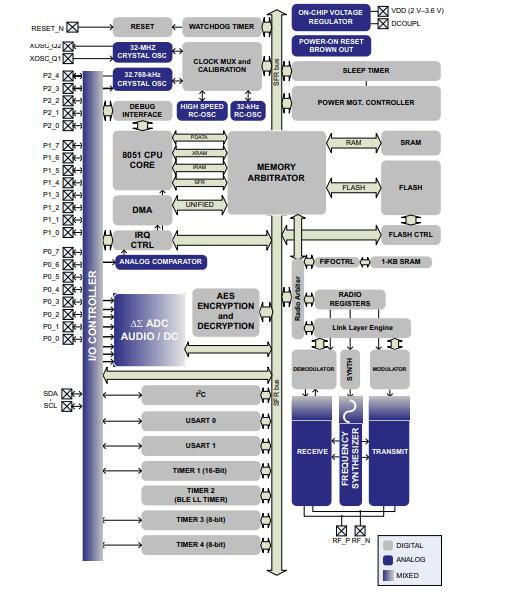
CC2541 Block Diagram

The CC2541 is highly suited for systems where ultralow power consumption is required. This is specified by various operating modes. Short transition times between operating modes further enable low power consumption.

The simplified block diagram is given below.

The modules can be roughly divided into one of three categories: CPU-related modules; modules related to power, test, and clock distribution, and radio-related modules.


Specifications

Texas Instruments CC2541F256TRHARQ1 technical specifications, attributes, parameters and parts with similar specifications to Texas Instruments CC2541F256TRHARQ1.

CC2541F256TRHARQ1 Tech Specifications

Texas Instruments CC2541F256TRHARQ1 technical specifications, attributes, parameters and parts with similar specifications to Texas Instruments CC2541F256TRHARQ1.

Product Attribute Attribute Value
Lifecycle StatusACTIVE (Last Updated: 5 days ago)
Factory Lead Time12 Weeks
Contact PlatingGold
MountSurface Mount
Mounting TypeSurface Mount
Package / Case40-VFQFN Exposed Pad
Number of Pins40Pins
Operating Temperature-40°C~105°C
PackagingTape & Reel (TR)
SeriesAutomotive, AEC-Q100
JESD-609 Codee4
Pbfree Codeyes
Part StatusActive
Moisture Sensitivity Level (MSL)3 (168 Hours)
Number of Terminations40Terminations
ECCN Code5A992.C
Product Attribute Attribute Value
TypeTxRx + MCU
Voltage - Supply2V~3.6V
Terminal PositionQUAD
Terminal FormNO LEAD
Peak Reflow Temperature (Cel)260
Number of Functions1Function
Supply Voltage3V
Terminal Pitch0.5mm
Frequency2.4GHz
Time@Peak Reflow Temperature-Max (s)NOT SPECIFIED
Base Part NumberCC2541
InterfaceI2C, SPI, USART
Memory Size256kB Flash 8kB RAM
RAM Size8kB
Density1002 Mb
ProtocolBluetooth v4.0
Product Attribute Attribute Value
Power - Output0dBm
RF Family/StandardBluetooth
Number of UART Channels1UART Channel
Data Rate (Max)2Mbps
Serial InterfacesI2C, SPI, USART
Current - Receiving18.3mA~20.8mA
Current - Transmitting17.2mA~18.6mA
ModulationGFSK, MSK
Sensitivity (dBm)-94 dBm
GPIO23
Height1mm
Length6mm
Width6mm
Thickness900μm
RoHS StatusROHS3 Compliant
Lead FreeLead Free
0 Products View Similar

CC2541 Application

• 2.4-GHz Bluetooth low energy Systems

• Proprietary 2.4-GHz Systems

• Human-Interface Devices (Keyboard, Mouse, Remote Control)

• Sports and Leisure Equipment

• Mobile Phone Accessories

• Consumer Electronics

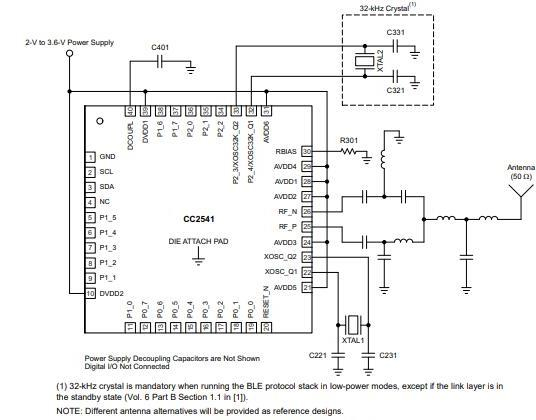
CC2541 Typical Application Circuit

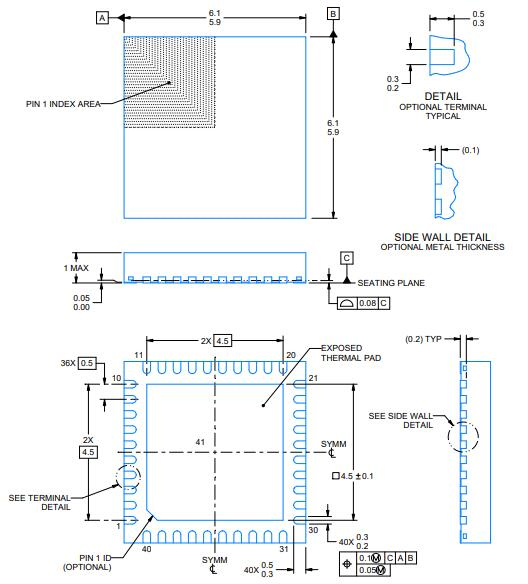
CC2541 Package

CC2541 Manufacturer

As a global semiconductor company operating in 35 countries, Texas Instruments (TI) is first and foremost a reflection of its people. From the TIer who unveiled the first working integrated circuit in 1958 to the more than 30,000 TIers around the world today who design, manufacture and sell analogue and embedded processing chips, TIers are problem-solvers collaborating to change the world through technology.

Datasheet PDF

Download datasheets and manufacturer documentation for Texas Instruments CC2541F256TRHARQ1.

CC2541F256TRHARQ1 Documents

Download datasheets and manufacturer documentation for CC2541F256TRHARQ1

Frequently Asked Questions

What is CC2541?
The CC2541 is a power-optimized true system-on-chip (SoC) solution for both Bluetooth low energy and proprietary 2.4-GHz applications. Compared to the CC2540, the CC2541 provides lower RF current consumption. The CC2541 does not have the USB interface of the CC2540 and provides lower maximum output power in TX mode.
What is TPS62730 and What is the relationship between CC2541 and TPS62730?
• TPS62730 is a 2-MHz Step-Down Converter Single-Mode • Extends Battery Lifetime by up to 20% • Reduced Current in All Active Modes • 30-nA Bypass Mode Current to Support Power Modes Roles • RF Performance Unchanged • Small Package Allows for Small Solution Size • CC2541 Controllable
FAQ
What is CC2541?
The CC2541 is a power-optimized true system-on-chip (SoC) solution for both Bluetooth low energy and proprietary 2.4-GHz applications. Compared to the CC2540, the CC2541 provides lower RF current consumption. The CC2541 does not have the USB interface of the CC2540 and provides lower maximum output power in TX mode.
What is TPS62730 and What is the relationship between CC2541 and TPS62730?
• TPS62730 is a 2-MHz Step-Down Converter Single-Mode • Extends Battery Lifetime by up to 20% • Reduced Current in All Active Modes • 30-nA Bypass Mode Current to Support Power Modes Roles • RF Performance Unchanged • Small Package Allows for Small Solution Size • CC2541 Controllable

TAGS

Share