ATTENTION: Due to increased demand and order volume, processing time may take an additional 1-3 business days.
HomeCommunitySubjectCP2102 Bridge Driver: Alternative, Pinout and Datasheet

CP2102 Bridge Driver: Alternative, Pinout and Datasheet

SILICON LABS - CP2102-GM - USB Interface, USB-to-UART BRIDGE, USB 2.0, 3 V, 3.6 V, QFN, 28 Pins

288

Jul 8, 2021

Odelia Coleridge

Arduino Mini Pro CP2102 USB to TTL - Tutorial


SILICON LABS - CP2102-GM - USB Interface, USB-to-UART BRIDGE, USB 2.0, 3 V, 3.6 V, QFN, 28 Pins

CP2102 is a highly integrated USB to UART bridge driver. This article mainly introduce its alternatives, pinout, datasheet and other detailed information about Silicon Labs CP2102.

CP2102-GM

1500In Stock
Min.: 1 Mult.: 1
Quantity Unit Price Ext. Price
1+ $6.82829$6.83
10+ $6.44178$64.42
100+ $6.07715$607.71
500+ $5.73316$2866.58
1000+ $5.40864$5408.64
Unit Price:$6.82829
Subtotal: $6.83
Looking for a better price? Want a lower wholesale price? Please send an RFQ, and we will respond immediately.
Quick Links

CP2102 Description

The CP2102 is a highly integrated USB to UART bridge controller, which provides a simple solution for updating RS-232 Design to USB uses the least components and PCB space. CP2102 includes a USB 2.0 full-speed function controller, USB transceiver, oscillator, EEPROM or EPROM, and asynchronous serial data bus(UART) has complete modem control signals in a compact 5 x 5 mm QFN-28 package. Other external USB Components are not required.

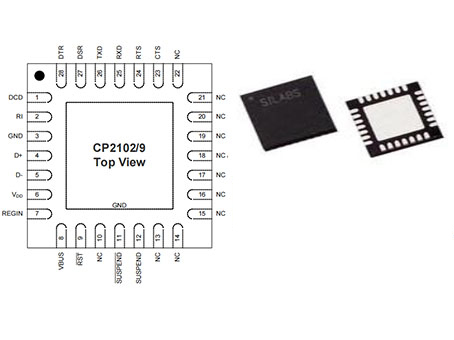
CP2102 Pinout

Pin Description

CP2102 CAD Model

Symbol


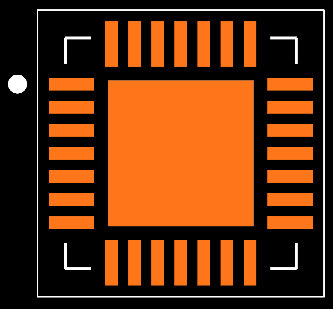
Footprint


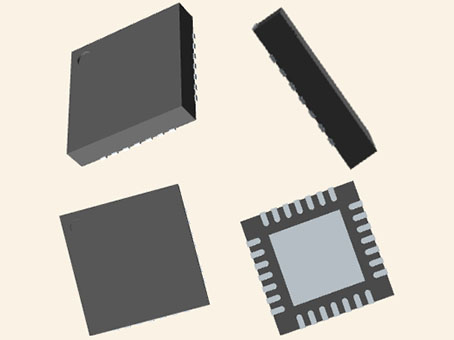
3D Model

CP2102 Features

•  The stable and reliable chipset CP2102.

•  USB specification 2.0 is compatible with full speed 12Mbps.

•  Standard USB Type A male header and TTL 6-pin connector.

•  Exchange information and modem interface signals throughout the process

•  Baud rate: 300 bps to 1 Mbps.

•  Byte receiving buffer; 640 byte transmission buffer.

•  Support hardware or X-On/X-Off exchange process.

•  Work with existing COM port PC applications

Specifications

Silicon Labs CP2102-GM technical specifications, attributes, parameters and parts with similar specifications to Silicon Labs CP2102-GM.

CP2102-GM Tech Specifications

Silicon Labs CP2102-GM technical specifications, attributes, parameters and parts with similar specifications to Silicon Labs CP2102-GM.

Product Attribute Attribute Value
Factory Lead Time6 Weeks
Contact PlatingTin
Package / Case28-VFQFN Exposed Pad
Number of Pins28Pins
Supplier Device Package28-QFN (5x5)
Weight67.75536mg
Operating Temperature-40°C~85°C
PackagingTube
Published1997
Part StatusNot For New Designs
Moisture Sensitivity Level (MSL)1 (Unlimited)
Max Operating Temperature85°C
Min Operating Temperature-40°C
Product Attribute Attribute Value
Voltage - Supply3V~3.6V
Base Part NumberCP2102
FunctionBridge, USB to UART
Operating Supply Voltage3.3V
Number of Channels1Channel
InterfaceUART
Max Supply Voltage3.6V
Min Supply Voltage3V
Operating Supply Current20mA
Number of Ports1Port
Nominal Supply Current26mA
Current - Supply20mA
Data Rate1 Mbps
Product Attribute Attribute Value
ProtocolUSB
Number of Transceivers1Transceiver
USBUSB 2.0
StandardsUSB 2.0
Height880μm
Length5mm
Width5mm
REACH SVHCUnknown
Radiation HardeningNo
RoHS StatusRoHS Compliant
Lead FreeLead Free
0 Products View Similar

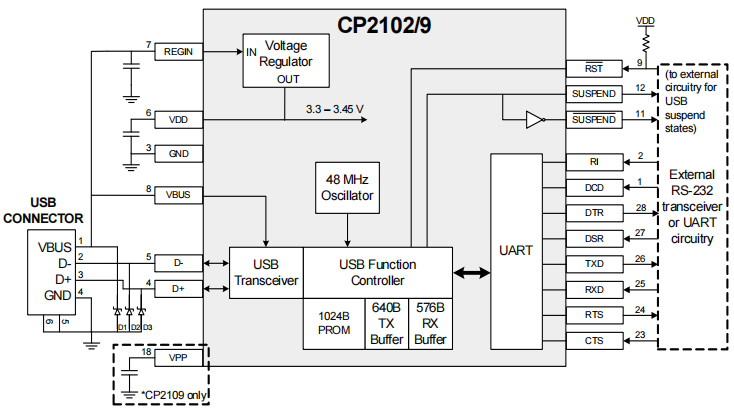
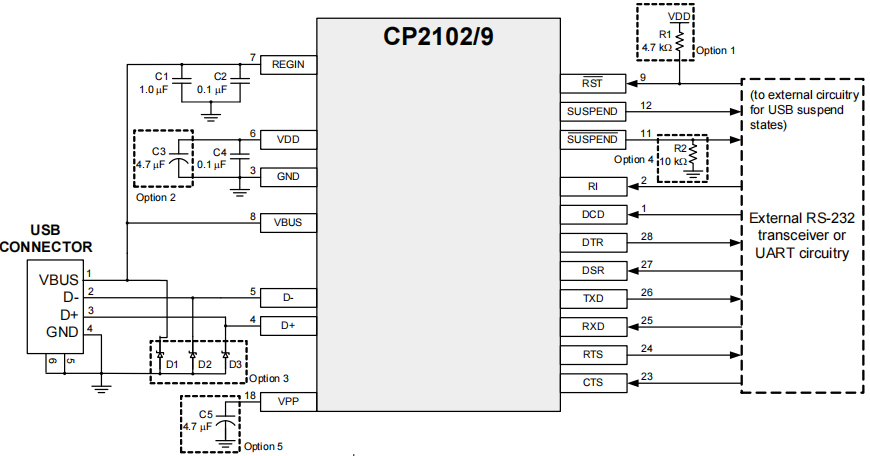
CP2102 Example System Diagram

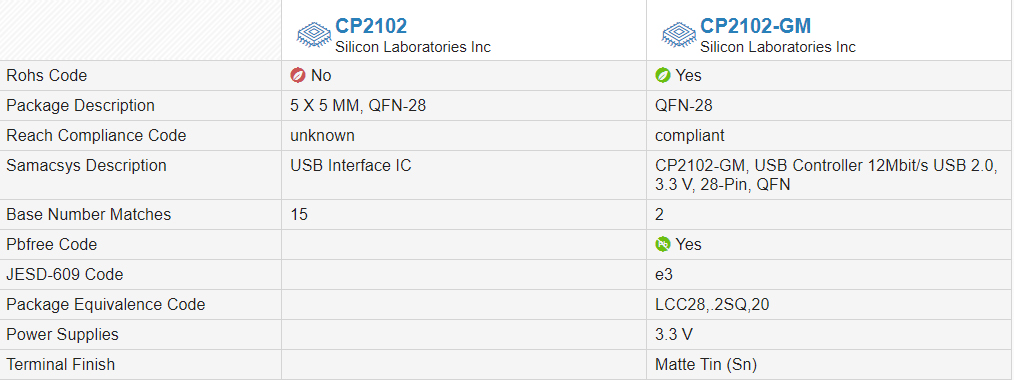
CP2102 Alternative

CP2102 Applications

1. Debugging purposes in development

2. Microcontroller and PC communication

3. Programming related uses

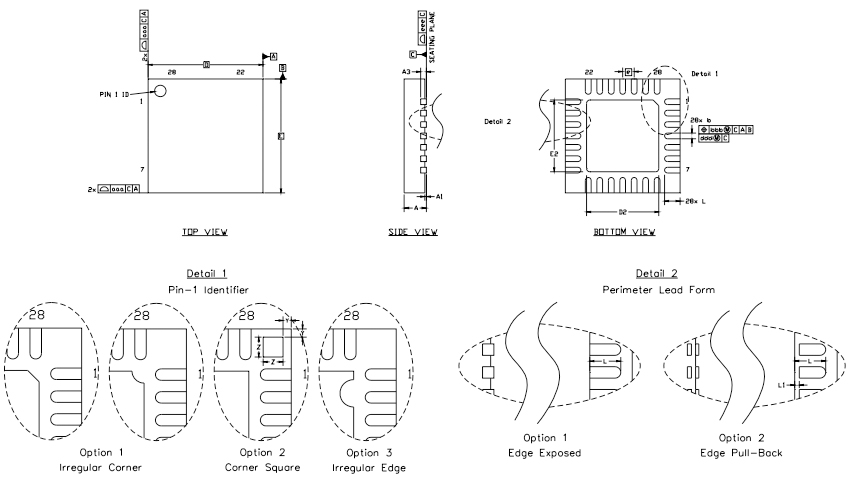
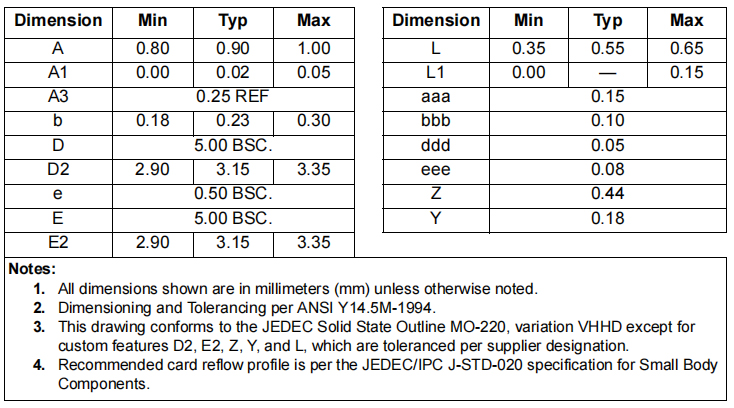
CP2102 Package

Package Drawing

Package Dimensions

CP2102 Manufacturer

Silicon Laboratories, Inc. (Silicon Labs) is a fabless global technology company that designs and manufactures semiconductors, other silicon devices and software, and sells them to Internet of Things (IoT) infrastructure, industrial automation, consumer and electronic products Electronic design engineers and manufacturers in the field. The global automotive market.

Its headquarter is located in Austin, Texas, USA. The company focuses on microcontrollers (MCU), wireless system-on-chips (SoC), timing devices, digital isolation devices, sensors, and broadcast equipment. The company also produces software stacks, including firmware libraries and protocol-based software, and a free software development platform called Simplicity Studio.

Datasheet PDF

Download datasheets and manufacturer documentation for Silicon Labs CP2102-GM.

CP2102-GM Documents

Download datasheets and manufacturer documentation for CP2102-GM

Frequently Asked Questions

1.What is CP2102?
SiLabs' CP2102 chip is a single-chip USB to UART bridge IC. It requires minimal external components. CP2102 can be used to migrate traditional serial port-based devices to USB. Hobbyists can use it as a powerful tool for making various PC interface projects.
2.Do I need external pull-up resistors for UART lines in CP2102?
TXD is described as "asynchronous data output". It can be push-pull (no pull-ups required) or open drain (pull-ups required). But RST is described as "open drain". This means that any output not explicitly described will be push-pull. Therefore, no pull-up is required on TXD. On the other hand, RXD is an input. Whether it needs to be pulled up does not depend on the CP2102, but on what it is connected to. In a typical application, CP2102 TXD and RXD lines will be connected to RS232 transceivers, such as MAX232. MAX232 uses push-pull output, no pull-up is required.
3.How do I solve CP2102 detection problem in windows 8.1?
Try to connect CP2102 to a laptop or PC without an esp module. It should list the device on the device manager. If this does not solve the problem, please try to connect the CP2102 to the USB port on the laptop (this solution is only available for laptops)
4.What is a CP2102 driver?
CP2102 is Silicon Labs' USB to UART IC. UART stands for Universal Asynchronous Receiver/Transmitter. It is not a communication protocol like SPI and I2C, but a physical circuit in a microcontroller, or an independent IC. The main purpose of UART is to send and receive serial data. One of the best things about UART is that it only uses two wires to transfer data between devices.
5.What is the difference between CP2102 and CP2101?
The main reason is that the size of the internal EEPROM is different, CP2101 is 512 bytes, and the latter is 102 bytes. EEPROM is used to store product manufacturer ID, product ID, serial number, power supply parameter version number and product description. Programming via USB is of little significance to ordinary users.
6.What is the difference between CP2102 and MAX232?
CP2102 is USB to RS232 MAX232 is the standard RS232 level and TTL level conversion
7.What are the characteristics of CP2102?
(1). Built-in USB transceiver, no external circuit device is needed (2). Contains a clock circuit, no external circuit device is required (3). Built-in power-on reset circuit (4). On-chip voltage regulation can output 3.3V voltage (5). Meet the requirements of USB2.0 specification (6). The SUSPEND pin supports USB status suspend (7). Asynchronous serial data bus is compatible with all handshake and modulator interface signals (8). The supported data format is data bit 8, stop bit 1, 2 and check bit (9). Connotation of 512-byte receive buffer and 512-byte transmit buffer (10).Support hardware or X-ON/X-OFF handshake
8.Can USB program the MCU through CP2102?
No, CP2102 does not have an external crystal oscillator, and the frequency does not meet the requirements of the microcontroller, so it cannot.
9.How can one computer use multiple CP2102 devices?
Just change the vid and pid names in the eeprom in the chip to different names. If there are two CP2102, just change one of them. Just let the PC distinguish the difference between the two. The vid and pid in the driver also need to be modified accordingly.
10.Which pin of the microcontroller is connected to the DTR of the CP2102?
You can see how many wires are used for the serial control of the single-chip microcomputer, 4 wires DTR connects to the DSR of the single-chip microcomputer, and 2 wires DTR connects to the CTS of the single-chip microcomputer
FAQ
1.What is CP2102?
SiLabs' CP2102 chip is a single-chip USB to UART bridge IC. It requires minimal external components. CP2102 can be used to migrate traditional serial port-based devices to USB. Hobbyists can use it as a powerful tool for making various PC interface projects.
2.Do I need external pull-up resistors for UART lines in CP2102?
TXD is described as "asynchronous data output". It can be push-pull (no pull-ups required) or open drain (pull-ups required). But RST is described as "open drain". This means that any output not explicitly described will be push-pull. Therefore, no pull-up is required on TXD. On the other hand, RXD is an input. Whether it needs to be pulled up does not depend on the CP2102, but on what it is connected to. In a typical application, CP2102 TXD and RXD lines will be connected to RS232 transceivers, such as MAX232. MAX232 uses push-pull output, no pull-up is required.
3.How do I solve CP2102 detection problem in windows 8.1?
Try to connect CP2102 to a laptop or PC without an esp module. It should list the device on the device manager. If this does not solve the problem, please try to connect the CP2102 to the USB port on the laptop (this solution is only available for laptops)
4.What is a CP2102 driver?
CP2102 is Silicon Labs' USB to UART IC. UART stands for Universal Asynchronous Receiver/Transmitter. It is not a communication protocol like SPI and I2C, but a physical circuit in a microcontroller, or an independent IC. The main purpose of UART is to send and receive serial data. One of the best things about UART is that it only uses two wires to transfer data between devices.
5.What is the difference between CP2102 and CP2101?
The main reason is that the size of the internal EEPROM is different, CP2101 is 512 bytes, and the latter is 102 bytes. EEPROM is used to store product manufacturer ID, product ID, serial number, power supply parameter version number and product description. Programming via USB is of little significance to ordinary users.
6.What is the difference between CP2102 and MAX232?
CP2102 is USB to RS232 MAX232 is the standard RS232 level and TTL level conversion
7.What are the characteristics of CP2102?
(1). Built-in USB transceiver, no external circuit device is needed (2). Contains a clock circuit, no external circuit device is required (3). Built-in power-on reset circuit (4). On-chip voltage regulation can output 3.3V voltage (5). Meet the requirements of USB2.0 specification (6). The SUSPEND pin supports USB status suspend (7). Asynchronous serial data bus is compatible with all handshake and modulator interface signals (8). The supported data format is data bit 8, stop bit 1, 2 and check bit (9). Connotation of 512-byte receive buffer and 512-byte transmit buffer (10).Support hardware or X-ON/X-OFF handshake
8.Can USB program the MCU through CP2102?
No, CP2102 does not have an external crystal oscillator, and the frequency does not meet the requirements of the microcontroller, so it cannot.
9.How can one computer use multiple CP2102 devices?
Just change the vid and pid names in the eeprom in the chip to different names. If there are two CP2102, just change one of them. Just let the PC distinguish the difference between the two. The vid and pid in the driver also need to be modified accordingly.
10.Which pin of the microcontroller is connected to the DTR of the CP2102?
You can see how many wires are used for the serial control of the single-chip microcomputer, 4 wires DTR connects to the DSR of the single-chip microcomputer, and 2 wires DTR connects to the CTS of the single-chip microcomputer

TAGS

Share