ATTENTION: Due to increased demand and order volume, processing time may take an additional 1-3 business days.
HomeCommunitySubjectESP-01 Wi-Fi Module: ESP-01 Pinout, Programming and ESP-01 VS ESP8266 [FAQ]

ESP-01 Wi-Fi Module: ESP-01 Pinout, Programming and ESP-01 VS ESP8266 [FAQ]

Evaluation Boards - Embedded - MCU, DSP ESPRUINO PICO STM32F401 EVAL BRD

241

Nov 8, 2021

Candice Emma

Getting Started with ESP 8266 ESP 01 with Arduino IDE | Programming esp-01 with Arduino ide


Evaluation Boards - Embedded - MCU, DSP ESPRUINO PICO STM32F401 EVAL BRD

The ESP-01 WIFI Wireless Transceiver Module is a self-contained SOC with an integrated TCP/IP protocol stack that can give any microcontroller access to your Wi-Fi network. This article is going to explain pinout, programming, specifications, and more details about the ESP-01 WIFI module.

ESP001

Inquiry
Min.: 1 Mult.: 1
Price not displayed? Not available to buy online? Please send an RFQ, and we will respond immediately.
Quick Links

What is ESP-01?

The ESP-01 WIFI Wireless Transceiver Module is a self-contained SOC with an integrated TCP/IP protocol stack that can give any microcontroller access to your Wi-Fi network. 

ESP-01 Pinout

ESP-01 CAD Model

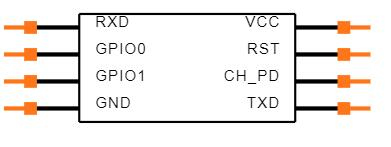
ESP-01 Symbol

ESP-01 Footprint

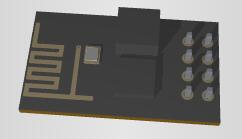
ESP-01 3D Model


Specifications

Pimoroni Ltd ESP001 technical specifications, attributes, parameters and parts with similar specifications to Pimoroni Ltd ESP001.

ESP001 Tech Specifications

Pimoroni Ltd ESP001 technical specifications, attributes, parameters and parts with similar specifications to Pimoroni Ltd ESP001.

Product Attribute Attribute Value
Factory Lead Time5 Weeks
Mounting TypeFixed
SeriesSTM32F4
Part StatusActive
Product Attribute Attribute Value
Moisture Sensitivity Level (MSL)1 (Unlimited)
TypeMCU 32-Bit
Core ProcessorARM® Cortex®-M4
Utilized IC / PartSTM32F401
Product Attribute Attribute Value
ContentsBoard(s)
Board TypeEvaluation Platform
PlatformEspruino Pico
0 Products View Similar

ESP-01 Features

  • 802.11 b/g/n

  • Integrated low power 32-bit MCU

  • Integrated 10-bit ADC

  • Integrated TCP/IP protocol stack 

  • Integrated TR switch, balun, LNA, power amplifier, and matching network

  • Integrated PLL, regulators, and power management units

  • Supports antenna diversity

  • Wi-Fi 2.4 GHz, support WPA/WPA2

  • Support STA/AP/STA+AP operation modes

  • Support Smart Link Function for both Android and iOS devices

  • Support Smart Link Function for both Android and iOS devices

How to use ESP-01 as a Wi-Fi Shield?

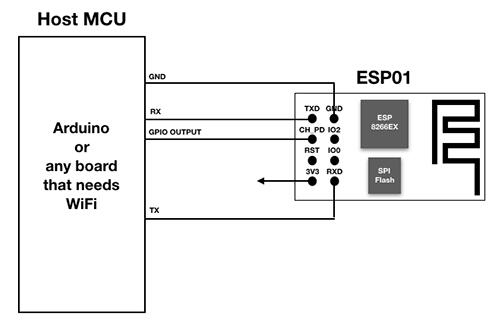
As a result, I devised a better way to utilize the ESP-01 as a  WiFi  shield, in which the ESP-01  is in charge of establishing WiFi and HTTP(S) connections, as seen in "Using the ESP-01  as an Arduino." As a sensor node, a Host  (in my case and STM32 Blue Pill) will communicate with the ESP-01  via a serial interface. This is similar to using the ESP-01  with AT command firmware, except the ESP-01  's firmware is replaced with the Arduino web client, and we can design our communication requests and responses between the serials.

ESP01 connection with Host

ESP-01 VS ESP-01S

ESP-01 VS ESP-01S

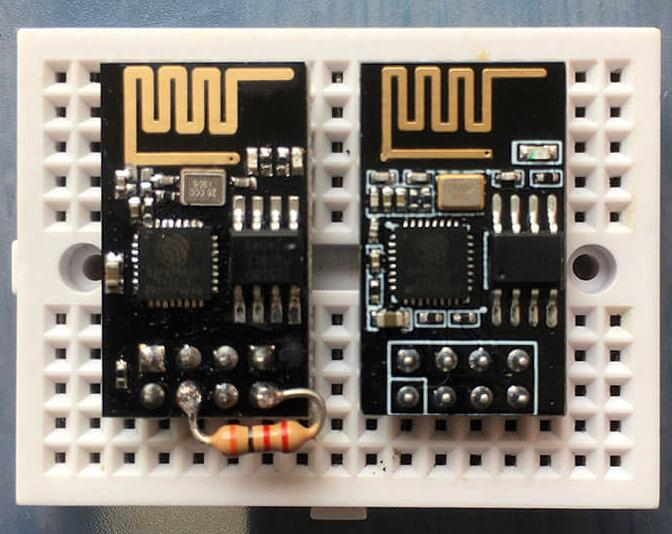
The ESP-01 is on the left, and the ESP-01S is on the right. The ESP-01  includes two LEDs near the PCB antenna, one for the Tx line (GPIO1) and the other for the power indicator. The ESP-01  S, on the other hand, has only one Blue LED and is wired to GPIO2. Two more pull-up resistors were added to the ESP-01  S, which can be seen between the ESP8266EX chip and the header pins. Between the CH PD and 3v3 (VCC) pins is one of the pull-up resistors.


  ESP-01 ESP-01S
  esp01 esp-01   esp8266ex blue 512MB esp01s esp-01s   esp8266ex black 1Mb
Flash Memory 512 Mo 1 Mo
Color Blue Black
Possible   mention AI Cloud Inside S Series
Note   The red (Power) and   blue (WiFi) LEDs are placed next to the antenna engraved on the PCB

ESP-01 Manufacturer

Pimoroni designs manufacture and sell friendly products for Makers, Educators, and Creatives. Founded in 2012 by Jon Williamson and Paul Beech, Pimoroni makes tech treasure for tinkerers. The company started just after Paul won a competition to design the Raspberry Pi logo. Supported by the Raspberry Pi community, as well as the wider Maker community, Pimoroni wants to bring electronics to a larger audience by making electronics accessible and attractive. Pimoroni has seen 80% growth each year since they started and currently employ over 30 people from their headquarters in Sheffield, in the northern UK. This growth has been sustained by selling internationally through more than 50 worldwide distributors. Pimoroni is the largest Adafruit reseller in the UK. When Kickstarter launched their UK site, Pimoroni's Picade (a kit to convert your Raspberry Pi into a desktop arcade machine) was their first project.

Datasheet PDF

ESP001 Documents

Download datasheets and manufacturer documentation for ESP001

Frequently Asked Questions

How Does ESP-01 Work?
The ESP-01 can be controlled from your local Wi-Fi network or the internet (after port forwarding). The ESP-01 module has GPIO pins that can be programmed to turn an LED or a relay ON/OFF through the internet. The module can be programmed using an Arduino/USB-to TTL converter through the serial pins (RX, TX).
What can you do with ESP-01?
The ESP-01 module has GPIO pins that can be programmed to turn an LED or a relay ON/OFF through the internet. The module can be programmed using an Arduino/USB-to-TTL converter through the serial pins (RX, TX).
How can I control ESP 01 without a router?
To control the ESP-01 ESP8266 module without a router or an internet connection, the ESP-01 is placed into AP mode (Access Point mode). A smartphone or a PC with wireless capability is then used to connect to the module. Command codes are then sent to it thru a browser or an application.
How do I connect my ESP-01 to Wi-Fi?
To see if it works, open the Wi-Fi settings on your computer, look for a network called "ESP8266 Access Point", enter the password "there is no spoon", and connect to it. Then open a terminal, and ping to 192.168. 4.1 (this is the default IP address of our ESP AP). You'll see that the ESP responds to your pings.
FAQ
How Does ESP-01 Work?
The ESP-01 can be controlled from your local Wi-Fi network or the internet (after port forwarding). The ESP-01 module has GPIO pins that can be programmed to turn an LED or a relay ON/OFF through the internet. The module can be programmed using an Arduino/USB-to TTL converter through the serial pins (RX, TX).
What can you do with ESP-01?
The ESP-01 module has GPIO pins that can be programmed to turn an LED or a relay ON/OFF through the internet. The module can be programmed using an Arduino/USB-to-TTL converter through the serial pins (RX, TX).
How can I control ESP 01 without a router?
To control the ESP-01 ESP8266 module without a router or an internet connection, the ESP-01 is placed into AP mode (Access Point mode). A smartphone or a PC with wireless capability is then used to connect to the module. Command codes are then sent to it thru a browser or an application.
How do I connect my ESP-01 to Wi-Fi?
To see if it works, open the Wi-Fi settings on your computer, look for a network called "ESP8266 Access Point", enter the password "there is no spoon", and connect to it. Then open a terminal, and ping to 192.168. 4.1 (this is the default IP address of our ESP AP). You'll see that the ESP responds to your pings.

TAGS

Share