ATTENTION: Due to increased demand and order volume, processing time may take an additional 1-3 business days.
HomeCommunitySubjectESP12F: Ai-Thinker, Arduino, Pinout and Datasheet

ESP12F: Ai-Thinker, Arduino, Pinout and Datasheet

ESP-12F WiFi module is developed by Ai-thinker Team. core processor ESP8266 in smaller sizes of the module encapsulates Tensilica L106 integrates industry-leading ultra low power 32-bit MCU micro, with the 16-bit short mode,

400

Feb 7, 2022

Colbert Moses

ESP-12F Minimal System Over The Air (Subtittled)


ESP-12F WiFi module is developed by Ai-thinker Team. core processor ESP8266 in smaller sizes of the module encapsulates Tensilica L106 integrates industry-leading ultra low power 32-bit MCU micro, with the 16-bit short mode, Clock speed support 80 MHz, 160 MHz, supports the RTOS, integrated Wi-Fi MAC/BB/RF/PA/LNA, on-board antenna. This article will introduce more details about ESP-12F, including Description, Absolute Maximum Ratings, Block Diagram, Parameters, Absolute Maximum Ratings, Features, and so on.
ESP-12F(ESP8266MOD)

Inquiry
Min.: 1 Mult.: 1
Price not displayed? Not available to buy online? Please send an RFQ, and we will respond immediately.
Quick Links

ESP-12F Description

The ESP-12F WiFi module was developed by Ai-Thinker Technology. The core processor  ESP8266  integrates the industry-leading Tensilica  L106 ultra-low-power 32-bit micro MCU in a small package with 16-bit Lite mode, clocked at Supports 80 MHz and 160 MHz, supports RTOS, and integrates Wi-Fi MAC/BB/RF/PA/LNA.

The ESP-12F WiFi module supports the standard IEEE802.11 b/g/n protocol, a complete TCP/IP protocol stack. Users can use this module to add networking capabilities to existing devices or to build separate network controllers.

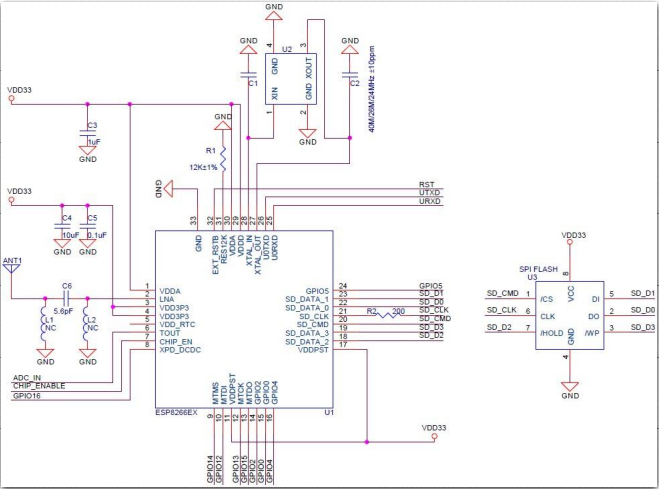
ESP-12F Schematics

ESP-12F Pin Design

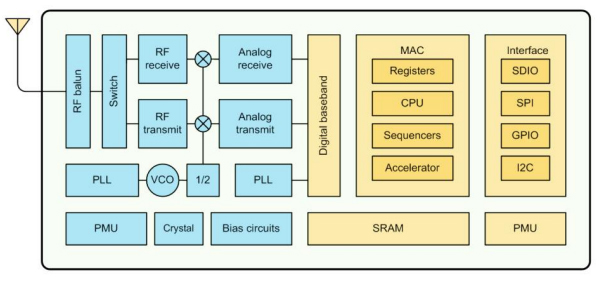
ESP-12F Block Diagram

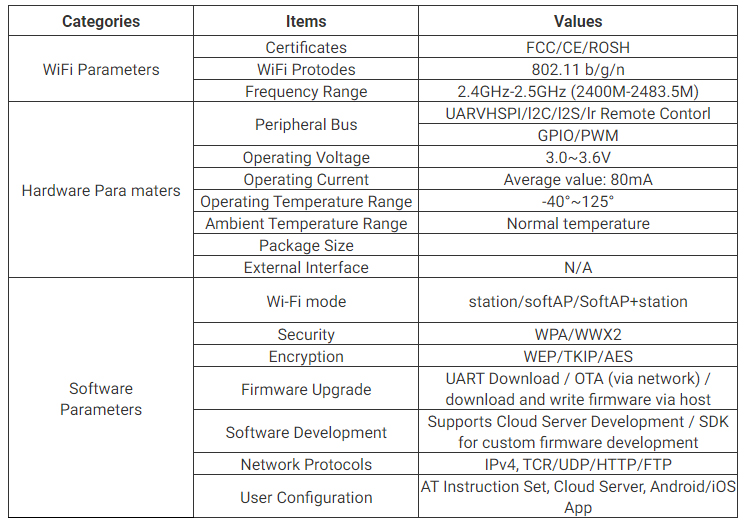
ESP-12F Parameters

ESP-12F Absolute Maximum Ratings

Rating Condition Value Unit
Storage Temperature   -40 to 125 °C
Maximum Soldering Temperature   260 °C
Supply Voltage IPC/JEDECJ-STD-020 +3.0 to +3.6 V

Specifications

ESP-12F(ESP8266MOD) Tech Specifications

Ai-Thinker ESP-12F(ESP8266MOD) technical specifications, attributes, parameters and parts with similar specifications to Ai-Thinker ESP-12F(ESP8266MOD).

Product Attribute Attribute Value
Package / CaseWIFI Module
Product Attribute Attribute Value
PackagingTape & Reel (TR)
Product Attribute Attribute Value
RoHS StatusRoHS Compliant
0 Products View Similar

ESP-12F Features

● 802.11 b/g/n

● Integrated low power 32-bit MCU 

● Integrated 10-bit ADC 

● Integrated TCP/IP protocol stack 

● Integrated TR switch, balun, LNA, power amplifier, and matching network

● Integrated PLL, regulators, and power management units 

● Supports antenna diversity 

● Wi-Fi 2.4 GHz, support WPA/WPA2

● Support STA/AP/STA+AP operation modes 

● Support Smart Link Function  for both Android  and iOS devices

● SDIO 2.0, (H) SPI, UART, I2C, I2S, IRDA, PWM, GPIO

● STBC, 1x1 MIMO, 2x1 MIMO

● A-MPDU & A-MSDU aggregation and 0.4s guard interval

● Deep sleep power <10uA, Power-down leakage current < 5uA

● Wake up and transmit packets in < 2ms

● Standby power consumption  of < 1.0mW (DTIM3)5

● +20dBm output power in 802.11b mode

● Operating temperature range -40C ~ 125C

● FCC, CE, and ROSH certified

Frequently Asked Questions

1.How to connect an ESP8266 ESP-12F with Arduino Mega?
The Arduino has a microcontroller chip(AVR family) and the ESP8266 has a microcontroller chip. It can use UART peripheral to get the job done. General Instructions: 1.ESP8266 has 3.3V tolerant pins, It might damage the WiFi module if people try to power it using 5V. 2.ESP8266 requires more current when it is at full capacity. More current than what the Arduino can give, It suggests using a separate power supply for ESP. 3. Arduino TX and RX pins are of 5v, use a level shifter (voltage divider) to convert it to 3.3 V, and then connect Arduino TX to ESP RX and vice versa. (Note that then people can't use Serial module for PC debugging, also people have to power up Arduino using a 9V adaptor). 4. ESP understands AT commands. See the documentation of ESP, we'll find those commands there. eg. If people do this from Arduino: Serial.println("AT"); It will get an OK response from ESP. People can use SoftwareSerial functionality also, which can send commands from PC to Arduino to ESP.
2.What are the features of ESP8266?
ESP8266 is high integration wireless SOCs, designed for space and power-constrained mobile platform designers. It provides unsurpassed ability to embed Wi-Fi capabilities within other systems or to function as a standalone application, with the lowest cost, and minimal space requirement.
FAQ
1.How to connect an ESP8266 ESP-12F with Arduino Mega?
The Arduino has a microcontroller chip(AVR family) and the ESP8266 has a microcontroller chip. It can use UART peripheral to get the job done. General Instructions: 1.ESP8266 has 3.3V tolerant pins, It might damage the WiFi module if people try to power it using 5V. 2.ESP8266 requires more current when it is at full capacity. More current than what the Arduino can give, It suggests using a separate power supply for ESP. 3. Arduino TX and RX pins are of 5v, use a level shifter (voltage divider) to convert it to 3.3 V, and then connect Arduino TX to ESP RX and vice versa. (Note that then people can't use Serial module for PC debugging, also people have to power up Arduino using a 9V adaptor). 4. ESP understands AT commands. See the documentation of ESP, we'll find those commands there. eg. If people do this from Arduino: Serial.println("AT"); It will get an OK response from ESP. People can use SoftwareSerial functionality also, which can send commands from PC to Arduino to ESP.
2.What are the features of ESP8266?
ESP8266 is high integration wireless SOCs, designed for space and power-constrained mobile platform designers. It provides unsurpassed ability to embed Wi-Fi capabilities within other systems or to function as a standalone application, with the lowest cost, and minimal space requirement.

TAGS

Share