ATTENTION: Due to increased demand and order volume, processing time may take an additional 1-3 business days.
HomeCommunitySubjectESP32 Microcontroller: Datasheet, Pinout and Programming

ESP32 Microcontroller: Datasheet, Pinout and Programming

WIFI802.11B/G/N/E/I BLUETOOTH CL ESP32 is a low-cost System on Chip (SoC) Microcontroller from Espressif Systems. This article mainly covers pinout, datasheet, features, applications, and other details about ESP32.
460

Sep 2, 2021

Cecil Nancy

Introduction to ESP32 - Getting Started


WIFI802.11B/G/N/E/I BLUETOOTH CL

ESP32 is a low-cost System on Chip (SoC) Microcontroller from Espressif Systems. This article mainly covers pinout, datasheet, features, applications, and other details about ESP32.

ESP-32

Inquiry
Min.: 1 Mult.: 1
Price not displayed? Not available to buy online? Please send an RFQ, and we will respond immediately.
Quick Links

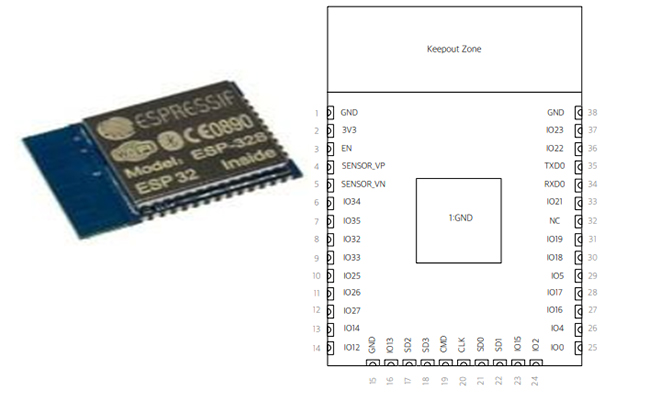
ESP32 Pinout

ESP32 CAD Model

Symbol

Symbol

Footprint

Footprint

3D Model

3D Model

ESP32 Description

ESP32 is a low-cost System on Chip (SoC) Microcontroller from Espressif Systems, the developers of the famous ESP8266 SoC. It is a successor to ESP8266 SoC and comes in both single-core and dual-core variations of the Tensilica’s 32-bit Xtensa LX6 Microprocessor with integrated Wi-Fi and Bluetooth.

Specifications

RF Solutions ESP-32 technical specifications, attributes, parameters and parts with similar specifications to RF Solutions ESP-32.

ESP-32 Tech Specifications

RF Solutions ESP-32 technical specifications, attributes, parameters and parts with similar specifications to RF Solutions ESP-32.

Product Attribute Attribute Value
Factory Lead Time4 Weeks
Mounting TypeSurface Mount
Package / CaseModule
Operating Temperature-40°C~85°C
Part StatusActive
Moisture Sensitivity Level (MSL)Not Applicable
Product Attribute Attribute Value
Voltage - Supply2.7V~3.6V
Frequency2.4GHz~2.5GHz
Data Rate150Mbps
Protocol802.11b/g/n, Bluetooth v4.2 + EDR, Class 1, 2 and 3
Power - Output20.5dBm
RF Family/StandardBluetooth, WiFi
Product Attribute Attribute Value
Sensitivity-97dBm
Serial InterfacesADC, GPIO, I2C, I2S, PWM, SDIO, SPI, UART
ModulationCCK, DSSS, OFDM
RoHS StatusRoHS Compliant
0 Products View Similar

ESP32 Features

  • Single or Dual-Core 32-bit LX6 Microprocessor with clock frequency up to 240 MHz.

  • 520 KB of SRAM, 448 KB of ROM, and 16 KB of RTC SRAM.

  • Supports 802.11 b/g/n Wi-Fi connectivity with speeds up to 150 Mbps.

  • Support for both Classic Bluetooth v4.2 and BLE specifications.

  • 34 Programmable GPIOs.

  • Up to 18 channels of 12-bit SAR ADC and 2 channels of 8-bit DAC

  • Serial Connectivity include 4 x SPI, 2 x I2C, 2 x I2S, 3 x UART.

  • Ethernet MAC for physical LAN Communication (requires external PHY).

  • 1 Host controller for SD/SDIO/MMC and 1 Slave controller for SDIO/SPI.

  • Motor PWM and up to 16-channels of LED PWM.

  • Secure Boot and Flash Encryption.

  • Cryptographic Hardware Acceleration for AES, Hash (SHA-2), RSA, ECC, and RNG.

ESP32 Applications

  • Prototyping of IoT devices

  • Low power battery operated applications

  • Network projects

  • Easy to use for beginner-level DIYers and makers.

  • Projects requiring Multiple I/O interfaces with Wi-Fi and Bluetooth functionalities.

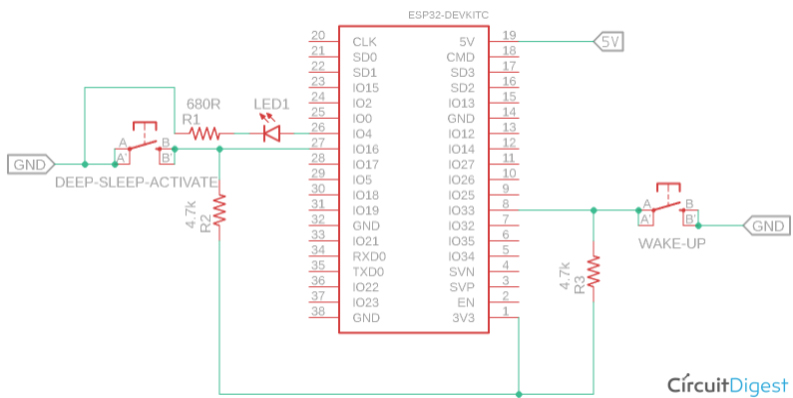
ESP32 Circuit

The schematic has two buttons. The sleep button will put the ESP32 in deep sleep mode and another switch is used for waking up the ESP32 from sleep mode. Both buttons are connected in PIN 16 and PIN 33. Both buttons are configured as active low when pressed; therefore an additional pull-up is given. However, to detect whether the ESP 32 is in sleep mode or normal working condition mode, LED is connected to IO Pin 4.

How to use ESP32

Plug your ESP32 development board into your computer and follow these next instructions:


  1. Go to Tools > Board, scroll down to the ESP32 section, and select the name of your ESP32 board. In my case, it's the DOIT ESP32 DEVKIT V1 board.

  2. Go to Tools > Port and select a COM port available.

  3. Press the upload button.

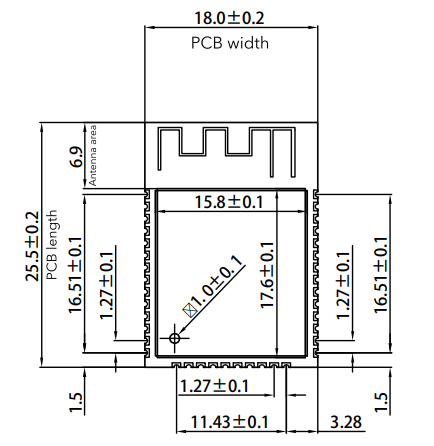
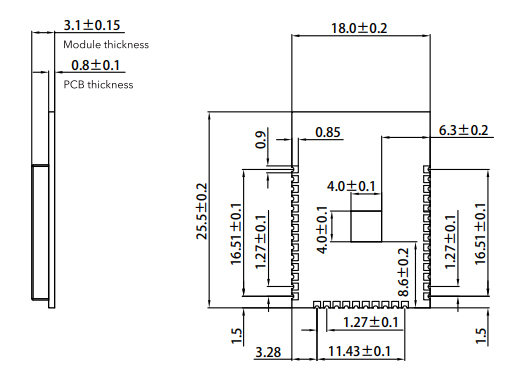
ESP32 Dimensions

ESP32 Manufacturer

RF Solutions LLC (RFS) is a wireless consulting and solutions firm. We offer end-to-end efficient and cost-effective comprehensive systems that stay on top of the ever-changing mobile IT environment and life-safety requirements.


Datasheet PDF

ESP-32 Documents

Download datasheets and manufacturer documentation for ESP-32

Datasheets
ESP-WROOM-32

Frequently Asked Questions

What do you use ESP32 for?
ESP32 can perform as a complete standalone system or as a slave device to a host MCU, reducing communication stack overhead on the main application processor. ESP32 can interface with other systems to provide Wi-Fi and Bluetooth functionality through its SPI / SDIO or I2C / UART interfaces.
Is ESP32 used in industry?
This ESP32 PLC has been designed for Industrial applications. It allows the use of WiFi, Bluetooth LE, Ethernet IP protocol, and other industrial Ethernet protocols such as Modbus TCP and others.
How does the ESP32 work?
ESP32 accesses the external QSPI flash and SRAM through high-speed caches. Up to 16 MBytes of external flash are memory-mapped onto the CPU code space, supporting 8, 16, and 32-bit access. Up to 8 MBytes of external SRAM are memory-mapped onto the CPU data space, supporting 8, 16, and 32-bit access.
What does ESP32 stand for?
ESP-WROOM-32. Compact development board created by Espressif. Silkscreen labeling on PCB reads "Core Board". ESP-WROVER-KIT. ESP-WROOM-32 or ESP32-ROVER.
FAQ
What do you use ESP32 for?
ESP32 can perform as a complete standalone system or as a slave device to a host MCU, reducing communication stack overhead on the main application processor. ESP32 can interface with other systems to provide Wi-Fi and Bluetooth functionality through its SPI / SDIO or I2C / UART interfaces.
Is ESP32 used in industry?
This ESP32 PLC has been designed for Industrial applications. It allows the use of WiFi, Bluetooth LE, Ethernet IP protocol, and other industrial Ethernet protocols such as Modbus TCP and others.
How does the ESP32 work?
ESP32 accesses the external QSPI flash and SRAM through high-speed caches. Up to 16 MBytes of external flash are memory-mapped onto the CPU code space, supporting 8, 16, and 32-bit access. Up to 8 MBytes of external SRAM are memory-mapped onto the CPU data space, supporting 8, 16, and 32-bit access.
What does ESP32 stand for?
ESP-WROOM-32. Compact development board created by Espressif. Silkscreen labeling on PCB reads "Core Board". ESP-WROVER-KIT. ESP-WROOM-32 or ESP32-ROVER.

TAGS

Share