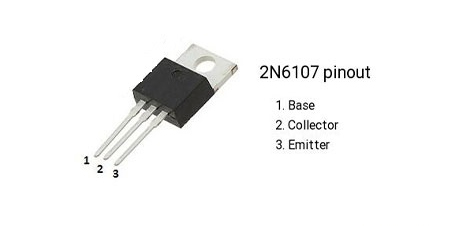
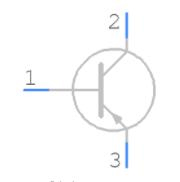
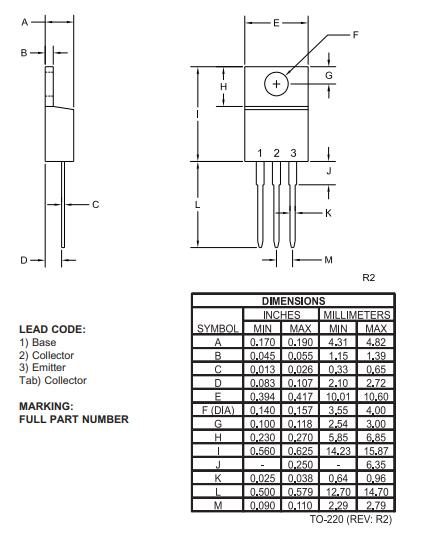
The primary functioning concept of a PNP transistor is that while there is a current at the base of the PNP transistor, the transistor remains turned off. When there is no current flowing through the transistor's base, the transistor turns on.
The primary difference between the NPN and PNP transistors is that current sinks into the PNP transistor and flows from emitter to collector. To turn on a PNP transistor, the base voltage must be smaller than the emitter voltage. This is due to the fact that the base terminal is built of an n-type semiconductor and the emitter is composed of a p-type semiconductor.
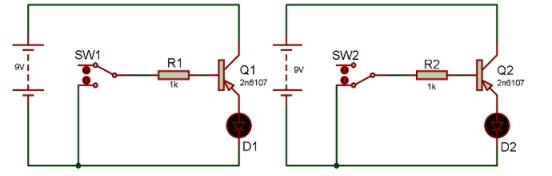
How to use 2N6107
As a result, in the above circuit, the emitter voltage is kept higher than the base voltage by connecting the positive terminal of the power source (9V DC battery) to the emitter and the negative terminal to the base.
The diode is connected to the transistor's emitter or ground terminal. When the base voltage is less than the emitter voltage or is 0V, it turns on, and when the base voltage is more than the emitter voltage, it remains off.
The LED may replace a high load, and due to its large power capacity, the 2N6107 can be utilized to efficiently drive high current loads.