ATTENTION: Due to increased demand and order volume, processing time may take an additional 1-3 business days.
HomeCommunitySubjectISO124 Isolation Amplifiers:Pinout, Price and Datasheet PDF

ISO124 Isolation Amplifiers:Pinout, Price and Datasheet PDF

TEXAS INSTRUMENTS - ISO124P - IC, AMP ISOLATION, PDIP16, 124 The ISO124 is a precision isolation amplifier incorporating a novel duty cycle modulationdemodulation technique.

3138

Jun 19, 2021

Harriet

ISO124


TEXAS INSTRUMENTS - ISO124P - IC, AMP ISOLATION, PDIP16, 124

The ISO124 is a precision isolation amplifier incorporating a novel duty cycle modulationdemodulation technique.This article mainly introduce its pinout, price, datasheet PDF and other detailed information about Texas Instruments ISO124.
ISO124P

779In Stock
Min.: 1 Mult.: 1
Price not displayed? Not available to buy online? Please send an RFQ, and we will respond immediately.
Quick Links

ISO124 Description

The ISO124 is a precision isolation amplifier incorporating a novel duty cycle modulationdemodulation technique. The signal is transmitted digitally across a 2-pF differential capacitive barrier. With digital modulation, the barrier characteristics do not affect signal integrity, thus resulting in excellent reliability and good high-frequency transient immunity across the barrier. Both barrier capacitors are imbedded in the plastic body of the package. The ISO124 is easy to use. No external components are required for operation. The key specifications are 0.010% maximum nonlinearity, 50-kHz signal bandwidth, and 200-µV/°C VOS drift. A power supply range of ±4.5 V to ±18 V, and quiescent currents of ±5 mA on VS1 and ±5.5 mA on VS2 make the ISO124 device a good choice for a wide range of applications. The ISO124 is available in 16-pin PDIP and 28-lead SOIC plastic surface-mount packages.


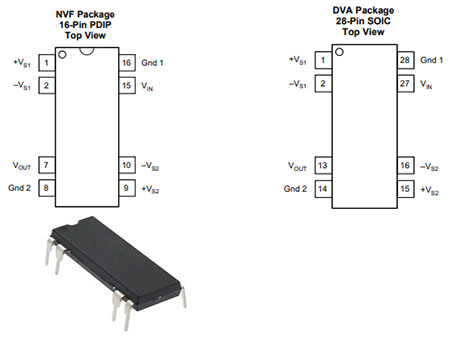
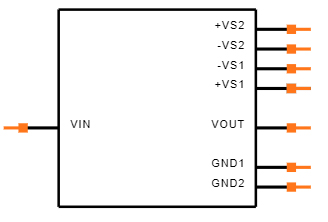
ISO124 Pinout

ISO124 CAD Model

Symbol

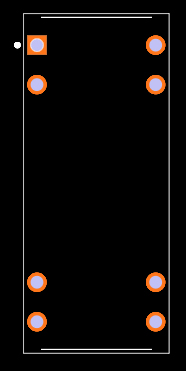
Footprint

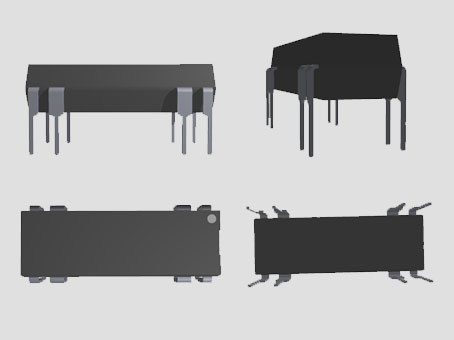
3D Model

ISO124 Features

• 100% Tested for High-Voltage Breakdown

• Rated 1500 Vrms

• High IMR: 140 dB at 60 Hz

• Maximum Nonlinearity: 0.010%

• Bipolar Operation: VO = ±10 V

• Packages: PDIP-16 and SOIC-28

• Ease of Use: Fixed Unity Gain Configuration

• Supply Range: ±4.5-V to ±18-V

Specifications

Texas Instruments ISO124P technical specifications, attributes, parameters and parts with similar specifications to Texas Instruments ISO124P.

ISO124P Tech Specifications

Texas Instruments ISO124P technical specifications, attributes, parameters and parts with similar specifications to Texas Instruments ISO124P.

Product Attribute Attribute Value
Lifecycle StatusACTIVE (Last Updated: 4 days ago)
Factory Lead Time6 Weeks
Mounting TypeThrough Hole
Package / Case16-DIP (0.300, 7.62mm), 8 Leads
Surface MountNO
Number of Pins8Pins
Weight930.006106mg
Operating Temperature-25°C~85°C
PackagingTube
JESD-609 Codee4
Pbfree Codeyes
Part StatusActive
Moisture Sensitivity Level (MSL)1 (Unlimited)
Number of Terminations8Terminations
ECCN CodeEAR99
Resistance200kOhm
Product Attribute Attribute Value
Terminal FinishNickel/Palladium/Gold (Ni/Pd/Au)
Terminal PositionDUAL
Number of Functions1Function
Supply Voltage15V
Terminal Pitch2.54mm
Base Part NumberISO124
Output Voltage12.5V
Number of Channels1Channel
Operating Supply Current5mA
Nominal Supply Current5mA
Slew Rate2V/μs
Amplifier TypeIsolation
Common Mode Rejection Ratio140 dB
Max Input Voltage12.5V
Voltage - Supply, Single/Dual (±)±4.5V~18V
Output Current per Channel15mA
Product Attribute Attribute Value
Input Offset Voltage (Vos)50mV
Bandwidth50 kHz
Neg Supply Voltage-Nom (Vsup)-15V
Voltage Gain0dB
Voltage - Input Offset20mV
-3db Bandwidth50MHz
Dual Supply Voltage9V
Isolation Voltage1.5kV
Height5.33mm
Length20.01mm
Width6.61mm
Thickness3.94mm
REACH SVHCNo SVHC
Radiation HardeningNo
RoHS StatusROHS3 Compliant
Lead FreeLead Free
0 Products View Similar

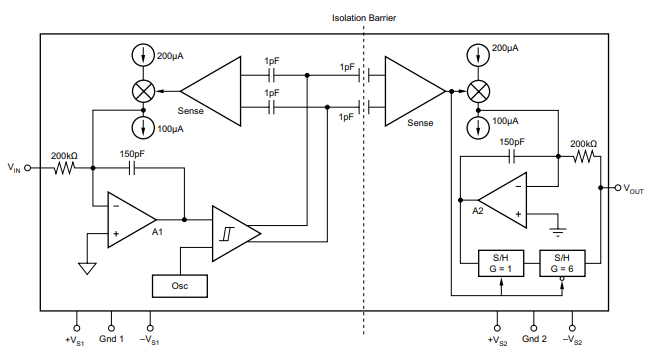
ISO124 Functional Block Diagram

ISO124 Application

• Industrial Process Control:

–Transducer Isolator, Isolator for Thermocouples, RTDs, Pressure Bridges, and Flow Meters, 4-mA to 20-mA Loop Isolation

• Ground Loop Elimination

• Motor and SCR Control

• Power Monitoring

• PC-Based Data Acquisition

• Test Equipment

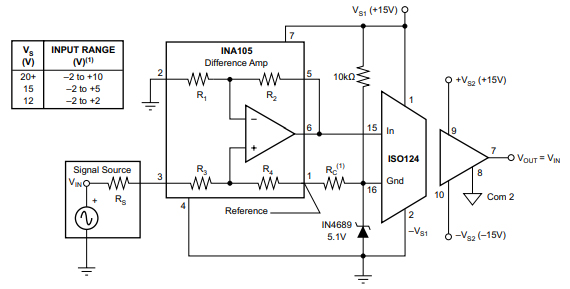
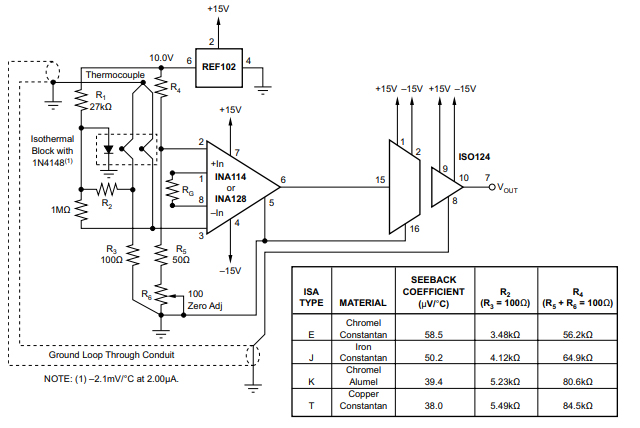
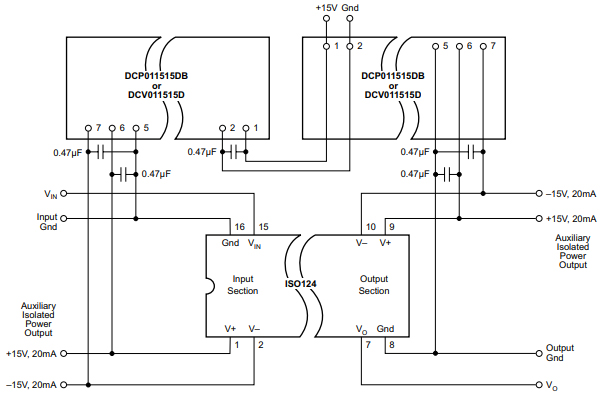
ISO124 Typical Application

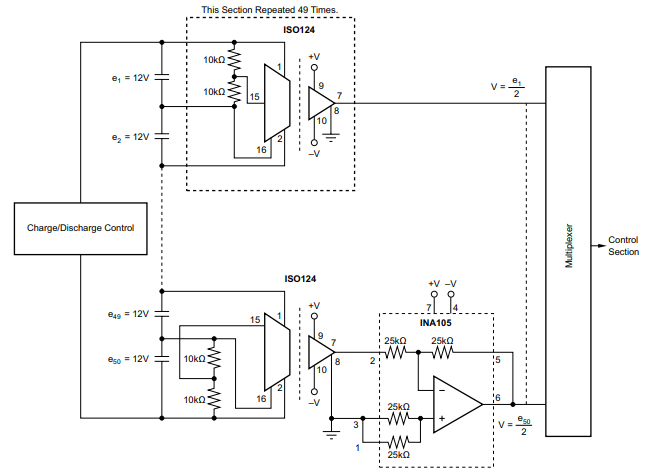
Battery Monitor for a 600-V Battery Power System


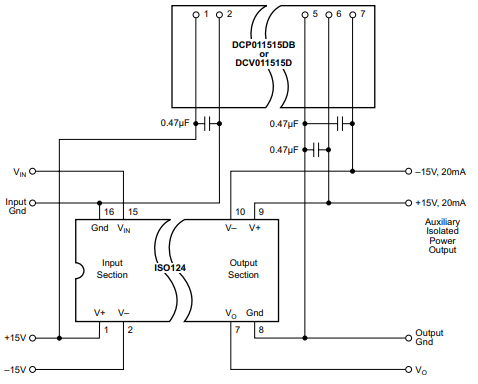
Input-Side Powered ISO Amplifier Schematic


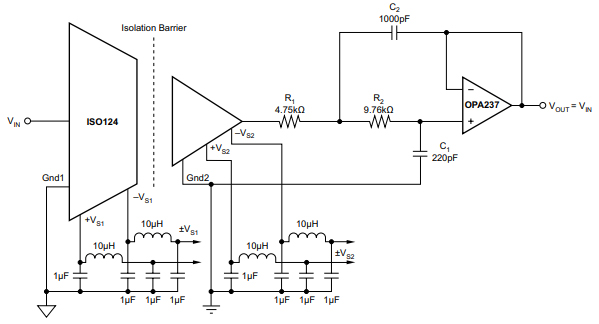
ISO124 With Output Filter for Improved Ripple


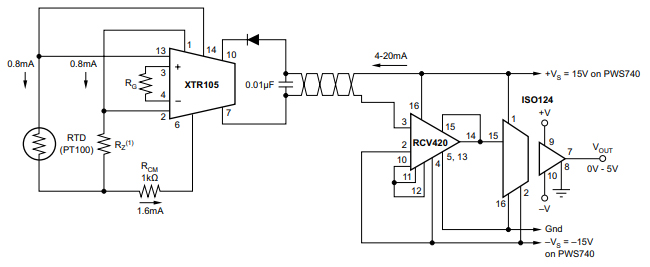
Isolated 4- to 20-mA Instrument Loop (RTD Shown)


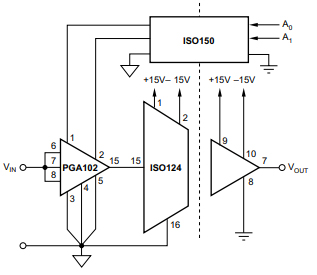
Programmable-Gain Isolation Channel With Gains of 1, 10, and 100


Single-Supply Operation of the ISO124 Isolation Amplifier Schematic


Thermocouple Amplifier With Ground Loop Elimination,


Powered ISO Amplifier With Three-Port Isolation Schematic

ISO124 Manufacturer

As a global semiconductor company operating in 35 countries, Texas Instruments (TI) is first and foremost a reflection of its people. From the TIer who unveiled the first working integrated circuit in 1958 to the more than 30,000 TIers around the world today who design, manufacture and sell analog and embedded processing chips, we are problem-solvers collaborating to change the world through technology.

Frequently Asked Questions

1.Where can the chip ISO124 be used in automotive electronics? How many chips can be used in each place?
Two chips can be used in the hybrid battery monitoring circuit.
2.I am using ISO124 as a data acquisition system. Since the offset voltage of ISO itself is about 20mV, it has a relatively large impact on the sampling accuracy. Is there any way to reduce the impact of the offset voltage?
According to the signal frequency to be processed, use a capacitor of about 100uF (impedance of about 30ohm at 50Hz) after blocking, add a resistance to ground of a few k ohms, and then select an op amp with a small offset as a buffer to ensure that it will not affect the final The sampling accuracy of AD.
3.There is a voltage of about 17V that needs to be collected. Is there any hidden danger in using ISO124? What should be paid attention to? Is it ok to collect signals lower than the supply voltage?
It is recommended to refer to the electrical conditions in "Recommended Operating Conditions". The typical values of the two voltages of ISO124 are VS1=+-15V, VS2=+-15V, and the typical value of Vin is +-10V, so it is not recommended to exceed this voltage range.
4.Does the output voltage of the ISO124P chip follow the input voltage?
The typical value of ISO124P voltage gain is 1, and the accuracy is ±0.05% (typical value) ~ ±0.5% (maximum value) of full-scale output, so its output voltage basically follows the input voltage, but when the load is too heavy or There will be distortion when the frequency is too high.
5.When do I need to use isolated amplifiers such as ISO124?
In some cases, the signal input and output terminals cannot share the ground. In this case, an isolated amplifier or a linear optocoupler must be used to achieve signal isolation.
FAQ
1.Where can the chip ISO124 be used in automotive electronics? How many chips can be used in each place?
Two chips can be used in the hybrid battery monitoring circuit.
2.I am using ISO124 as a data acquisition system. Since the offset voltage of ISO itself is about 20mV, it has a relatively large impact on the sampling accuracy. Is there any way to reduce the impact of the offset voltage?
According to the signal frequency to be processed, use a capacitor of about 100uF (impedance of about 30ohm at 50Hz) after blocking, add a resistance to ground of a few k ohms, and then select an op amp with a small offset as a buffer to ensure that it will not affect the final The sampling accuracy of AD.
3.There is a voltage of about 17V that needs to be collected. Is there any hidden danger in using ISO124? What should be paid attention to? Is it ok to collect signals lower than the supply voltage?
It is recommended to refer to the electrical conditions in "Recommended Operating Conditions". The typical values of the two voltages of ISO124 are VS1=+-15V, VS2=+-15V, and the typical value of Vin is +-10V, so it is not recommended to exceed this voltage range.
4.Does the output voltage of the ISO124P chip follow the input voltage?
The typical value of ISO124P voltage gain is 1, and the accuracy is ±0.05% (typical value) ~ ±0.5% (maximum value) of full-scale output, so its output voltage basically follows the input voltage, but when the load is too heavy or There will be distortion when the frequency is too high.
5.When do I need to use isolated amplifiers such as ISO124?
In some cases, the signal input and output terminals cannot share the ground. In this case, an isolated amplifier or a linear optocoupler must be used to achieve signal isolation.

TAGS

Share