ATTENTION: Due to increased demand and order volume, processing time may take an additional 1-3 business days.
HomeCommunitySubjectLIS3DHTR accelerometer: Datasheet, Pinout and Features

LIS3DHTR accelerometer: Datasheet, Pinout and Features

ACCEL 2-16G I2C/SPI 16LGA The LIS3DHTR is an ultra-low-power high performance three-axis linear accelerometer.

2620

Jul 14, 2021

Horace Harte

LIS3DH Accelerometer on an Arduino Pro Mini


ACCEL 2-16G I2C/SPI 16LGA

The LIS3DHTR is an ultra-low-power high performance three-axis linear accelerometer. This article mainly covers pinout, datasheet, applications, features and more detail about LIS3DHTR.
LIS3DHTR

22560In Stock
Min.: 1 Mult.: 1
Quantity Unit Price Ext. Price
1+ $1.9052$1.91
10+ $1.79736$17.97
100+ $1.69562$169.56
500+ $1.59964$799.82
1000+ $1.5091$1509.1
Unit Price:$1.9052
Subtotal: $1.91
Looking for a better price? Want a lower wholesale price? Please send an RFQ, and we will respond immediately.
Quick Links

LIS3DHTR Description

The LIS3DHTR is an ultra-low-power high performance three-axis linear accelerometer belonging to the “nano” family, with digital I2C/SPI serial interface standard output. The device features ultra-low-power operational modes that allow advanced power saving and smart embedded functions.

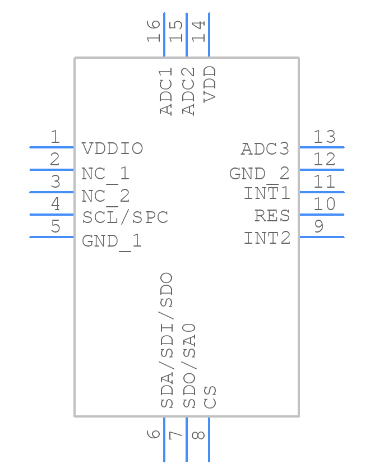
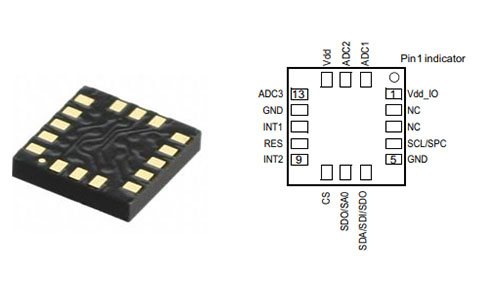
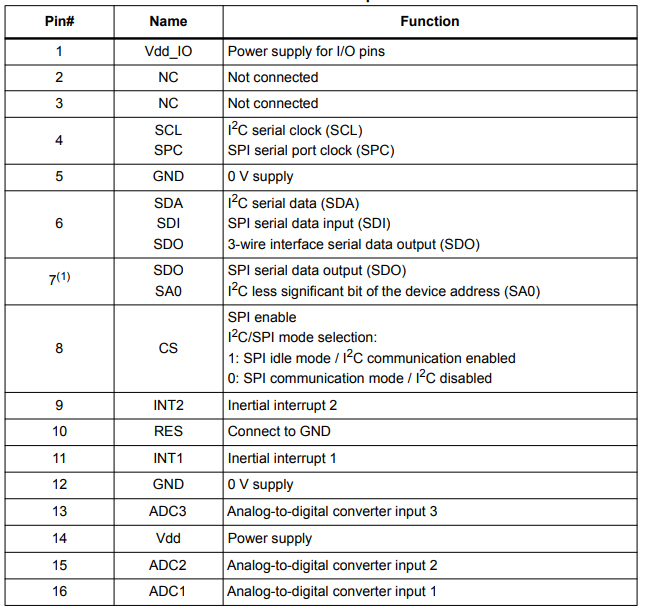
LIS3DHTR Pinout

LIS3DHTR CAD Model

Symbol


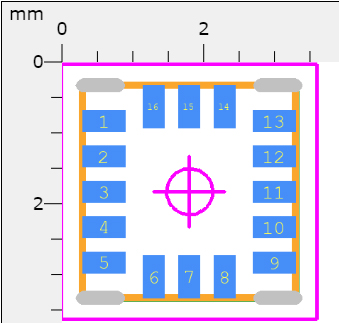
Footprint


3D Model

LIS3DHTR Block Diagram

Specifications

STMicroelectronics LIS3DHTR technical specifications, attributes, parameters and parts with similar specifications to STMicroelectronics LIS3DHTR.

LIS3DHTR Tech Specifications

STMicroelectronics LIS3DHTR technical specifications, attributes, parameters and parts with similar specifications to STMicroelectronics LIS3DHTR.

Product Attribute Attribute Value
Lifecycle StatusACTIVE (Last Updated: 7 months ago)
Factory Lead Time16 Weeks
Contact PlatingGold
Mounting TypeSurface Mount
Package / Case16-VFLGA
Surface MountYES
Number of Pins16Pins
Usage LevelIndustrial grade
Operating Temperature-40°C~85°C TA
PackagingTape & Reel (TR)
JESD-609 Codee4
Part StatusActive
Moisture Sensitivity Level (MSL)3 (168 Hours)
Number of Terminations16Terminations
ECCN CodeEAR99
TypeDigital
Product Attribute Attribute Value
HTS Code8542.39.00.01
Voltage - Supply1.71V~3.6V
Terminal PositionBOTTOM
Terminal FormBUTT
Peak Reflow Temperature (Cel)260
Number of Functions1Function
Supply Voltage2.5V
Terminal Pitch0.5mm
Depth3mm
Time@Peak Reflow Temperature-Max (s)30
Base Part NumberLIS3
Pin Count16
Output TypeI2C, SPI
Operating Supply Voltage2.5V
InterfaceI2C, SPI
Operating Supply Current11μA
Product Attribute Attribute Value
Resolution2 B
Sensor Type3 Axis
Max Supply Voltage (DC)3.6V
Min Supply Voltage (DC)1.71V
AxisX, Y, Z
Acceleration Range±2g, 4g, 8g, 16g
FeaturesAdjustable Bandwidth, Selectable Scale, Temperature Sensor
Sensitivity (LSB/g)1000 (±2g) ~ 83 (±16g)
Height1mm
Length3mm
Width3mm
REACH SVHCNo SVHC
Radiation HardeningNo
RoHS StatusROHS3 Compliant
Lead FreeLead Free
0 Products View Similar

IS3DHTR Features

  • Wide supply voltage, 1.71 V to 3.6 V

  • Independent IO supply (1.8 V) and supply voltage compatible

  • Ultra-low-power mode consumption down to 2 μA

  • ±2g/±4g/±8g/±16g dynamically selectable full scale · I 2C/SPI digital output interface

  • 16-bit data output

  • 2 independent programmable interrupt generators for free-fall and motion detection

  • 6D/4D orientation detection

  • Free-fall detection

  • Motion detection

  • Embedded temperature sensor

  • Embedded self-test

  • Embedded 32 levels of 16-bit data output FIFO

  • 10000 g high shock survivability

  • ECOPACK®, RoHS and “Green” compliant


IS3DHTR Applications

  • Motion activated functions

  • Free-fall detection

  • Click/double-click recognition

  • Intelligent power saving for handheld devices

  • Pedometers

  • Display orientation

  • Gaming and virtual reality input devices

  • Impact recognition and logging

  • Vibration monitoring and compensation

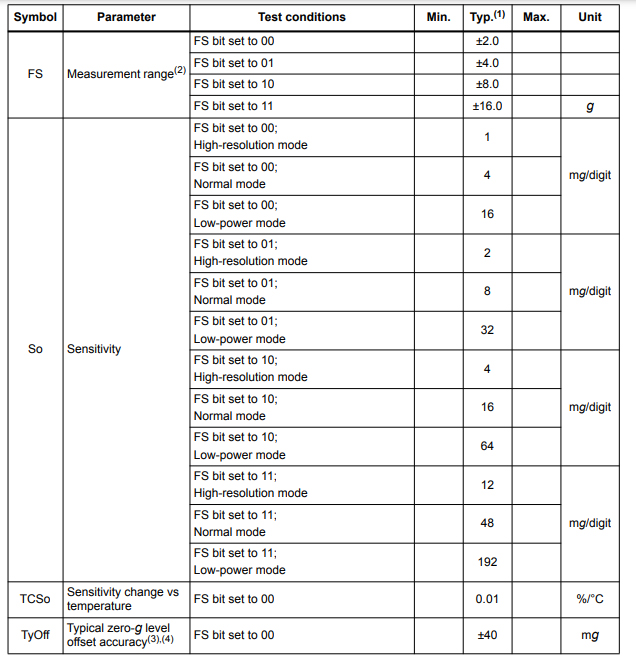
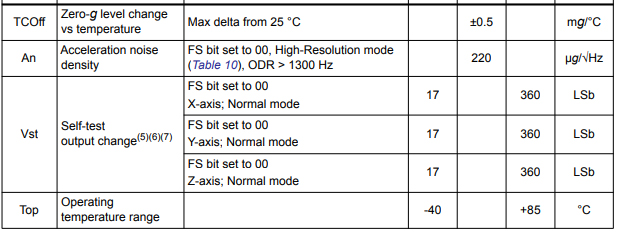
LIS3DHTR Mechanical Characteristics

Vdd = 2.5 V, T = 25 °C unless otherwise noted (c)


LIS3DHTR Temperature Sensor Characteristics

Vdd = 2.5 V, T = 25 °C unless otherwise noted (c)


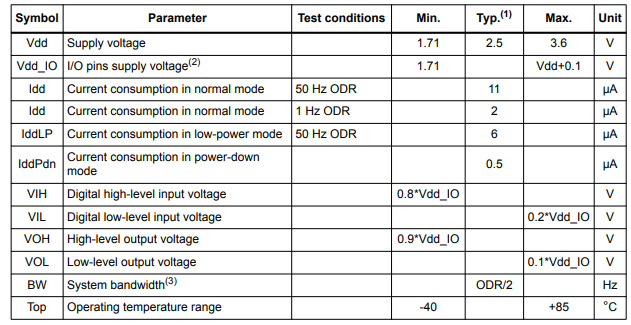
LIS3DHTR Electric Characteristics

Vdd = 2.5 V, T = 25 °C unless otherwise noted (c)

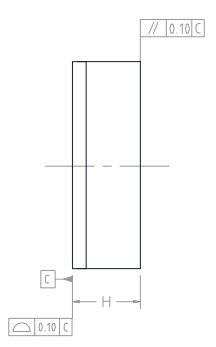
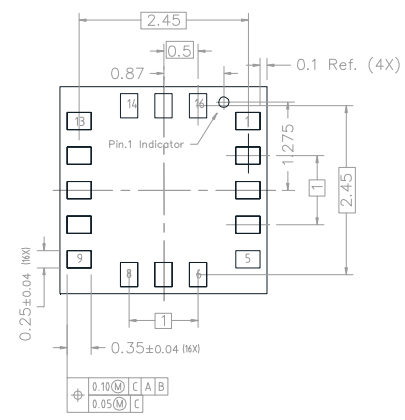
LIS3DHTR Dimension

LIS3DHTR Manufacturer

STMicroelectronics is a global independent semiconductor company and is a leader in developing and delivering semiconductor solutions across the spectrum of microelectronics applications. An unrivaled combination of silicon and system expertise, manufacturing strength, Intellectual Property (IP) portfolio and strategic partners positions the Company at the forefront of System-on-Chip (SoC) technology and its products play a key role in enabling today's convergence trends.

Datasheet PDF

Download datasheets and manufacturer documentation for STMicroelectronics LIS3DHTR.

LIS3DHTR Documents

Download datasheets and manufacturer documentation for LIS3DHTR

Frequently Asked Questions

How to connect LIS3DH to Arduino?
The LIS3DH is a triple axis accelerometer you can use to add translation detection to your project. The "3D" in LIS3DH refers to the fact that it is a 3DoF, or 3 Degrees of Freedom. Additionally, it has a few analog inputs to play with, and it has some built in movement detection features to detect things like free-fall, and to indicate if the FIFO buffers are full.
How to connect LIS3DH to Raspberry Pi?
It's easy to use the LIS3DH sensor with Python or CircuitPython, and the Adafruit CircuitPython LIS3DH module. This module allows you to easily write Python code that reads acceleration from the sensor.
How to connect LIS3DH to ESP32?
The driver is for the usage with the ESP8266 and esp-open-rtos. If you can't find it in folder extras/lis3dh of original repository, it is not yet merged. Please take a look to branch lis3dh of my fork in that case.
FAQ
How to connect LIS3DH to Arduino?
The LIS3DH is a triple axis accelerometer you can use to add translation detection to your project. The "3D" in LIS3DH refers to the fact that it is a 3DoF, or 3 Degrees of Freedom. Additionally, it has a few analog inputs to play with, and it has some built in movement detection features to detect things like free-fall, and to indicate if the FIFO buffers are full.
How to connect LIS3DH to Raspberry Pi?
It's easy to use the LIS3DH sensor with Python or CircuitPython, and the Adafruit CircuitPython LIS3DH module. This module allows you to easily write Python code that reads acceleration from the sensor.
How to connect LIS3DH to ESP32?
The driver is for the usage with the ESP8266 and esp-open-rtos. If you can't find it in folder extras/lis3dh of original repository, it is not yet merged. Please take a look to branch lis3dh of my fork in that case.

TAGS

Share