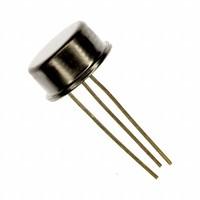
IC REG LIN POS ADJ 1.5A TO39-3
The LM117 series of adjustable 3-terminal positive voltage regulators is capable of supplying in excess of 1.5A over a 1.2V to 37V output range.

IC REG LIN POS ADJ 1.5A TO39-3 The LM117 series of adjustable 3-terminal positive voltage regulators is capable of supplying in excess of 1.5A over a 1.2V to 37V output range.
37
Jun 10, 2021
YALE
IC REG LIN POS ADJ 1.5A TO39-3
The LM117 series of adjustable 3-terminal positive voltage regulators is capable of supplying in excess of 1.5A over a 1.2V to 37V output range.
LM117H
| Quantity | Unit Price | Ext. Price |
|---|---|---|
| 1+ | $20.64179 | $20.64 |
| 10+ | $19.47339 | $194.73 |
| 100+ | $18.37112 | $1837.11 |
| 500+ | $17.33125 | $8665.63 |
| 1000+ | $16.35023 | $16350.23 |
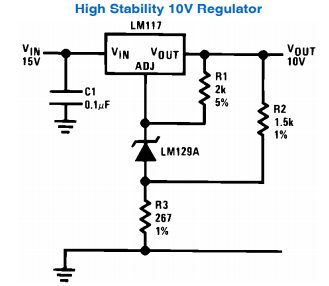
The LM117 series are exceptionally easy to use and require only two external resistors to set the output voltage. Further, both line and load regulation are better than standard fixed regulators. Also, the LM117 is packaged in standard transistor packages which are easily mounted and handled.
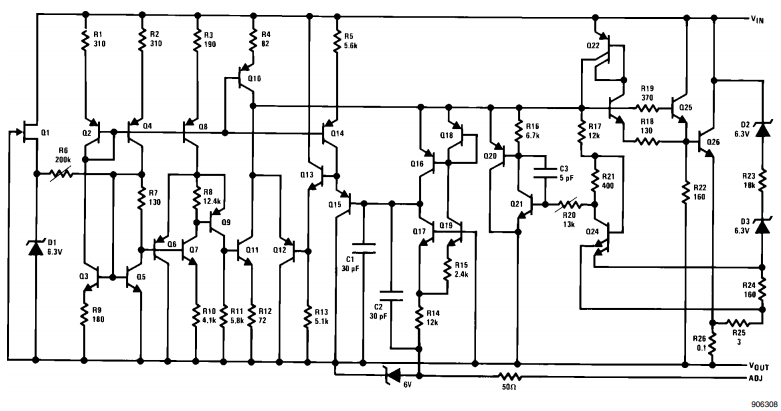
In addition to higher performance than fixed regulators, the LM117 series offers full overload protection available only in IC's. Included on the chip are the current limit, thermal overload protection, and safe area protection. All overload protection circuitry remains fully functional even if the adjustment terminal is disconnected.
Normally, no capacitors are needed unless the device is situated more than 6 inches from the input filter capacitors in which case an input bypass is needed. An optional output capacitor can be added to improve transient response. The adjustment terminal can be bypassed to achieve very high ripple rejection ratios which are difficult to achieve with standard 3-terminal regulators.
Besides replacing fixed regulators, the LM117 is useful in a wide variety of other applications. Since the regulator is “floating" and sees only the input-to-output differential voltage, supplies of several hundred volts can be regulated as long as the maximum input to output differential is not exceeded, i.e., avoid short-circuiting the output.
Also, it makes an especially simple adjustable switching regulator, a programmable output regulator, or by connecting a fixed resistor between the adjustment pin and output, the LM117 can be used as a precision current regulator. Supplies with electronic shutdown can be achieved by clamping the adjustment terminal to ground which programs the output to 1.2V where most loads draw little current.
■ Guaranteed 1% output voltage tolerance (LM317A)
■ Guaranteed max. 0.01%/V line regulation (LM317A)
■ Guaranteed max. 0.3% load regulation (LM117)
■ Guaranteed 1.5A output current
■ Adjustable output down to 1.2V
■ Current limit constant with temperature
■ P+ Product Enhancement tested
■ 80 dB ripple rejection
■ Output is short-circuit protected
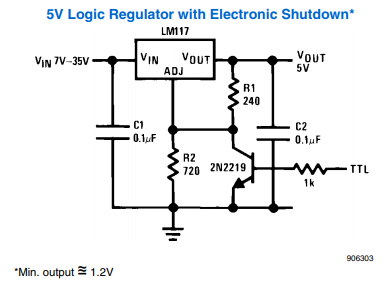
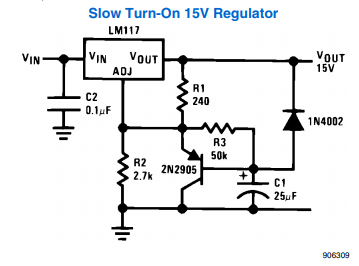
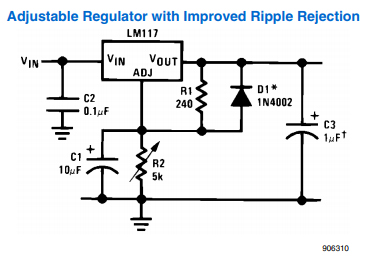
Texas Instruments LM117H technical specifications, attributes, parameters and parts with similar specifications to Texas Instruments LM117H.
Texas Instruments LM117H technical specifications, attributes, parameters and parts with similar specifications to Texas Instruments LM117H.
| Product Attribute | Attribute Value | |
|---|---|---|
| Factory Lead Time | 6 Weeks | |
| Contact Plating | Gold | |
| Mount | Through Hole | |
| Mounting Type | Through Hole | |
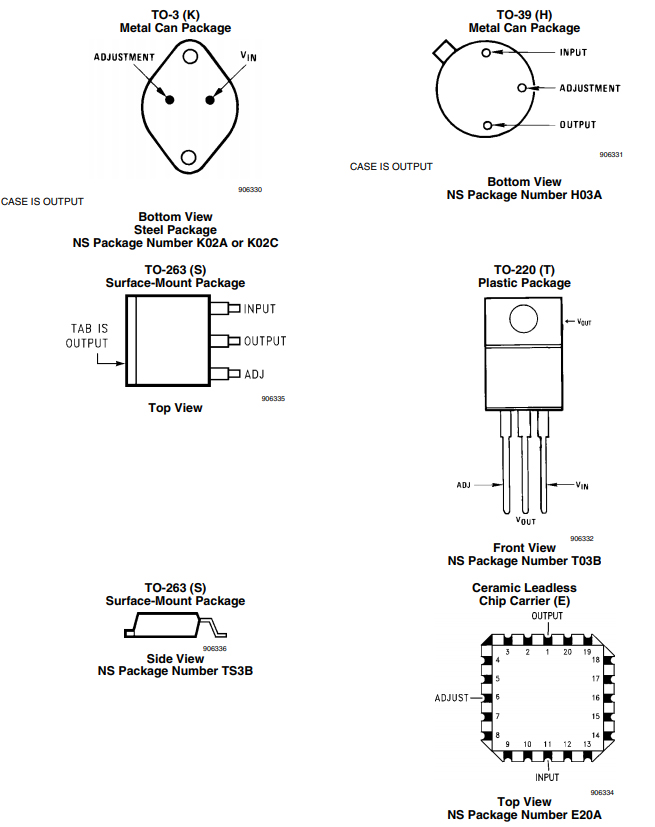
| Package / Case | TO-205AD, TO-39-3 Metal Can | |
| Number of Pins | 3Pins | |
| Weight | 4.535924g | |
| Operating Temperature | -55°C~150°C TJ | |
| Packaging | Tube | |
| JESD-609 Code | e4 | |
| Pbfree Code | yes | |
| Part Status | ACTIVE (Last Updated: 5 days ago) | |
| Moisture Sensitivity Level (MSL) | 1 (Unlimited) | |
| Number of Terminations | 3Terminations | |
| ECCN Code | EAR99 |
| Product Attribute | Attribute Value | |
|---|---|---|
| Max Power Dissipation | 2W | |
| Terminal Position | BOTTOM | |
| Terminal Form | WIRE | |
| Number of Functions | 1Function | |
| Base Part Number | LM117 | |
| Number of Outputs | 1Output | |
| Voltage - Input (Max) | 40V | |
| Output Type | Adjustable | |
| Current - Output (Max) | 500mA | |
| Output Configuration | Positive | |
| Quiescent Current | 5mA | |
| Max Output Voltage | 37V | |
| Voltage - Output | 37V | |
| Number of Regulators | 1Regulator | |
| Min Input Voltage | 4.2V |
| Product Attribute | Attribute Value | |
|---|---|---|
| Protection Features | Over Current, Over Temperature, Short Circuit | |
| PSRR | 80dB ~ 65dB (120Hz) | |
| Reference Voltage | 1.25V | |
| Dropout Voltage | 2.2V | |
| Dropout Voltage1-Nom | 1.2V | |
| Min Output Voltage | 1.2V | |
| Power Supply Rejection Ratio (PSRR) | 80dB | |
| Height | 0m | |
| Length | 8.255mm | |
| Width | 8.255mm | |
| Thickness | 4.445mm | |
| REACH SVHC | No SVHC | |
| Radiation Hardening | No | |
| RoHS Status | ROHS3 Compliant | |
| Lead Free | Lead Free |
As a global semiconductor company operating in 35 countries, Texas Instruments (TI) is first and foremost a reflection of its people. From the TIer who unveiled the first working integrated circuit in 1958 to the more than 30,000 TIers around the world today who design, manufacture, and sell analog and embedded processing chips, we are problem-solvers collaborating to change the world through technology.
Download datasheets and manufacturer documentation for Texas Instruments LM117H.
Download datasheets and manufacturer documentation for LM117H
TAGS
Comments