ATTENTION: Due to increased demand and order volume, processing time may take an additional 1-3 business days.
HomeCommunitySubjectMCP4921 Digital-to-Analog Converter: Datasheet, Circuit, Equivalent

MCP4921 Digital-to-Analog Converter: Datasheet, Circuit, Equivalent

DAC 1-CH Resistor-String 12-bit Automotive 8-Pin PDIP Tube The MCP4921 is a 2.7 – 5.5V, low-power, low DNL, 12-Bit Digital to Analog Converters (DACs) with optional 2X buffered output and SPI interface. This article will unlock more details about MCP4921. There is a huge range of Semiconductors, Capacitors, Resistors and ICs in stock.

67

Oct 3, 2021

Alva Kelsen

Analog Voltage from Raspberry Pi using MCP4921 12-bit DAC and SPI


DAC 1-CH resistor>Resistor-String 12-bit Automotive 8-Pin PDIP Tube

The MCP4921 is a 2.7 – 5.5V, low-power, low DNL, 12-Bit Digital to Analog Converters (DACs) with optional 2X buffered output and SPI interface. This article will unlock more details about MCP4921. There is a huge range of Semiconductors, Capacitors, Resistors and ICs in stock.


MCP4921-E/P

5000In Stock
Min.: 1 Mult.: 1
Quantity Unit Price Ext. Price
1+ $4.77094$4.77
10+ $4.50089$45.01
100+ $4.24612$424.61
500+ $4.00577$2002.89
1000+ $3.77903$3779.03
Unit Price:$4.77094
Subtotal: $4.77
Looking for a better price? Want a lower wholesale price? Please send an RFQ, and we will respond immediately.
Quick Links

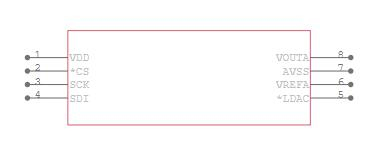
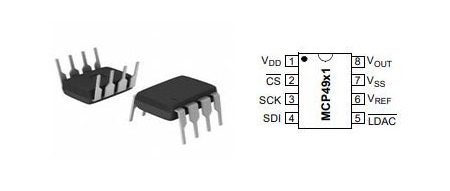
MCP4921 Pinout

MCP4921 Pinout


Pin   Number Pin Name Pin Description
1 VDD Positive Power Supply Input (2.7V to 5.5V)
2 CS Chip Select Input
3 SCK Serial Clock Input
4 SDI Serial Data Input
5 LDAC Synchronization input is used to transfer DAC   settings from serial latches to the output latches.
6 VREFA DACB Voltage Input (AVSS to VDD)
7 AVSS Analog ground
8 VOUTA DAC Output

MCP4921 CAD Model

MCP4921 Symbol


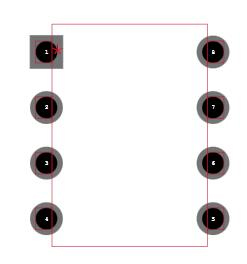
MCP4921 Footprint


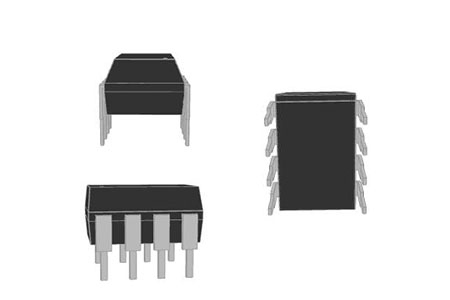
MCP4921 3D Model

MCP4921 Description

The MCP4921 is a low-power, low DNL 12-bit Digital to Analog Converter (DAC) with optional 2X buffered output and SPI interface that operates between 2.7 and 5.5V. The MCP4921 are DACs with high accuracy and low noise for industrial applications that require signal calibration or compensation (such as temperature, pressure, and humidity).


Specifications

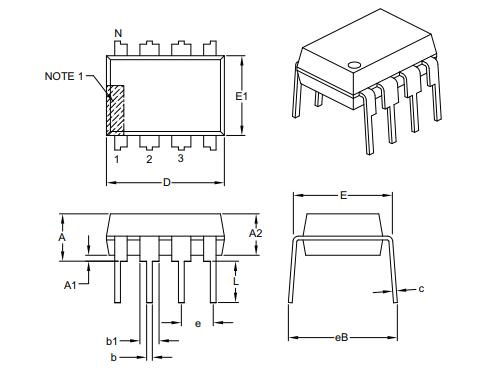
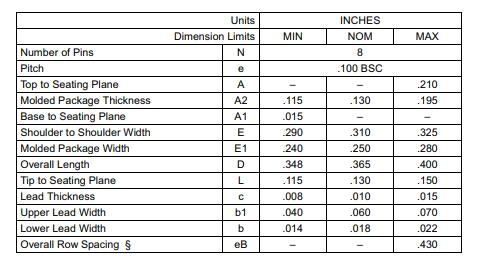
MCP4921-E/P Tech Specifications

Microchip Technology MCP4921-E/P technical specifications, attributes, parameters and parts with similar specifications to Microchip Technology MCP4921-E/P.

Product Attribute Attribute Value
Factory Lead Time7 Weeks
MountThrough Hole
Mounting TypeThrough Hole
Package / Case8-DIP (0.300, 7.62mm)
Number of Pins8Pins
Operating Temperature-40°C~125°C
PackagingTube
Published2003
JESD-609 Codee3
Pbfree Codeyes
Part StatusActive
Moisture Sensitivity Level (MSL)1 (Unlimited)
Number of Terminations8Terminations
ECCN CodeEAR99
Terminal FinishMatte Tin (Sn)
Terminal PositionDUAL
Number of Functions1Function
Product Attribute Attribute Value
Supply Voltage5V
Terminal Pitch2.54mm
Base Part NumberMCP4921
Pin Count8
Output TypeVoltage - Buffered
Operating Supply Voltage5V
PolarityBipolar, Unipolar
InterfaceSPI, Serial
Max Supply Voltage5.5V
Min Supply Voltage2.7V
Nominal Supply Current175μA
Number of Bits12Bits
ArchitectureString DAC
Converter TypeD/A CONVERTER
Supply TypeSingle
Reference TypeExternal
Input Offset Voltage (Vos)820μV
Product Attribute Attribute Value
Data InterfaceSPI
Differential OutputNo
Resolution1.5 B
Voltage - Supply, Analog2.7V~5.5V
Voltage - Supply, Digital2.7V~5.5V
Settling Time4.5μs (Typ)
Linearity Error-Max (EL)0.29%
Integral Nonlinearity (INL)12 LSB
Input Bit CodeBINARY
Number of Converters1Converter
INL/DNL (LSB)±4, ±0.25
Height3.3mm
Length9.4mm
Width6.35mm
REACH SVHCNo SVHC
RoHS StatusROHS3 Compliant
Lead FreeLead Free
0 Products View Similar

MCP4921 Feature

• MCP4921: 12-Bit Voltage Output DAC

• Rail-to-Rail Output

• SPI Interface with 20 MHz Clock Support

• Simultaneous Latching of the DAC Output with LDAC Pin

• Fast Settling Time of 4.5 µs

• Selectable Unity or 2x Gain Output

• External Voltage Reference Input

• External Multiplier Mode

• 2.7V to 5.5V Single-Supply Operation

• Extended Temperature Range: -40°C to +125°C

MCP4921 Application

• Set Point or Offset Trimming

• Precision Selectable Voltage Reference

• Motor Control Feedback Loop

• Digitally-Controlled Multiplier/Divider

• Calibration of Optical Communication Devices

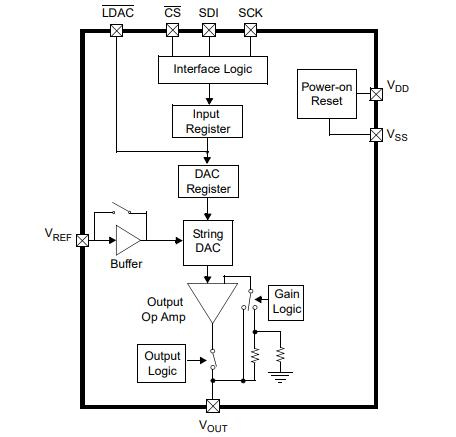
MCP4921 Block Diagram

MCP4921 Equivalent

  • PT8211

  • AC7715

  • DAC0832

  • MCP4725

  • AD5421

  • AD5420

  • AD5410

  • AD5422

  • AD5412

Where to use MCP4941

The MCP4921 are DACs with high accuracy and low noise for industrial applications that require signal calibration or compensation (such as temperature, pressure, and humidity). The resistor string architecture used in MCP4921 devices has the advantages of minimal DNL error, low ratiometric temperature coefficient, and quick settling time. These gadgets are designed to work at a wide variety of temperatures. The MCP492X has double-buffered inputs, allowing the LDAC pin to be used for simultaneous updates. A Power-On Reset (POR) circuit is also included in these devices to ensure reliable power-up. These devices are useful where we need accurate measurement, like low voltage measurement after a voltage divider stage, SetPoint or Offset Trimming, Sensor Calibration.


How to use MCP4921

The MCP4921 is a DAC with a voltage output string. Input amplifiers, rail-to-rail output amplifiers, reference buffers, and shutdown and reset management circuits are among these components. The SPI protocol is used for serial communication. The MCP492X can work with voltages ranging from 2.7 to 5.5 volts. A typical application circuit for a programmable current source is illustrated in the diagram below.
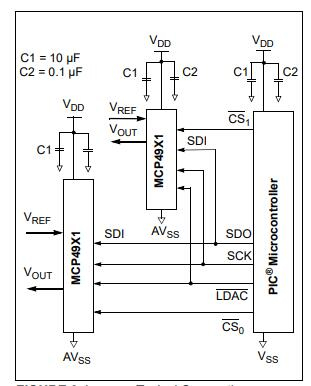
MCP4921 Typical Application Diagram


A sensing resistor is utilized to transform the DAC's voltage output into a digitally selectable current source in the voltage follower shown above. In this case, adding the resistor network as demonstrated in the previous example would be beneficial. The less power dissipated across Rsense, the smaller it is. This, however, reduces the resolution with which the current can be adjusted. The voltage divider, or "window," DAC design reduces the range, boosting resolution around the range of interest. When working with very small sensor voltages, plan on eliminating the amplifier's offset error by storing the DAC's setting under known sensor

MCP4921 Package

MCP4921 Manufacturer

Microchip Technology Inc., is a leader that provides microcontroller and analogue semiconductors. The microchip was headquartered in Chandler, Arizona. We are dedicated to offering low-risk product development, reducing total system cost and accelerating time to market. We mainly serve different fields of customers applications around the world. To provide prominent technical support along with reliable delivery and quality is our goal.

Datasheet PDF

MCP4921-E/P Documents

Download datasheets and manufacturer documentation for MCP4921-E/P

ConflictMineralStatement
Microchip-company-68.pdf
Datasheets
MCP4901,11,21

Frequently Asked Questions

What is the operating condition of MCP4921?
The devices operate from a single 2.7V to 5.5V supply with an SPI compatible Serial Peripheral Interface.
What advantage does MCP4921 have?
With its inherent advantages of low Differential Non-Linearity (DNL) error and fast settling time. These devices are specified over the extended temperature range (+125°C).
How to Build a “Window” DAC?
When calibrating a set point or threshold of a sensor, typically only a small portion of the DAC output range is utilized. If the LSB size is adequate to meet the application’s accuracy needs, the unused range is sacrificed without consequences. If greater accuracy is needed, then the output range will need to be reduced to increase the resolution around the desired threshold. If the threshold is not near VREF or VSS, then creating a “window” around the threshold has several advantages. One simple method to create this “window” is to use a voltage divider network with a pull-up and pull-down resistor.
FAQ
What is the operating condition of MCP4921?
The devices operate from a single 2.7V to 5.5V supply with an SPI compatible Serial Peripheral Interface.
What advantage does MCP4921 have?
With its inherent advantages of low Differential Non-Linearity (DNL) error and fast settling time. These devices are specified over the extended temperature range (+125°C).
How to Build a “Window” DAC?
When calibrating a set point or threshold of a sensor, typically only a small portion of the DAC output range is utilized. If the LSB size is adequate to meet the application’s accuracy needs, the unused range is sacrificed without consequences. If greater accuracy is needed, then the output range will need to be reduced to increase the resolution around the desired threshold. If the threshold is not near VREF or VSS, then creating a “window” around the threshold has several advantages. One simple method to create this “window” is to use a voltage divider network with a pull-up and pull-down resistor.

TAGS

Share