ATTENTION: Due to increased demand and order volume, processing time may take an additional 1-3 business days.
HomeCommunitySubjectMMBTA92 PNP High-Voltage Transistor: SOT-23, MMBTA92 Datasheet PDF

MMBTA92 PNP High-Voltage Transistor: SOT-23, MMBTA92 Datasheet PDF

Transistors - Bipolar (BJT) - Single TRANS PNP 300V 0.1A SOT23 MMBTA92 is a PNP high-voltage transistor in a SOT23 plastic package. This article covers its pinout, datasheet, feature and more details about MMBTA92. Welcome your RFQ!

53

Dec 8, 2021

Zoe Howard

PNP TRANSISTOR | CONSTRUCTION AND WORKING|


Transistors - Bipolar (BJT) - Single TRANS PNP 300V 0.1A SOT23

MMBTA92 is a PNP high-voltage transistor in a SOT23 plastic package. This article covers its pinout, datasheet, feature and more details about MMBTA92. Welcome your RFQ!

MMBTA92,215

48000In Stock
Min.: 1 Mult.: 1
Quantity Unit Price Ext. Price
1+ $0.0468$0.05
500+ $0.03441$17.21
1000+ $0.02868$28.68
2000+ $0.02631$52.62
5000+ $0.02459$122.95
10000+ $0.02287$228.7
15000+ $0.02212$331.8
50000+ $0.02175$1087.5
Unit Price:$0.0468
Subtotal: $0.05
Looking for a better price? Want a lower wholesale price? Please send an RFQ, and we will respond immediately.
Quick Links

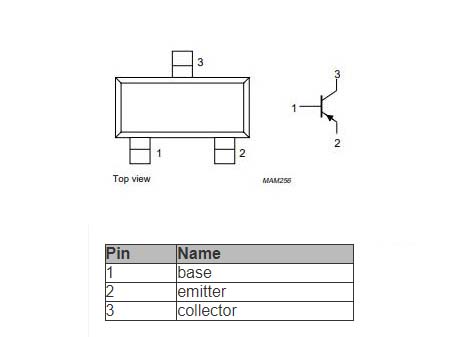
MMBTA92 Pinout

MMBTA92 CAD Model


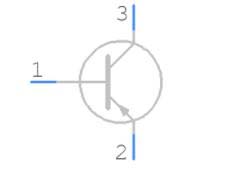
MMBTA92 Symbol


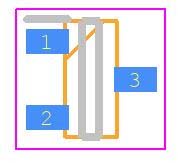
MMBTA92 Footprint


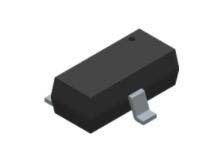
MMBTA92 3D Model

MMBTA92 Description

MMBTA92 is a PNP high-voltage transistor in a SOT23 plastic package. 

NPN complement: MMBTA42.

MMBTA92 Feature

  • Low current (max. 100 mA)

  • High voltage (max. 300 V).

  • AEC-Q101 qualified

MMBTA92 Application

  • Telephony

  • Professional communication equipment


MMBTA92 Alternatives

The alternatives for MMBTA92:

  • MMBTA92,215

  • MMBTA92lt1G

  • MMBTA92-7-F

  • MMBTA92-AU

Specifications

Nexperia USA Inc. MMBTA92,215 technical specifications, attributes, parameters and parts with similar specifications to Nexperia USA Inc. MMBTA92,215.

MMBTA92,215 Tech Specifications

Nexperia USA Inc. MMBTA92,215 technical specifications, attributes, parameters and parts with similar specifications to Nexperia USA Inc. MMBTA92,215.

Product Attribute Attribute Value
Factory Lead Time4 Weeks
Contact PlatingTin
MountSurface Mount
Mounting TypeSurface Mount
Package / CaseTO-236-3, SC-59, SOT-23-3
Number of Pins3Pins
Transistor Element MaterialSILICON
Collector-Emitter Breakdown Voltage300V
Number of Elements1 Element
Operating Temperature150°C TJ
PackagingTape & Reel (TR)
SeriesAutomotive, AEC-Q101
Published2000
JESD-609 Codee3
Part StatusActive
Product Attribute Attribute Value
Moisture Sensitivity Level (MSL)1 (Unlimited)
Number of Terminations3Terminations
ECCN CodeEAR99
Max Power Dissipation250mW
Terminal PositionDUAL
Terminal FormGULL WING
Frequency50MHz
Base Part NumberMMBTA92
Pin Count3
Element ConfigurationSingle
Power Dissipation250mW
Transistor ApplicationSWITCHING
Gain Bandwidth Product50MHz
Polarity/Channel TypePNP
Transistor TypePNP
Product Attribute Attribute Value
Collector Emitter Voltage (VCEO)300V
Max Collector Current100mA
DC Current Gain (hFE) (Min) @ Ic, Vce25 @ 30mA 10V
Current - Collector Cutoff (Max)250nA ICBO
Vce Saturation (Max) @ Ib, Ic500mV @ 2mA, 20mA
Transition Frequency50MHz
Max Breakdown Voltage300V
Collector Base Voltage (VCBO)300V
Emitter Base Voltage (VEBO)5V
REACH SVHCNo SVHC
Radiation HardeningNo
RoHS StatusROHS3 Compliant
Lead FreeLead Free
0 Products View Similar

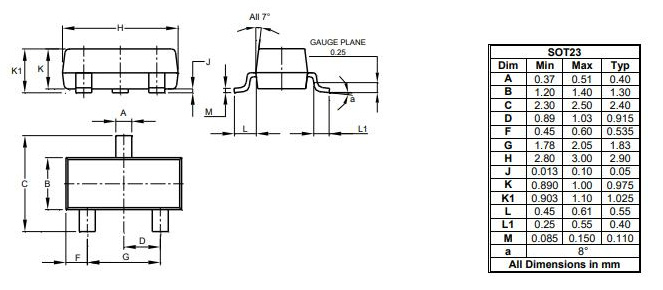
MMBTA92 Package

MMBTA92 Manufacturer

Nexperia is a dedicated global leader in DiscretesLogic and MOSFETs devices. This new company became independent at the beginning of 2017. Focused on efficiency, Nexperia produces consistently reliable semiconductor components at a high volume: 85 billion annually. The company’s extensive portfolio meets the stringent standards set by the Automotive industry. And industry-leading small packages, produced in their own manufacturing facilities, combine power and thermal efficiency with best-in-class quality levels. Built on over half a century of expertise, Nexperia has 11,000  employees across Asia, Europe and the U.S. supporting customers globally.

The more similar parts from Nexperia:  MMBTA42,215, MMBT3906VL, MMBT3904,215, MMBT3904, MMBT3904VL, MMBT3904,215 and so on.

Datasheet PDF

MMBTA92,215 Documents

Download datasheets and manufacturer documentation for MMBTA92,215

Frequently Asked Questions

How do PNP transistors work?
The PNP transistor turns on when a small current flows through the base. The direction of current in the PNP transistor is from the emitter to collector. ... In the PNP transistor, the electrons are taken from the base terminal. The current which enters into the base is amplified into the collector ends.
What is difference between PNP and NPN?
PNP sensors produce a positive output to your industrial controls input, while NPN sensors produce a negative signal during an “on” state. ... NPN, or “sinking” output sensors, work in the opposite way, sinking ground voltage to input when it's on.
How can PNP transistor be controlled?
First of all, to turn on the PNP transistor, you need the voltage on the base to be lower than the emitter. For a simple circuit like this, it's common to connect the emitter to the plus from your power source. This way, you know what voltage you have on the emitter.
FAQ
How do PNP transistors work?
The PNP transistor turns on when a small current flows through the base. The direction of current in the PNP transistor is from the emitter to collector. ... In the PNP transistor, the electrons are taken from the base terminal. The current which enters into the base is amplified into the collector ends.
What is difference between PNP and NPN?
PNP sensors produce a positive output to your industrial controls input, while NPN sensors produce a negative signal during an “on” state. ... NPN, or “sinking” output sensors, work in the opposite way, sinking ground voltage to input when it's on.
How can PNP transistor be controlled?
First of all, to turn on the PNP transistor, you need the voltage on the base to be lower than the emitter. For a simple circuit like this, it's common to connect the emitter to the plus from your power source. This way, you know what voltage you have on the emitter.

TAGS

Share