ATTENTION: Due to increased demand and order volume, processing time may take an additional 1-3 business days.
HomeCommunitySubjectSTM32F207 Microcontroller: Features, Datasheet and Pinout

STM32F207 Microcontroller: Features, Datasheet and Pinout

Embedded - Microcontrollers A/D 16x12b; D/A 2x12b 100-LQFP 512kB Brown-out Detect/Reset, DMA, I2S, LCD, POR, PWM, WDT -40°C~85°C TA 1.8V~3.6V STM32F2 MICROCONTROLLER, RISC STM32F207 120MHz MCU 32-bit STM32 ARM Cortex M3 RISC 512KB Flash 2.5V/3.3V 100-Pin LQFP Tray

1785

Nov 1, 2021

Stephanie Josh

Difference between Microprocessor and Microcontroller

Embedded - Microcontrollers A/D 16x12b; D/A 2x12b 100-LQFP 512kB Brown-out Detect/Reset, DMA, I2S, LCD, POR, PWM, WDT -40°C~85°C TA 1.8V~3.6V STM32F2 MICROCONTROLLER, RISC STM32F207 120MHz MCU 32-bit STM32 ARM Cortex M3 RISC 512KB Flash 2.5V/3.3V 100-Pin LQFP Tray

The STM32F207 family is based on the high-performance Arm® Cortex®-M3 32-bit RISC core operating at a frequency of up to 120 MHz. The devices also feature an adaptive real-time memory accelerator (ART Accelerator™) that allows to achieve a performance equivalent to 0 wait state program execution from Flash memory at a CPU frequency up to 120 MHz. Furthermore, Huge range of Semiconductors, Capacitors, Resistors and IcS in stock. Welcome RFQ.

STM32F207VET6

3140In Stock
Min.: 1 Mult.: 1
Quantity Unit Price Ext. Price
1+ $11.38444$11.38
10+ $10.74004$107.4
100+ $10.13211$1013.21
500+ $9.5586$4779.3
1000+ $9.01755$9017.55
Unit Price:$11.38444
Subtotal: $11.38
Looking for a better price? Want a lower wholesale price? Please send an RFQ, and we will respond immediately.
Quick Links

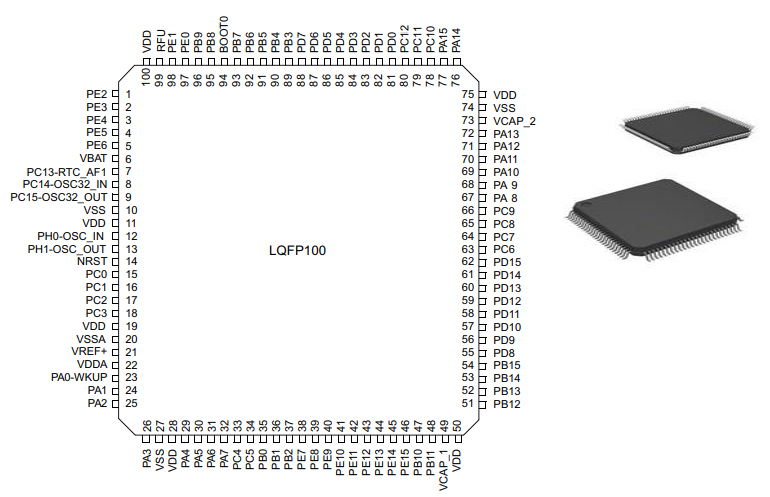
STM32F207 Pinout

Pinout

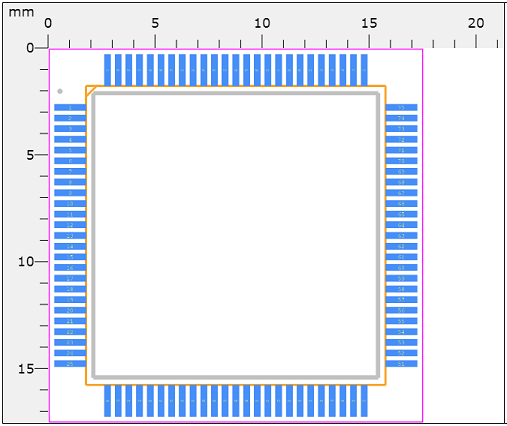
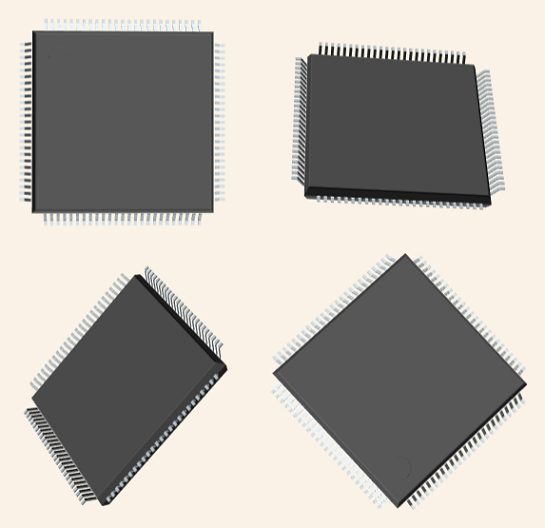
STM32F207 CAD Model

PCB Symbol

PCB Footprint

3D Model

STM32F207 Overview

The STM32F207 family is based on the high-performance Arm® Cortex®-M3 32-bit RISC core operating at a frequency of up to 120 MHz. The family incorporates high-speed embedded memories (Flash memory up to 1 Mbyte, up to 128 Kbytes of system SRAM), up to 4 Kbytes of backup SRAM, and an extensive range of enhanced I/Os and peripherals connected to two APB buses, three AHB buses and a 32-bit multi-AHB bus matrix. A comprehensive set of power-saving modes enables the design of low-power applications. The devices also feature an adaptive real-time memory accelerator (ART Accelerator™) that allows to achieve a performance equivalent to 0 wait state program execution from Flash memory at a CPU frequency up to 120 MHz. This performance has been validated using the CoreMark® benchmark.

This article provides you with a basic overview of the STM32F207, including its pin descriptions, features and specifications, etc., to help you quickly understand what STM32F207 is.

STM32F207 Features

● Core: Arm® 32-bit Cortex®-M3 CPU (120 MHz max) with Adaptive real-time accelerator (ART Accelerator™) allowing        0- wait state execution performance from Flash memory, MPU, 150 DMIPS/1.25 DMIPS/MHz (Dhrystone 2.1)

● Memories

   ◆ Up to 1 Mbyte of Flash memory

   ◆ 512 bytes of OTP memory

   ◆ Up to 128 + 4 Kbytes of SRAM

   ◆ Flexible static memory controller that supports Compact Flash, SRAM, PSRAM, NOR and NAND memories

   ◆ LCD parallel interface, 8080/6800 modes

● Clock, reset and supply management

   ◆ From 1.8 to 3.6 V application supply + I/Os

   ◆ POR, PDR, PVD and BOR

   ◆ 4 to 26 MHz crystal oscillator

   ◆ Internal 16 MHz factory-trimmed RC

   ◆ 32 kHz oscillator for RTC with calibration

   ◆ Internal 32 kHz RC with calibration

● Low-power modes

   ◆ Sleep, Stop and Standby modes

   ◆ VBAT  supply for RTC, 20 × 32 bit backup registers, and optional 4 Kbytes backup SRAM

● 3 × 12-bit, 0.5 µs ADCs with up to 24 channels and up to 6 MSPS in triple interleaved mode

● 2 × 12-bit D/A converters

● General-purpose DMA: 16-stream controller with centralized FIFOs and burst support

● Up to 17 timers

   ◆ Up to twelve 16-bit and two 32-bit timers, up to 120 MHz, each with up to four IC/OC/PWM or pulse counter                     and quadrature (incremental) encoder input

● Debug mode: Serial wire debug (SWD), JTAG, and Cortex®-M3 Embedded Trace Macrocell™

● Up to 140 I/O ports with interrupt capability:

   ◆ Up to 136 fast I/Os up to 60 MHz

   ◆ Up to 138 5 V-tolerant I/Os

● Up to 15 communication interfaces

   ◆ Up to three I2C interfaces (SMBus/PMBus)

   ◆ Up to four USARTs and two UARTs (7.5 Mbit/s, ISO 7816 interface, LIN, IrDA, modem control)

   ◆ Up to three SPIs (30 Mbit/s), two with muxed I2S to achieve audio class accuracy via audio PLL or external PLL

   ◆ 2 × CAN interfaces (2.0B Active)

   ◆ SDIO interface

● Advanced connectivity

   ◆ USB 2.0 full-speed device/host/OTG controller with on-chip PHY

   ◆ USB 2.0 high-speed/full-speed device/host/OTG controller with dedicated DMA, on-chip full-speed PHY and ULPI

   ◆ 10/100 Ethernet MAC with dedicated DMA: supports IEEE 1588v2 hardware, MII/RMII

● 8- to 14-bit parallel camera interface (48 Mbyte/s max.)

● CRC calculation unit

● 96-bit unique ID

STM32F207 Advantage

The STM32F207 devices operate in the –40 to +105 °C temperature range from a 1.8 V to 3.6 V power supply. On devices in WLCSP64+2 package, if IRROFF is set to VDD, the supply voltage can drop to 1.7 V when the device operates in the 0 to 70 °C temperature range using an external power supply supervisor.

All devices offer three 12-bit ADCs, two DACs, a low-power RTC, twelve general-purpose 16-bit timers including two PWM timers for motor control, two general-purpose 32-bit timers, a true number random generator (RNG). They also feature standard and advanced communication interfaces. New advanced peripherals include an SDIO, an enhanced flexible static memory control (FSMC) interface (for devices offered in packages of 100 pins and more), and a camera interface for CMOS sensors. The devices also feature standard peripherals.

• Up to three I2Cs

• Three SPIs, two I2Ss. To achieve audio class accuracy, the I2S peripherals can be clocked via a dedicated internal audio         PLL or via an external PLL to allow synchronization.

• Four USARTs and two UARTs

• A USB OTG high-speed with full-speed capability (with the ULPI)

• A second USB OTG (full-speed)

• Two CANs

• An SDIO interface

• Ethernet and camera interface available on STM32F207xx devices only.

Specifications

STM32F207VET6 Tech Specifications

STMicroelectronics STM32F207VET6 technical specifications, attributes, parameters and parts with similar specifications to STMicroelectronics STM32F207VET6.

Product Attribute Attribute Value
Lifecycle StatusACTIVE (Last Updated: 7 months ago)
Factory Lead Time12 Weeks
Contact PlatingGold
Mounting TypeSurface Mount
Package / Case100-LQFP
Surface MountYES
Number of Pins100Pins
Data ConvertersA/D 16x12b; D/A 2x12b
Number of I/Os82I/Os
Watchdog TimersYes
Operating Temperature-40°C~85°C TA
PackagingTray
SeriesSTM32F2
Part StatusActive
Moisture Sensitivity Level (MSL)3 (168 Hours)
Number of Terminations100Terminations
Max Power Dissipation434mW
Terminal PositionQUAD
Terminal FormGULL WING
Product Attribute Attribute Value
Supply Voltage3.3V
Terminal Pitch0.5mm
Frequency120MHz
Base Part NumberSTM32F207
Pin Count100
InterfaceCAN, Ethernet, I2C, I2S, IrDA, LIN, MMC, SDIO, SPI, UART, USART, USB
Memory Size512kB
Oscillator TypeInternal
RAM Size132K x 8
Voltage - Supply (Vcc/Vdd)1.8V~3.6V
uPs/uCs/Peripheral ICs TypeMICROCONTROLLER, RISC
Core ProcessorARM® Cortex®-M3
PeripheralsBrown-out Detect/Reset, DMA, I2S, LCD, POR, PWM, WDT
Program Memory TypeFLASH
Core Size32-Bit
Program Memory Size512KB 512K x 8
ConnectivityCANbus, Ethernet, I2C, IrDA, LINbus, Memory Card, SPI, UART/USART, USB OTG
Bit Size32
Has ADCYES
Product Attribute Attribute Value
DMA ChannelsYES
Data Bus Width32b
DAC ChannelsYES
Number of Timers/Counters14Timers/Counters
Core ArchitectureARM
Number of Programmable I/O16Programmable I/Os
Number of UART Channels2UART Channels
Number of PWM Channels4PWM Channels
Number of I2C Channels3I2C Channels
Number of Ethernet Channels1Ethernet Channel
Height1.45mm
Length14.2mm
Width14.2mm
REACH SVHCNo SVHC
Radiation HardeningNo
RoHS StatusROHS3 Compliant
Lead FreeLead Free
0 Products View Similar

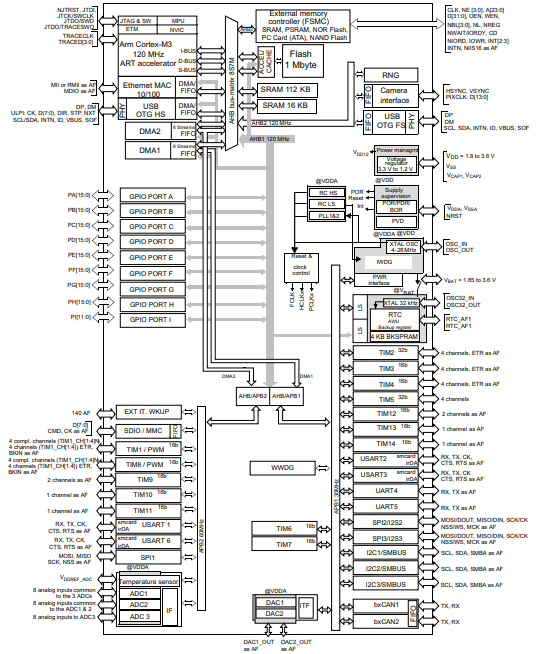
STM32F207 Functional Block Diagram

Block diagram

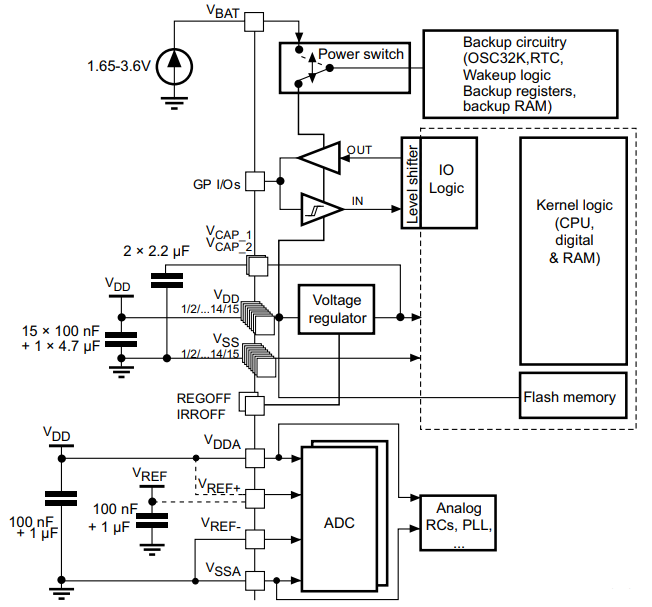
STM32F207 Power Supply Scheme

Power Supply Scheme

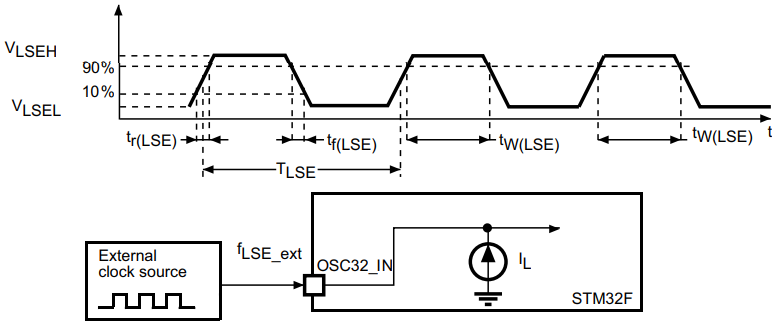
STM32F207 AC Timing Diagram

High-speed external clock source AC timing diagram


Low-speed external clock source AC timing diagram

STM32F207 Applications

● Motor drive and application control

● Medical equipment

● Industrial applications: PLC, inverters, circuit breakers

● Printers, and scanners

● Alarm systems, video intercom, and HVAC

● Home audio appliances

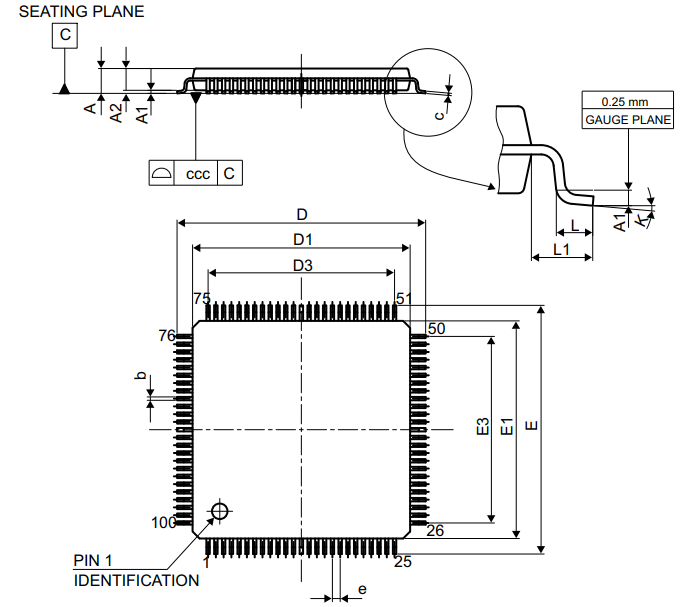
STM32F207 Package

LQFP100 Package Outline

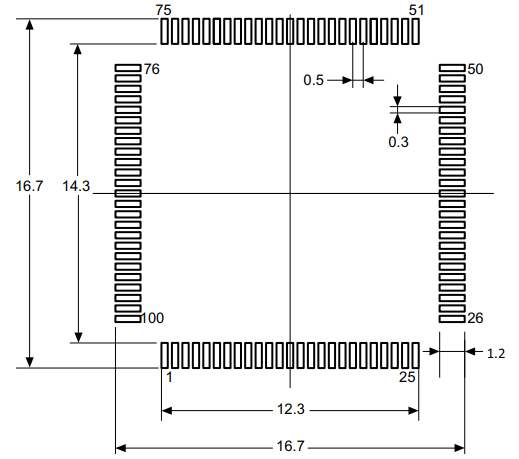
STM32F207 Recommended Footprint

LQFP100 Recommended Footprint

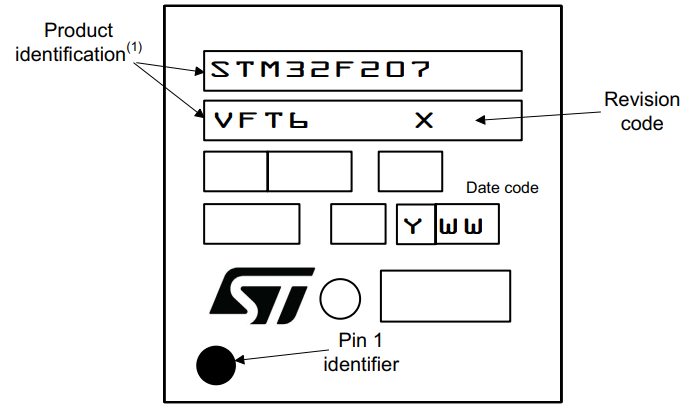
STM32F207 Marking

LQFP100 Marking (package top view)

STM32F207 Manufacturer

STMicroelectronics is a globally recognized semiconductor company. They are dedicated to developing semiconductor solutions for various microelectronics applications. STMicroelectronics enjoys unrivaled silicon and system expertise, strong manufacturing strength, IP portfolio,and solid relationships with their strategic partners. Based on these advantages, STMicroelectronics has become a pioneer in System-on-Chip (SoC) technology and its products has a positive effect in realizing today's convergence trends.

Datasheet PDF

STM32F207VET6 Documents

Download datasheets and manufacturer documentation for STM32F207VET6

Frequently Asked Questions

What is the difference between STM32F207 and STM32103?
STM32F207 has a higher operating frequency and larger memory; most of the integrated peripherals have been redesigned, and the continuity of the peripheral firmware library is not very good, but the performance has been improved by one grade, and then the integrated peripherals of 207 and 407 are basically the same NS.
Can STM32F407 directly replace STM32F207?
In theory, it is possible, but the premise is that you do not use the FPU function of STM32F407, because the 207 does not have this function.
The working voltage of STM32F207 is 1.8V~3.6V, will it be burned out if it is powered by 5V?
It is definitely not possible to use 5V power supply, just add a level of 3V voltage regulator circuit and then supply power. Disconnect the STM32F207 power terminal from the power supply circuit, and only check the STM32F207. If it is still short-circuited, it will burn.
FAQ
What is the difference between STM32F207 and STM32103?
STM32F207 has a higher operating frequency and larger memory; most of the integrated peripherals have been redesigned, and the continuity of the peripheral firmware library is not very good, but the performance has been improved by one grade, and then the integrated peripherals of 207 and 407 are basically the same NS.
Can STM32F407 directly replace STM32F207?
In theory, it is possible, but the premise is that you do not use the FPU function of STM32F407, because the 207 does not have this function.
The working voltage of STM32F207 is 1.8V~3.6V, will it be burned out if it is powered by 5V?
It is definitely not possible to use 5V power supply, just add a level of 3V voltage regulator circuit and then supply power. Disconnect the STM32F207 power terminal from the power supply circuit, and only check the STM32F207. If it is still short-circuited, it will burn.

TAGS

Share