ATTENTION: Due to increased demand and order volume, processing time may take an additional 1-3 business days.
HomeCommunitySubjectSTM32F411RET6 Microcontrollers: Pinout, Features and Application

STM32F411RET6 Microcontrollers: Pinout, Features and Application

ARM Microcontrollers - MCU High-performance access line, ARM Cortex-M4 core with DSP and FPU, 512 Kbytes Flash, 100 MHz CPU, ART Accelerator

261

Jul 7, 2021

Vita Elinor

STM32F411RET6TR


ARM Microcontrollers - MCU High-performance access line, ARM Cortex-M4 core with DSP and FPU, 512 Kbytes Flash, 100 MHz CPU, ART Accelerator

The STM32F411RET6 devices are based on the high-performance Arm® Cortex® -M4 32-bit RISC core operating at a frequency of up to 100 MHz. This article mainly introduces its pinout, features and more information about STM32F411RET6。

STM32F411RET6

9600In Stock
Min.: 1 Mult.: 1
Quantity Unit Price Ext. Price
1+ $5.94217$5.94
10+ $5.60582$56.06
100+ $5.28851$528.85
500+ $4.98916$2494.58
1000+ $4.70676$4706.76
Unit Price:$5.94217
Subtotal: $5.94
Looking for a better price? Want a lower wholesale price? Please send an RFQ, and we will respond immediately.
Quick Links

STM32F411RET6 Description

The STM32F411RET6 devices are based on the high-performance Arm® Cortex® -M4 32-bit RISC core operating at a frequency of up to 100 MHz. The Cortex®-M4 core features a Floating point unit (FPU) single precision which supports all Arm single-precision data-processing instructions and data types.The STM32F411xC/xE belongs to the STM32 Dynamic Efficiency™ product line (with products combining power efficiency, performance and integration) while adding a new innovative feature called Batch Acquisition Mode (BAM) allowing to save even more power consumption during data batching.

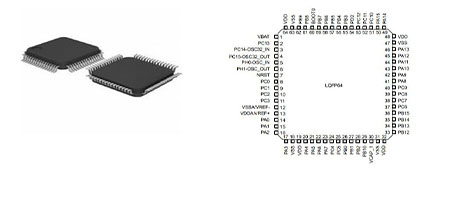
STM32F411RET6 Pinout

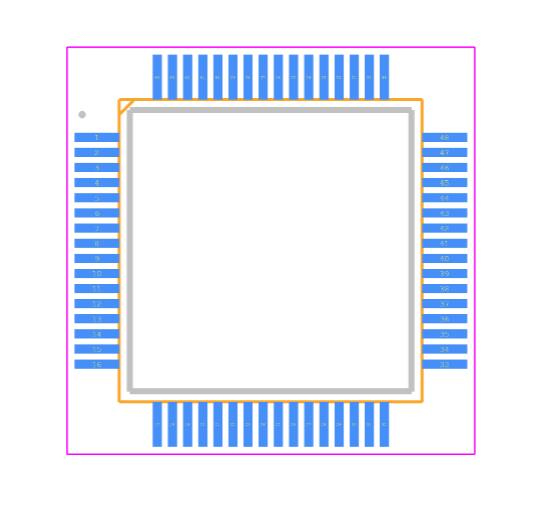
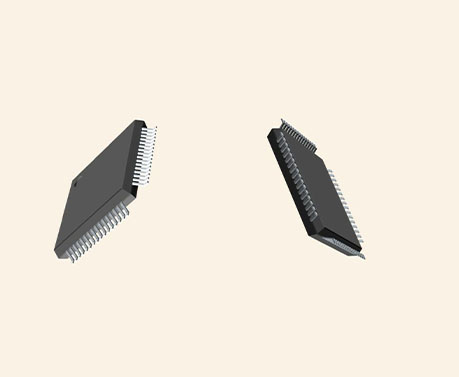
STM32F411RET6 CAD Model

Symbol 


Footprint


3D Model

STM32F411RET6 Features

• Dynamic Efficiency Line with BAM (Batch Acquisition Mode)

– 1.7 V to 3.6 V power supply

– - 40°C to 85/105/125 °C temperature range 

• Core: Arm® 32-bit Cortex®-M4 CPU with FPU, Adaptive real-time accelerator (ART Accelerator™) allowing 0-wait state execution from Flash memory, frequency up to 100 MHz, memory protection unit, 125 DMIPS/1.25 DMIPS/MHz (Dhrystone 2.1), and DSP instructions

• Memories

– Up to 512 Kbytes of Flash memory 

– 128 Kbytes of SRAM 

• Clock, reset and supply management 

– 1.7 V to 3.6 V application supply and I/Os 

– POR, PDR, PVD and BOR 

– 4-to-26 MHz crystal oscillator 

– Internal 16 MHz factory-trimmed RC 

– 32 kHz oscillator for RTC with calibration 

– Internal 32 kHz RC with calibration 

• Power consumption 

– Run: 100 µA/MHz (peripheral off) 

– Stop (Flash in Stop mode, fast wakeup time): 42 µA Typ @ 25C; 65 µA max @25 °C 

– Stop (Flash in Deep power down mode, slow wakeup time): down to 9 µA @ 25 °C; 28 µA max @25 °C 

– Standby: 1.8 µA @25 °C / 1.7 V without RTC; 11 µA @85 °C @1.7 V

– VBAT supply for RTC: 1 µA @25 °C 

• 1×12-bit, 2.4 MSPS A/D converter: up to 16 channels 

• General-purpose DMA: 16-stream DMA controllers with FIFOs and burst support 

• Up to 11 timers: up to six 16-bit, two 32-bit timers up to 100 MHz, each with up to four IC/OC/PWM or pulse counter and quadrature (incremental) encoder input, two watchdog timers (independent and window) and a SysTick timer

•Debug mode 

– Serial wire debug (SWD) & JTAG interfaces 

– Cortex®-M4 Embedded Trace Macrocell™

• Up to 81 I/O ports with interrupt capability 

– Up to 78 fast I/Os up to 100 MHz 

– Up to 77 5 V-tolerant I/Os • Up to 13 communication interfaces 

– Up to 3 x I2C interfaces (SMBus/PMBus) 

– Up to 3 USARTs (2 x 12.5 Mbit/s, 1 x 6.25 Mbit/s), ISO 7816 interface, LIN, IrDA, modem control) 

– Up to 5 SPI/I2Ss (up to 50 Mbit/s, SPI or I2S audio protocol), SPI2 and SPI3 with muxed full-duplex I2S to achieve audio class accuracy via internal audio PLL or external clock 

– SDIO interface (SD/MMC/eMMC) 

– Advanced connectivity: USB 2.0 full-speed device/host/OTG controller with on-chip PHY 

• CRC calculation unit 

• 96-bit unique ID 

• RTC: subsecond accuracy, hardware calendar 

• All packages (WLCSP49, LQFP64/100, UFQFPN48, UFBGA100) are ECOPACK®2

Specifications

STMicroelectronics STM32F411RET6TR technical specifications, attributes, parameters and parts with similar specifications to STMicroelectronics STM32F411RET6TR.

STM32F411RET6 Tech Specifications

STMicroelectronics STM32F411RET6 technical specifications, attributes, parameters and parts with similar specifications to STMicroelectronics STM32F411RET6.

Product Attribute Attribute Value
Factory Lead Time12 Weeks
MountSurface Mount
Mounting TypeSurface Mount
Package / Case64-LQFP
Number of Pins64Pins
Weight342.689036mg
Data ConvertersA/D 16x12b
Number of I/Os50I/Os
Watchdog TimersYes
Operating Temperature-40°C~85°C TA
PackagingTray
SeriesSTM32F4
Part StatusActive
Moisture Sensitivity Level (MSL)3 (168 Hours)
Number of Terminations64Terminations
ECCN Code3A991.A.2
Max Power Dissipation313mW
Terminal PositionQUAD
Terminal FormGULL WING
Supply Voltage3.3V
Product Attribute Attribute Value
Terminal Pitch0.5mm
Frequency100MHz
Base Part NumberSTM32F411
Operating Supply Voltage3.3V
Supply Voltage-Max (Vsup)3.6V
InterfaceI2C, I2S, IrDA, LIN, MMC, SD, SDIO, SPI, UART, USART, USB
Memory Size512kB
Oscillator TypeInternal
RAM Size128K x 8
Voltage - Supply (Vcc/Vdd)1.7V~3.6V
uPs/uCs/Peripheral ICs TypeMICROCONTROLLER, RISC
Core ProcessorARM® Cortex®-M4
PeripheralsBrown-out Detect/Reset, DMA, I2S, POR, PWM, WDT
Program Memory TypeFLASH
Core Size32-Bit
Program Memory Size512KB 512K x 8
ConnectivityI2C, IrDA, LINbus, MMC/SD/SDIO, SPI, UART/USART, USB OTG
Supply Current-Max34.5mA
Bit Size32
Has ADCYES
Product Attribute Attribute Value
DMA ChannelsYES
Data Bus Width32b
PWM ChannelsYES
Number of Timers/Counters8Timers/Counters
Core ArchitectureARM
CPU FamilyCORTEX-M4
Boundary ScanYES
Low Power ModeYES
FormatFLOATING-POINT
Integrated CacheNO
Number of ADC Channels16ADC Channels
Number of External Interrupts16External Interrupts
Length10mm
Height Seated (Max)1.6mm
Width10mm
REACH SVHCNo SVHC
Radiation HardeningNo
RoHS StatusROHS3 Compliant
Lead FreeLead Free
0 Products View Similar

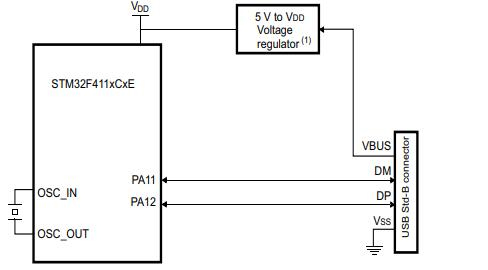
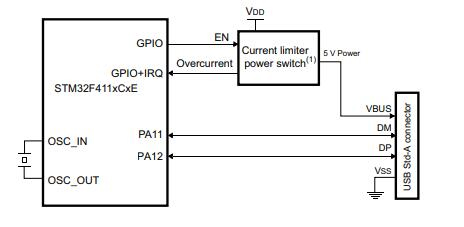
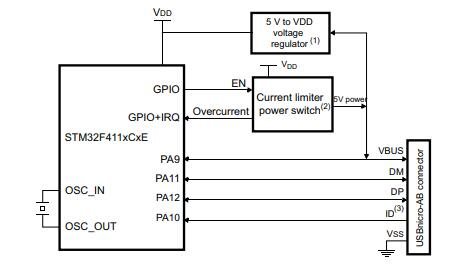
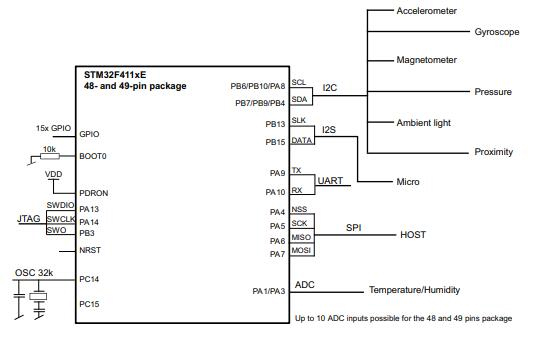
STM32F411RET6 Application Diagram

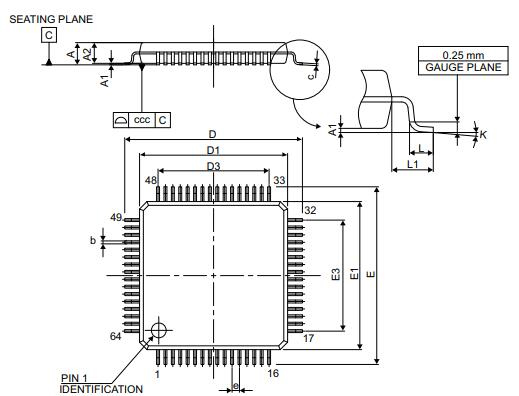
STM32F411RET6 Package

STM32F411RET6 Manufacturer

STMicroelectronics is a global independent semiconductor company and is a leader in developing and delivering semiconductor solutions across the spectrum of microelectronics applications. An unrivaled combination of silicon and system expertise, manufacturing strength, Intellectual Property (IP) portfolio and strategic partners positions the Company at the forefront of System-on-Chip (SoC) technology and its products play a key role in enabling today's convergence trends.

Datasheet PDF

Download datasheets and manufacturer documentation for STMicroelectronics STM32F411RET6TR.

STM32F411RET6 Documents

Download datasheets and manufacturer documentation for STM32F411RET6

Frequently Asked Questions

What is STM32F411RET6TR?
The STM32F411XC/XE devices are based on the high-performance Arm® Cortex® -M4 32- bit RISC core operating at a frequency of up to 100 MHz.
How about STM32F411RET6TR?
The STM32F411RET6 32-bit RISC core, ARM microcontroller-MCU, operating frequency up to 100 MHz, Cortex®-M4 core with floating point unit (FPU) single precision, supporting all Arm single precision data processing instructions and data types. It also implements a full set of DSP instructions and a memory protection unit (MPU), thereby enhancing the security of the application.
Which is preferred: Arduino or STM32?
Depends on the task at hand. Applications that don’t require the use of advanced libraries can be efficiently implemented using an Arduino board. However, applications that do require a series of advanced manipulations will generally require something a bit more sophisticated i.e. an ARM-based platform like the STM32. Obviously, the sophisticated STM32 equipment costs more than an Arduino and is thus more versatile. However, for fairly simplistic projects, it’s a bit of an overkill. With all that said, when it comes to making a purchase decision, I would recommend any beginner to purchase the STM32, as it can be reused for more complex projects in the future. I personally think that beginners should start with an 8051 or PIC microcontroller and build their own boards (soldering individual components and stuff) instead of starting off with a commercial one. That first LED-blinking experience should be on a crude, hand-made board programmed using low-level assembly or C. Using an Arduino or any such platform only isolates the users from the hardware and isn’t fruitful academically. For advanced projects, however, building your own board isn’t really feasible, and thus an STM32 board is a better choice there.
What temperature does STM32F411xC/xE operate in?
The STM32F411xC/xE operate in the - 40 to + 125 °C temperature range from a 1.7 (PDR OFF) to 3.6 V power supply.
FAQ
What is STM32F411RET6TR?
The STM32F411XC/XE devices are based on the high-performance Arm® Cortex® -M4 32- bit RISC core operating at a frequency of up to 100 MHz.
How about STM32F411RET6TR?
The STM32F411RET6 32-bit RISC core, ARM microcontroller-MCU, operating frequency up to 100 MHz, Cortex®-M4 core with floating point unit (FPU) single precision, supporting all Arm single precision data processing instructions and data types. It also implements a full set of DSP instructions and a memory protection unit (MPU), thereby enhancing the security of the application.
Which is preferred: Arduino or STM32?
Depends on the task at hand. Applications that don’t require the use of advanced libraries can be efficiently implemented using an Arduino board. However, applications that do require a series of advanced manipulations will generally require something a bit more sophisticated i.e. an ARM-based platform like the STM32. Obviously, the sophisticated STM32 equipment costs more than an Arduino and is thus more versatile. However, for fairly simplistic projects, it’s a bit of an overkill. With all that said, when it comes to making a purchase decision, I would recommend any beginner to purchase the STM32, as it can be reused for more complex projects in the future. I personally think that beginners should start with an 8051 or PIC microcontroller and build their own boards (soldering individual components and stuff) instead of starting off with a commercial one. That first LED-blinking experience should be on a crude, hand-made board programmed using low-level assembly or C. Using an Arduino or any such platform only isolates the users from the hardware and isn’t fruitful academically. For advanced projects, however, building your own board isn’t really feasible, and thus an STM32 board is a better choice there.
What temperature does STM32F411xC/xE operate in?
The STM32F411xC/xE operate in the - 40 to + 125 °C temperature range from a 1.7 (PDR OFF) to 3.6 V power supply.

TAGS

Share