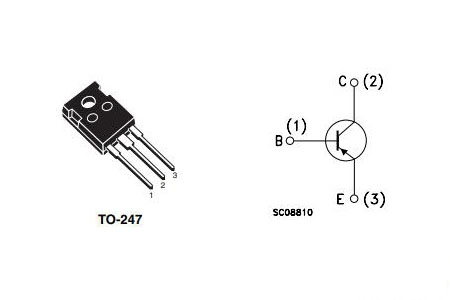
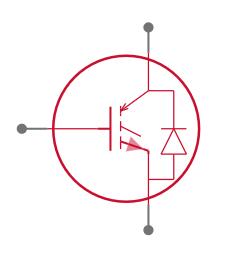
A transistor must be correctly biased in order to function as an amplifier.
By boosting the power of a weak signal, a transistor works as an amplifier. The emitter-base junction remains forward biased due to the DC bias voltage given to it. Regardless of the signal's polarity, the forward bias is maintained. A transistor coupled as an amplifier is depicted in the diagram below.
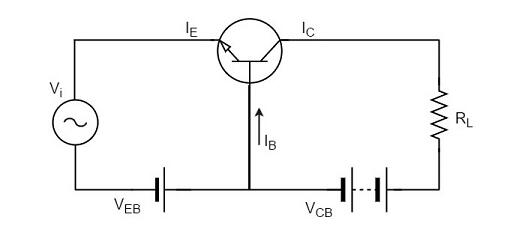
Transistor Amplifier
Because the input circuit has a low resistance, any minor change in the input signal causes a noticeable change in the output. The input signal's emitter current adds to the collector current, which causes a high voltage drop across the load resistor RL as it runs through it. As a result, a low input voltage yields a high output value, indicating that the transistor functions as an amplifier.