ATTENTION: Due to increased demand and order volume, processing time may take an additional 1-3 business days.
HomeCommunitySubjectTIP41C Transistor: Datasheet, Pinout, and Test Circuits

TIP41C Transistor: Datasheet, Pinout, and Test Circuits

In a Pack of 5, STMicroelectronics TIP41C NPN Transistor, 6 A, 100 V, 3-Pin TO-220

3840

Jul 1, 2021

Bonnie Gissing

Ultra Deep Bass Amplifier Using TIP41C and TIP42C Transistor


In a Pack of 5, STMicroelectronics TIP41C NPN Transistor, 6 A, 100 V, 3-Pin TO-220

The TIP41C is a base island technology NPN power transistor in TO-220 plastic package that make this device suitable for audio, power linear and switching applications.

TIP41C

50950In Stock
Min.: 1 Mult.: 1
Quantity Unit Price Ext. Price
1+ $0.96546$0.97
10+ $0.91081$9.11
100+ $0.85925$85.93
500+ $0.81062$405.31
1000+ $0.76473$764.73
Unit Price:$0.96546
Subtotal: $0.97
Looking for a better price? Want a lower wholesale price? Please send an RFQ, and we will respond immediately.
Quick Links

TIP41C Description

The TIP41C is a base island technology NPN power transistor in TO-220 plastic package that make this device suitable for audio, power linear and switching applications. The complementary PNP type is TIP42C. The TIP41C can drive maximum 6 ampere of load. It will be a perfect substitution if you want to replace a TIP31, TIP31C or other similar transistors in your circuit to drive more load.
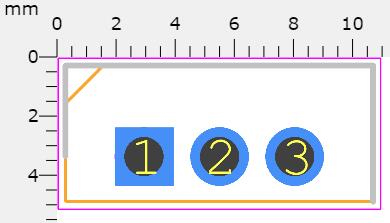
 

TIP41C Pinout

TIP41C CAD Model

Symbol


Footprint


3D Model

TIP41C Features

  • Base Part Number: TIP41

  • Package Type: TO-220

  • Transistor Type: NPN

  • Max Collector Current(IC): 6A or 6000mA

  • Max Collector-Emitter Voltage (VCE): 100V

  • Max Collector-Base Voltage (VCB): 100V

  • Max Emitter-Base Voltage (VEBO): 5V

  • Max Collector Dissipation (Pc): 65W

  • Max Transition Frequency (fT): 3 MHz

  • Minimum & Maximum DC Current Gain (hFE): 15 - 75

  • Max Storage & Operating temperature Should Be: -65 to +150 Centigrade

TIP41C Advantages

  • New enhanced series

  • High switching speed

  • hFE grouping

  • hFE improved linearity

Specifications

STMicroelectronics TIP41C technical specifications, attributes, parameters and parts with similar specifications to STMicroelectronics TIP41C.

TIP41C Tech Specifications

STMicroelectronics TIP41C technical specifications, attributes, parameters and parts with similar specifications to STMicroelectronics TIP41C.

Product Attribute Attribute Value
Lifecycle StatusACTIVE (Last Updated: 7 months ago)
Factory Lead Time8 Weeks
MountThrough Hole
Mounting TypeThrough Hole
Package / CaseTO-220-3
Number of Pins3Pins
Weight453.59237kg
Transistor Element MaterialSILICON
Collector-Emitter Breakdown Voltage100V
Collector-Emitter Saturation Voltage1.5V
Number of Elements1 Element
hFEMin15
Operating Temperature150°C TJ
PackagingTube
JESD-609 Codee3
Part StatusActive
Product Attribute Attribute Value
Moisture Sensitivity Level (MSL)1 (Unlimited)
Number of Terminations3Terminations
ECCN CodeEAR99
Terminal FinishMatte Tin (Sn)
Voltage - Rated DC100V
Max Power Dissipation65W
Current Rating6A
Base Part NumberTIP41
Pin Count3
Element ConfigurationSingle
Power Dissipation65W
Transistor ApplicationSWITCHING
Polarity/Channel TypeNPN
Transistor TypeNPN
Collector Emitter Voltage (VCEO)100V
Max Collector Current6A
Product Attribute Attribute Value
DC Current Gain (hFE) (Min) @ Ic, Vce15 @ 3A 4V
Current - Collector Cutoff (Max)700μA
JEDEC-95 CodeTO-220AB
Vce Saturation (Max) @ Ib, Ic1.5V @ 600mA, 6A
Transition Frequency3MHz
Collector Base Voltage (VCBO)100V
Emitter Base Voltage (VEBO)5V
Max Junction Temperature (Tj)150°C
Height19.68mm
Length10.4mm
Width4.6mm
REACH SVHCNo SVHC
Radiation HardeningNo
RoHS StatusROHS3 Compliant
Lead FreeLead Free
0 Products View Similar

TIP41C Test Circuits

Inductive load switching test circuit


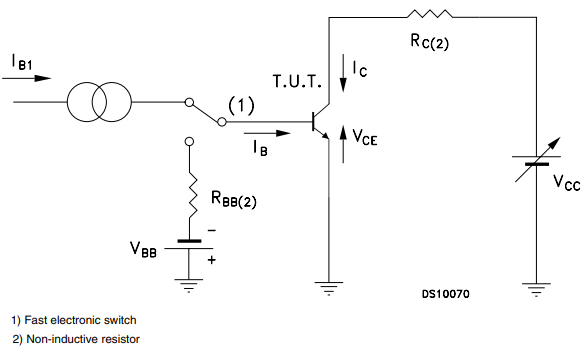
Resistive load switching test circuit


(Note: For PNP types voltage e current values are negative.)

TIP41C Functional Alternatives

How to use TIP41C

The TIP41C can be used in any general purpose of switching and amplification application. It can be used as a switch to drive many loads at the same time, though the sum of all load should not increase from 6A. It can drive DC motors, high power LEDs, high power relays, bulbs, devices etc.

It can also be used for general amplification purposes like signal amplification. It can also be used to build a simple high power amplifier circuit or be used in other high power audio amplifier stages.


TIP41C Applications

  • General purpose circuits

  • Audio amplifier

  • Signal Amplification

  • Power linear and switching

  • Driving Loads Under 6 Amperes

  • Driving and Controlling DC Motors

  • Darlington Pairs

  • Wide Variety Of General Purpose Applications

TIP41C Package

TIP41C Package Outline


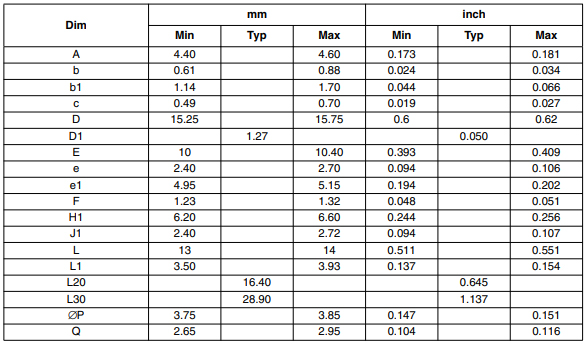
TIP41C Mechanical Data

TIP41C Manufacturer

STMicroelectronics is a global independent semiconductor company and is a leader in developing and delivering semiconductor solutions across the spectrum of microelectronics applications. An unrivaled combination of silicon and system expertise, manufacturing strength, Intellectual Property (IP) portfolio and strategic partners positions the Company at the forefront of System-on-Chip (SoC) technology and its products play a key role in enabling today's convergence trends.

Datasheet PDF

Download datasheets and manufacturer documentation for STMicroelectronics TIP41C.

TIP41C Documents

Download datasheets and manufacturer documentation for TIP41C

Frequently Asked Questions

1.What is TIP41C?
The TIP41C is a base island technology NPN power transistor in TO-220 plastic package that make this device suitable for audio, power linear, and switching applications.
2.How to test a TIP41C transistor?
Hook the positive lead from the multimeter to the to the BASE (B) of the transistor. Hook the negative meter lead to the EMITTER (E) of the transistor. For an good NPN transistor, the meter should show a voltage drop between 0.45V and 0.9V. If you are testing PNP transistor, you should see “OL” (Over Limit)
3.Can I use this with arduno for rgb leds?
You can. Make sure you size the base resistor to limit current from arduino to 30mA. ATMega328 used on Arduino has a 30mA max sink or source.
4.How to get long term performance with TIP41C in a circuit?
To make this device stay stable for years in your circuits it is recommended to not drive load more than 6A, always use a suitable heatsink, do not drive load more than 100V, for good and stable performance always stay below from the max values and always operate and store the device/transistor in temperature above -65 centigrade and below +150 centigrade.
5.Will 5W power on TIP41C/TIP42C require a heat sink?
Depends a bit, 5W on a naked TO220 is pushing it in the absence of airflow, and I would probably screw the thing down to some suitable bit of metal if it was to be sustained for more then a few seconds.
FAQ
1.What is TIP41C?
The TIP41C is a base island technology NPN power transistor in TO-220 plastic package that make this device suitable for audio, power linear, and switching applications.
2.How to test a TIP41C transistor?
Hook the positive lead from the multimeter to the to the BASE (B) of the transistor. Hook the negative meter lead to the EMITTER (E) of the transistor. For an good NPN transistor, the meter should show a voltage drop between 0.45V and 0.9V. If you are testing PNP transistor, you should see “OL” (Over Limit)
3.Can I use this with arduno for rgb leds?
You can. Make sure you size the base resistor to limit current from arduino to 30mA. ATMega328 used on Arduino has a 30mA max sink or source.
4.How to get long term performance with TIP41C in a circuit?
To make this device stay stable for years in your circuits it is recommended to not drive load more than 6A, always use a suitable heatsink, do not drive load more than 100V, for good and stable performance always stay below from the max values and always operate and store the device/transistor in temperature above -65 centigrade and below +150 centigrade.
5.Will 5W power on TIP41C/TIP42C require a heat sink?
Depends a bit, 5W on a naked TO220 is pushing it in the absence of airflow, and I would probably screw the thing down to some suitable bit of metal if it was to be sustained for more then a few seconds.

TAGS

Share