
The transformation of the grid is driven by growing demand, electric transportation, fluctuation of peak time and renewable energy.
The electrical power industry is undergoing tremendous change and reinvention, and the primary drivers for this are decarbonization, digitalization and decentralization. These paradigm shifts come with their respective challenges and opportunities. For example, the shift away from coal requires striking a balance between keeping capital costs low, achieving reliable alternative supply, and of course, environmental goals and compliance. The operational challenges of renewable energy are also a significant consideration, and achieving a consistent supply and integration of renewables into the grid will require solutions that go beyond traditional practices.
Automation provides for a significant solution in creating future ready electrical grids. Smart grid technologies create a system that is more efficient and reliable. In fact, the Smart Grid Market, which was valued at over US $30 billion in 2017, is set to expand over 11% CAGR to hit US $70 billion by 2024 (Aditya Gupta, 2017).

Current Scenario
The fundamental transformation of the grid is being driven by growing demand, electric transportation, fluctuation of peak time, integration of renewable energy, smart meters at the consumer level and the interrelatedness of operations and information being generated.
Compliance to environmental and regulatory requirements, along with the need for reliable power supply is leading to an increased push towards automation in the secondary grid. Automation at this level will ensure greater control, better data management and an effective smart grid implementation which not only benefits Distribution System Operators (DSOs) but also end consumers.
Automation in the secondary grid
While digitization of asset data is increasingly becoming the norm, the larger and critical aspect of a smarter and resilient grid is in the integration of renewable energy sources and hence it important to invest in the automation of the secondary power grid.
DSOs are faced with back feeding, or reverse power flow, due to power from various distributed energy resources (DERs) such as wind turbines and solar farms. Thus, leading to the need for maintenance and protection of circuitry.
Smart automation devices such as digital sensors and switches with advanced control and communication technologies improve fault location, isolation and service restoration. They also lead to improved resilience in the event of extreme weather. Automation significantly improves equipment monitoring as well as service restoration. It also helps in preventive maintenance, thereby ensuring reduction of operating costs, efficient use of service crews and lesser environmental emissions. All of this helps to create operational and maintenance efficiencies for operators.
Data from EU countries has shown that failures in the distribution network are largely caused by natural factors such as fallen trees or overhead lines. Moreover, poor insulation of isolators occurs almost 70% of the time in the medium voltage part of the grid. Distribution automation brings down the frequency of occurrence, timing of outage and cost for such events which has a direct impact on reliability indices.
Network automation technologies enable advanced capabilities for grid operators to diagnose, detect and locate faults accurately. Feeder-based fault detection, isolation and recovery (FDIR) or service restoration (FLISR) technologies can automate power restoration within a few minutes by isolating malfunctioning feeders and switching to adjacent ones, reducing the number of affected customers and minutes of interruption. In cases of fully automated switching and validation, there is a larger reliability improvement than operator based remote switching, which improves indices such as System Average Interruption Index (SAIDI) and Customer Interruption Duration Index (CAIDI). Reducing outage rates have a large role to play in minimizing penalties and increasing end customer satisfaction.
Network automation improves grid reliability, thereby reducing economic costs and customer inconveniences from outages. In the U.S., interruptions to power supply cost the economy almost $44 billion per annum (Kristina Hamachi, 2018).
These technologies also create operation and maintenance efficiencies which lead to savings for utilities. Usage of automated voltage regulation and power factor correction help utilities to monitor and reduce peak demand, use existing assets more efficiently and allocate investments more effectively.
Secondary Grid Automation in Switzerland
Automating the secondary distribution network is a key contributor and a prerequisite to building smart grids. In a recent project we worked with one of Switzerland’s largest energy companies to extend automation controls into the secondary distribution grid for a low voltage network in a rural area.
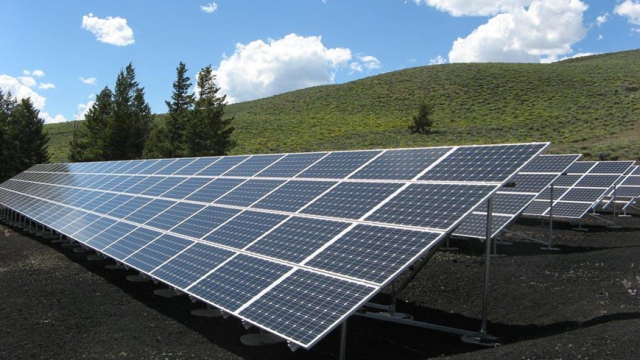
With the installation of a new solar plant of 134kW, where a maximum fluctuation of /-10% is allowed to ensure power quality, the voltage limits within the low voltage network were being violated. By introducing the RTU450, our smart solution for distribution automation in conjunction with a monitoring function, we were able to have greater control over the line voltage.
This enabled our customer to improve the power quality with distributed energy resources on its network and avoid the greater financial outlay that comes with a new transformer and rewiring the low voltage network with higher rated cables.
The installation also provided the utility operator with a secure VPN and helped the company improve operational efficiencies and costs by monitoring and controlling the voltage, load status and temperature of the line voltage regulator, remotely.
Conclusion
The deployment of automation into the secondary grid offers many benefits, including:
- Efficient energy: Optimizing energy usage leads to reduced losses and better demand management during peak hours.
- Quality of power: A reduction in number and duration of power outages leads to improvement of reliability indices and customer satisfaction.
- Cost benefits: Stabilized costs result in pricing choices for consumers, and of course, money saved due to operational efficiencies.
- Environmental benefits: Reduction in emission of greenhouse gases leads to a cleaner and greener grid.
In conclusion, the application of intelligent grid solutions, allows operators to see inside the grid and make faster, smarter and safer decisions. This is becoming imperative to making the grid intelligent and responsive to future outages.