
Are you struggling to source memory chips or facing sudden price hikes from major foundries? You are not alone. The 2026 semiconductor market trends indicate a massive structural shift. Driven by aggressive AI infrastructure expansion, the global semiconductor market is rapidly approaching the trillion-dollar mark.
However, this unprecedented growth brings severe supply chain bottlenecks. High-value AI processors are consuming global manufacturing capacity. Consequently, traditional electronic components face severe shortages. Procurement teams must adapt immediately.
This article analyzes the March 2026 market data, details the memory price surges, explains the end of the destocking cycle, and provides actionable strategies to secure your supply chain.
AI Infrastructure Drives Record Global Sales
The semiconductor industry has entered a new phase of volume and price expansion. According to the "2026 Global Semiconductor Industry Trend Report" released by Deloitte, global semiconductor sales will reach a record $975 billion this year. This growth is not uniform across all sectors.
The data reveals a stark structural disparity in the market. High-value AI chips now contribute approximately 50% of total industry revenue. Strikingly, these same AI chips account for less than 0.2% of total shipment volume. This imbalance dictates current foundry priorities.
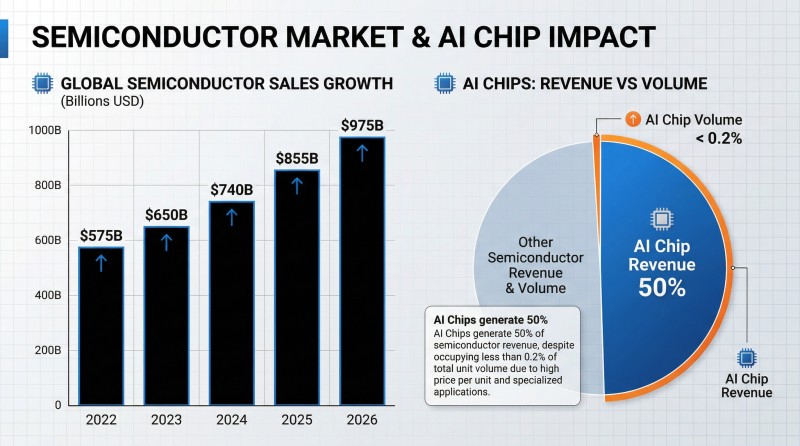
Global semiconductor sales chart 2026 Deloitte report
Foundries are allocating maximum capacity to advanced packaging and cutting-edge nodes required for AI accelerators. Technologies like CoWoS (Chip-on-Wafer-on-Substrate) and TSV (Through-Silicon Via) are fully booked. This allocation leaves mature nodes and standard logic components fighting for remaining fab time.
For buyers of standard microcontrollers, power management ICs, and legacy logic chips, this means extended lead times. Manufacturers prioritize high-margin AI components over high-volume, low-margin standard parts. Procurement strategies relying on Just-In-Time (JIT) delivery are failing under these conditions.
Companies must secure long-term agreements or partner with independent distributors to maintain production lines. The focus has shifted from cost reduction to supply assurance. Understanding this structural shift is critical for Q2 and Q3 planning.
Memory Market Explosion: HBM Demand and Price Hikes
The most acute pain point in the 2026 semiconductor market is memory. AI applications require massive bandwidth and capacity. This requirement has triggered an explosion in demand for advanced memory architectures, specifically HBM3, HBM4, and DDR7.
Memory manufacturers have pivoted their production lines to meet this demand. The yield rates for HBM (High Bandwidth Memory) are lower than standard DRAM, consuming more wafer area per gigabyte. This pivot has drastically reduced the output of traditional consumer-grade memory.
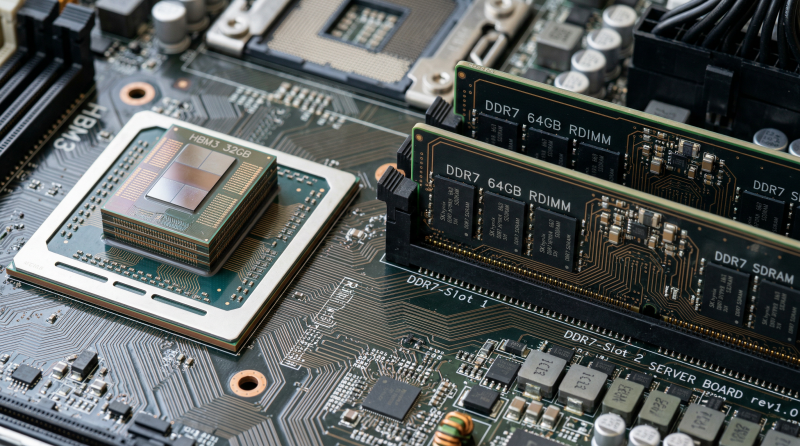
HBM3 and DDR7 memory chips on motherboard
As a direct result, supplies of DDR4 and DDR5 have tightened significantly. Prices for these standard memory modules are experiencing sharp, double-digit percentage increases month-over-month. Consumer electronics, PC manufacturers, and automotive suppliers are feeling the immediate impact of these price hikes.
The shortage is not temporary. The chairman of SK Group recently issued a stark warning to the industry. Driven by the relentless demand for HBM in AI data centers, the current memory shortage is projected to last four to five years, extending until 2030.
Procurement managers must factor these long-term shortages into their Bill of Materials (BOM) cost projections. Delaying memory purchases in hopes of a price drop is a high-risk strategy in the current market environment.
| Memory Type | Primary Application | Demand Trend | Supply Status | Price Trajectory |
|---|---|---|---|---|
| HBM3 / HBM4 | AI Accelerators, Data Centers | Exponential Growth | Severely Constrained | Premium Pricing |
| DDR7 | Next-Gen Servers, High-End PCs | High Growth | Allocated | Increasing |
| DDR5 | Standard PCs, Consumer Electronics | Stable | Tightening | Sharp Increase |
| DDR4 | Legacy Systems, IoT, Automotive | Declining | Production Reduced | Moderate Increase |
The End of Destocking: Broad Price Increases Across Components
For the past two years, the semiconductor industry operated under a "destocking" cloud. Companies burned through excess inventory accumulated during previous supply chain disruptions. That era is officially over. March 2026 marks the definitive start of a comprehensive price-hike cycle.
Major international IDMs (Integrated Device Manufacturers) are adjusting their pricing models. Texas Instruments (TI) and Infineon have both issued official price increase notifications to their customers. These adjustments affect a wide range of analog, power, and embedded processing components.
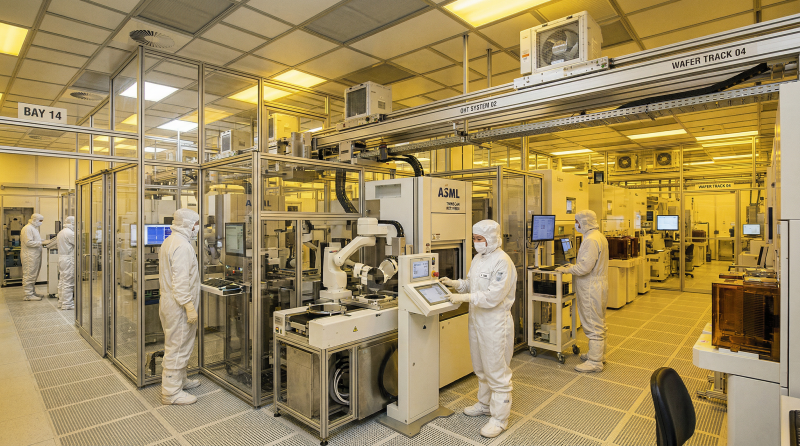
Semiconductor wafer fabrication facility cleanroom
The price increases are not limited to international giants. Domestic foundries are also reacting to market pressures. Nexchip (Jinghe Integration) and other regional wafer fabs have officially raised their foundry service prices. Higher wafer costs translate directly to higher component costs for fabless design houses.
Several factors drive these broad price increases. First, raw material costs, including specialized gases and silicon wafers, have risen. Second, energy costs for operating fabs remain high. Third, the massive capital expenditure required to build new AI-capable fabs is being subsidized by raising margins on mature products.
Automotive and industrial sectors are particularly vulnerable. These industries rely heavily on the mature node components produced by TI, Infineon, and regional foundries. Manufacturers must update their cost models immediately to protect profit margins.
Navigating Supply Chain Challenges with JAK Electronics
The combination of AI-driven capacity constraints, memory shortages, and broad price increases creates a hostile environment for procurement. Relying solely on direct manufacturer allocations or franchised distributors with rigid lead times is no longer sufficient.
Agility is the most valuable asset in the 2026 supply chain. When standard channels fail, independent distributors provide the necessary buffer. They hold physical inventory, offer alternative component sourcing, and provide market intelligence to anticipate shortages before they halt production.
To secure your production lines against these disruptions, partnering with a reliable electronic components distributor is essential. JAK Electronics offers extensive inventory access, rigorous quality control, and global sourcing capabilities to mitigate the impact of the 2026 component shortages.
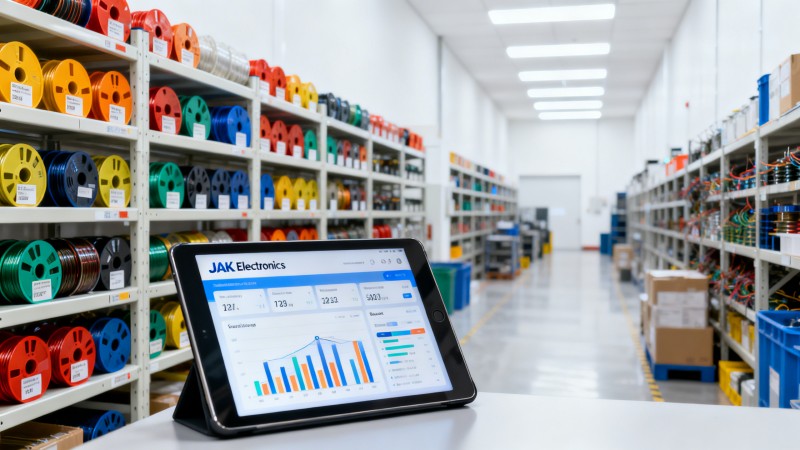
JAK Electronics components distributor warehouse and inventory system
Effective mitigation strategies include expanding your approved vendor list (AVL), qualifying alternative part numbers, and utilizing spot market purchases strategically. A competent distributor facilitates these strategies by providing cross-reference data and authenticating components through strict testing protocols.
Do not wait for a line-down situation to adjust your procurement strategy. Proactive sourcing and inventory buffering are mandatory practices in a market dominated by AI infrastructure demands.
Industry Voices: How Engineers Are Adapting
We surveyed procurement managers and hardware engineers regarding the March 2026 market shifts. Here is how industry professionals are handling the current landscape:
Michael T., Senior Procurement Manager (Automotive Tier 1):
"The Infineon and TI price hike letters hit us hard last week. We were running lean on PMICs expecting prices to stay flat. We are now scrambling to secure 12-month buffer stock. The destocking phase is definitely dead. We are heavily utilizing independent distributors to fill the immediate gaps."
Sarah L., Lead Hardware Engineer (Industrial IoT):
"Our latest gateway design used DDR5. With the current lead times pushing 40 weeks due to the HBM capacity shift, we had to redesign the board. We are qualifying alternative memory brands that we previously ignored just to keep the product shipping."
David K., Supply Chain Director (Consumer Electronics):
"The SK Group warning about shortages lasting until 2030 changed our entire five-year plan. We are moving away from JIT entirely for critical silicon. If you don't have the parts in your own warehouse or secured with a trusted partner, you don't have parts."
Frequently Asked Questions (FAQs)
1. Why are global semiconductor sales reaching record highs in 2026?
Global sales are projected to hit $975 billion primarily due to massive investments in AI infrastructure. High-value AI processors and advanced memory chips (HBM) command premium prices, driving total revenue up despite representing a tiny fraction of total unit volume.
2. Why is there a shortage of standard DDR4 and DDR5 memory?
Memory manufacturers have reallocated their production capacity to produce HBM3, HBM4, and DDR7 for AI data centers. This reallocation reduces the manufacturing output for traditional consumer-grade memory, causing supply constraints and price increases.
3. How long will the current memory shortage last?
According to warnings from industry leaders like the SK Group chairman, the memory shortage driven by AI demand is structural and could persist for four to five years, potentially lasting until 2030.
4. What does the "end of destocking" mean for component buyers?
It means the period of excess inventory and falling prices is over. Major manufacturers like TI and Infineon, along with regional foundries, are raising prices. Buyers must prepare for higher BOM costs and longer lead times across most component categories.
5. How can companies protect their supply chain during these shortages?
Companies should abandon strict Just-In-Time (JIT) models for critical silicon, build strategic buffer inventories, expand their Approved Vendor Lists (AVL), and partner with reliable independent electronic component distributors to access spot market inventory safely.
Ready to secure your supply chain against the 2026 component shortages? Stop waiting on extended lead times. Check real-time inventory and source critical components today by visiting JAK Electronics.