
Don’t fear the rise of the machines: Robotics and automation will unlock people potential and solve the productivity puzzle.
It’s no secret that the U.K. industry’s failure to embrace advanced technologies and its continued reliance on human workers to do repetitive unskilled tasks have meant it hasn’t kept pace with other nations and, as a result, has seen productivity plummet.
Take robotics. According to the International Federation of Robotics, the U.K.’s “robot density,” or the number of robots per 10,000 workers, is 71 — below the global average of 74 and significantly lower than Germany’s (309) and South Korea’s (631).
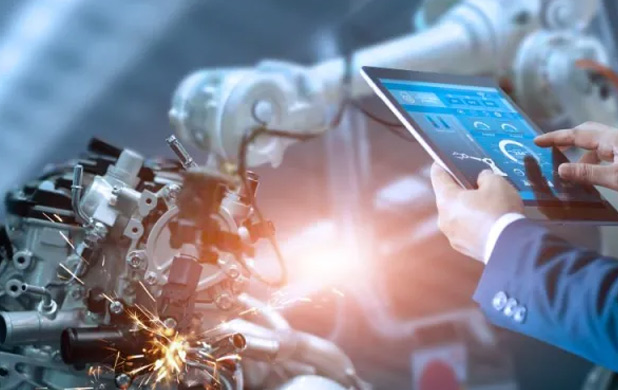
The positive news is that robotics adoption in the U.K. is on the rise, and with the advent of Industry 4.0 and a reduction in its cost, robotics is now much more accessible to small and mid-sized enterprises (SMEs), the backbone of U.K. industry, providing an opportunity to unlock the productivity problem.
Helping drive digitalization among SMEs is the Made Smarter Adoption Programme in the North West, a collaboration between the U.K. government and industry designed to support the increased use of digital technologies among small and medium-sized manufacturers and engineering companies.
By providing businesses with specialists, impartial technology advice, grant funding for projects, digital transformation workshops, a leadership program, digital technology internships, and skills development, we are helping them select the right approach and the appropriate level of investment and tools for their business.
Since 2019, we have helped hundreds of businesses invest in a range of technologies and digital tools. This includes 45 robotics and automation projects worth £2 million in investment, combining £883k in grant funding and leveraging £1.1 million of private finance.
It has resulted in a raft of benefits for these manufacturers, starting with an increase in productivity. That is because robot systems can have a shorter cycle time than humans. Plus, they can tolerate something that people would struggle with: working 24/7. The result is a substantial rise in how much can be made. They can be used for line resilience as well. If there’s a spike in demand, it’s a simple case of increasing their shifts.
Agricultural machine manufacturer Storth, based in Cumbria, used collaborative robots (cobots) to navigate staff shortages during the pandemic and overcome the problem of skilled welders being tied up with repetitive tasks. Its robotic welding system now produces parts at twice the rate of its human counterparts, and welding staff have been moved to higher-value, more rewarding, and more technically challenging roles.
Enhanced product quality is another major benefit. Robots are highly precise. This means there is a much lower chance of errors and mistakes, so you can guarantee the quality and consistency of output.
Robotics also reduces operational costs by taking on repetitive, low-value work. This saves some of the costs associated with the particular operation, allowing these savings to be redistributed elsewhere. As a result, manufacturers can boost the quality of other, higher-value areas.
Ammunition manufacturer Empire Cartridges, based in Lancashire, invested in a six-axis cobot and process control technology that increased manufacturing output of shotgun cartridge shells by at least 50%, increased quality control, reduced manual handling, and upskilled its workforce from box fillers to cobot programmers.
Robotics also offers the advantage of better health and safety. Poor work environments and highly repetitive tasks are sometimes harmful to humans, and it is here where robots are best placed. As they don’t suffer fatigue, they’re less likely to make mistakes or experience accidents.
Despite other advantages, including better data capture and process oversight, integration with ERP and MRP systems, improved compliance, reduced downtime, and higher space utilization, some manufacturers believe that this type of technology simply isn’t an option for them. And that’s all down to the challenges that can arise, such as the capital cost of these solutions and the investment in the skills needed to program and maintain this new technology.
The key to the success stories I have mentioned is that all these businesses have taken the right approach to implementing the technology. This can be whittled down to four key areas: Map your process to identify the best operation to automate; build the business case, including specific requirements; speak to suppliers or integrators for proposals; and then select the option that best meets your requirements.
But even if you get all this right, at the heart of any change are the people. Team members need to be open to it. This is no mean feat, especially with the fear around robots taking people’s jobs. Involving everybody throughout the process will help to create a positive culture for embracing technology, which will focus on how technology can improve their jobs.
Brainboxes, an electronics manufacturer based in Liverpool, is a great example of getting this right. When it recognized that the human task of sticking hundreds of thousands of labels on its products was low-skilled and expensive, it automated the whole process, printing directly onto the product and using robotics to move the products into place.
Initially, there was skepticism among its production staff about what a robot would do to their livelihoods. But once production staff saw the benefits of the change, they weren’t complaining that “the robot has taken my job” but were actually suggesting other areas of the business in which the technology could also be adopted.
Robotics is creating more jobs than it is displacing in the North West, where the 45 projects that Made Smarter North West has supported so far are forecast to create 183 new jobs and upskill a further 234 existing workers. Furthermore, the cumulative gross value added to these businesses from their investment is expected to be £137.4 million over the next three years.
The ROI on the use of robots is startlingly clear. The next step is for Made Smarter to continue being rolled out to other areas of the U.K. And with programs in the North East, Yorkshire and the Humber, and the West Midlands under way, more manufacturers are now accessing the support they need to adopt technology and digital tools to increase growth, productivity, and efficiency, simultaneously enjoying a long-sought–after benefit: the ability to free human workers from the dangers and drudgery of manual work.
Human workers are now being elevated to roles in which their individual skills and cognitive abilities can be better utilized, and that is when a business can truly thrive.