
Lotus Cars will use Analog Devices’ (ADI) wireless battery management system (wBMS) in its next-generation electric vehicle (EV) design.
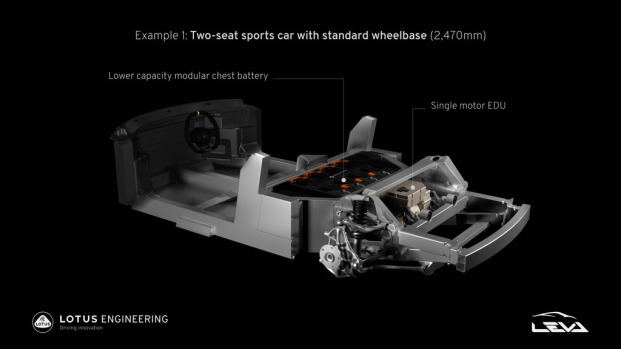
Lotus Cars, a well-known British performance brand, will use Analog Devices’ (ADI’s) wireless battery management system (wBMS) in its next-generation electric vehicle (EV) design. Lotus will be able to securely propel its future EV fleet and continue to push the boundaries of design and technology thanks to the engineering collaboration. The structure of Lotus’s new EVs has been developed through Project LEVA (Lightweight Electric Vehicle Architecture) with the goal of accelerating the development of all-new lightweight structures for next-generation battery electric vehicles.
Gina Aquilano, technology director for the Automotive Business Unit at Analog Devices, said in an interview with Power Electronics News that ADI’s wBMS technology eliminates the traditional wired harness, leading to a reduction of up to 90% in the wiring and 15% of the volume in the battery pack.
“ADI’s wBMS system can achieve a high level of measurement accuracy that our BMS sensors provide and collect this data across the full battery life cycle,” said Aquilano. “This directly translates into more accurate battery insights that can be used to optimize battery usage and life. Furthermore, with the Lotus use case, many of their cars will be on the road for decades. Repairability is critical, as the car will outlive the battery. wBMS enables simple and high-quality module replacement, with no harness or connectors that need to be handled carefully.”
Wireless battery management systems
Many industry experts see the wireless battery management system as one of the most important enablers for the widespread adoption of electric cars, as it allows automakers to avoid having to reinvent complicated wiring diagrams for each new vehicle and ensures battery scalability. It’s important to have a solid, dependable, and secure system that performs effectively and is secured by the newest IT security measures.
Removing wiring harnesses with wBMS provides a lightweight solution that meets the criteria of the British manufacturer. Every Lotus car’s body construction is optimized for maximum performance. Lotus engineers will be able to freely build the car and fit the battery pack as most appropriately possible thanks to the flexibility of the wBMS architecture.
ADI’s and Lotus’s technical effort is creating a game-changer for the electric car market, with a revolutionary lightweight powertrain design that has no wires and a wBMS that allows for great efficiency and a more sustainable environment.
Because the battery is the heart of an electric car and must keep up with the system’s lifetime, a system that allows for battery health assessment and assembly is essential to avoid defective cells. Because the battery modules are programmable via software for quick and simple over-the-air changes, ADI and Lotus claim that maintenance is easier and faster for both on-road and on-track cars with wBMS.
The voltage-, temperature-, and current-measuring parameters are the same as with a wired system. Having a wBMS means you can control the batteries more accurately and better understand performance with access to these metrics throughout their lifespan.
Challenges of wBMS
In e-mobility, the battery management system is crucial. Traditional wired connections are eliminated in ADI’s wBMS implementation, which saves wiring and volume in the battery pack while also enhancing design flexibility and streamlining manufacturing without degrading the battery.
Aquilano shared that two of the primary challenges when transitioning to wireless from wired are:
- Network robustness: To meet the requirement of the automotive EV use case, ADI needed to build hardware and network software from the ground up that hugely outperforms existing wireless networks such as Bluetooth Low Energy.
- Cybersecurity: Wireless systems, by their nature, use an open-communication medium. Therefore, wBMS requires a high level of security. ADI provides an end-to-end security solution that spans the life cycle.
The use of wireless technologies in battery management allows designers to reduce the weight of an EV, therefore balancing the electrical charge, while maintaining the highest levels of functional safety and dependability. The battery is the most important component of an EV: More cells imply greater charging capacity, which implies longer range between recharges.
Both in terms of electronics and mechanics, the automotive supply chain is undergoing major changes. The importance of software is growing: Today’s high-end vehicles have about 100 million lines of software code. The wBMS is taking on a bigger role, as the battery is such an important part of EVs and good charge management is essential for proper functioning.
Batteries nowadays must have a high energy storage density, a low self-loss current, and the ability to charge in minutes rather than hours. In the coming years, a significant increase in the adoption of EVs is expected, aided by lower market prices, the capabilities of various charging systems (such as fast charging, which takes a few tens of minutes to fully or nearly fully recharge), and the increasing availability of charging stations in the area.
Today, Lotus can disclose that the framework created via Project LEVA will be integrated into the company’s new electric sports vehicle architecture. The rear structure is 37% lighter than on the Lotus Emira V6, thanks to Lotus and Project LEVA partners’ innovation. Lotus now has the blueprint for the next generation of electric sports vehicles, future Lotus products, and the commercialization of the Lotus Engineering consultancy.