
At APEC, ON Semiconductor unveiled a totem-pole power-factor correction (PFC) controller in critical conduction mode (CrM) and new converter-inverter-PFC modules for use in industrial motor drives, servo drives, and HVAC. In an interview with Power Electronics News, Ali Husain, manager of corporate marketing and strategy at ON Semiconductor, highlighted the need for a totem-pole PFC with a reduced BOM. In addition, a key consideration in motor control is to reduce heat buildup and improve the reliability of the overall system. Husain pointed out that ON Semiconductor’s new solutions aim to reduce costs and parasitic elements, offering a ready-made solution to optimize motor control design.
Totem-pole PFC controller
In conventional PFC circuits, rectifier bridge diodes account for about 20% of the losses for a 240-W power supply. In contrast, PFC stages are typically 97% efficient, and the LLC circuit offers similar performance. Replacing diodes with switches in a “totem pole” configuration incorporating the PFC boost function can reduce bridge losses and significantly improve overall efficiency. The NCP1680 is a controller and can accommodate any type of switch, whether it is a superjunction silicon MOSFET or broadband switches such as silicon carbide or gallium nitride devices with the appropriate choice of gate driver.
“We want to eliminate the diode losses on the front end,” said Husain. “Totem pole is a topology that’s made more feasible and more attractive by wide-bandgap semiconductors. So if we can eliminate the bridge, then we can make the boost PFC more efficient.”
ON Semiconductor unveiled the new NCP1680 CrM totem-pole PFC controller that uses a new architecture for line phase detection with internally compensated loop digital circuit control algorithms. The NCP1680 employs a constant on-time CrM architecture with downstream switching, unlike other standard solutions that utilize built-in discontinuous conduction mode with downstream synchronized switching during frequency folding operation. Used in modules up to 350 W, PFC circuits based on the NCP1680 are capable of achieving almost 99% efficiency at 300 W. The NCP1680 can be used with either the NCP51820 half-bridge GaN HEMT gate driver or the NCP51561 isolated SiC MOSFET gate driver.
Motor control
The new NXH50M65L4C2SG and NXH50M65L4C2ESG are transfer-molded power-integrated modules (TMPIMs) based upon standard aluminum oxide (AI2O3) substrate and enhanced low-thermal–resistance substrate, respectively. TMPIMs adopt the transfer-molding process to encapsulate the power devices and peripheral components with epoxy molding compound. The construction structure is shown in Figures 1 and 2. The power devices and passive-component–like thermistor are solder-attached to direct-bonded copper substrates and connected through thick aluminum bond wires and leadframe.
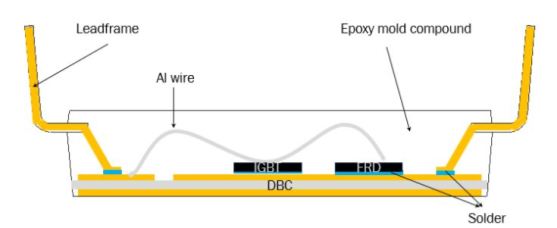 Figure 1: . Internal structure in TMPIM (Source: ON Semi)

The new motor control modules measure 73 × 47 × 8 mm in DIP-26 and offer efficient thermal management thanks to an integrated heatsink with high levels of corrosion resistance. ON Semi also has a SiC version available if you need to increase the switching frequency. DIP-26 series provide module products in different topologies such as converter-inverter-brake, converter-inverter, six-pack, and other multi-level converters.
The new devices find their way into various rugged applications. They contain a converter-inverter-PFC circuit consisting of a single-phase converter with four 75-A, 1,600-V rectifiers. The three-phase inverter uses six 50-A, 600-V IGBTs with reverse diodes, and the two-channel interleaved PFC comprises two 75-A, 650-V IGBTs with reverse diodes and two 50-A, 650-V PFC diodes. Negligible parasitic elements offer a wide PFC switching frequency range between 18 kHz and 65 kHz.